Love Hotels Are Not What You Think: The Practical Traveler Hack
Love hotels in Shibuya have the largest Tokyo rooms for under ¥10,000. Here is how to book one without a Japanese address and what the check-in machines say.
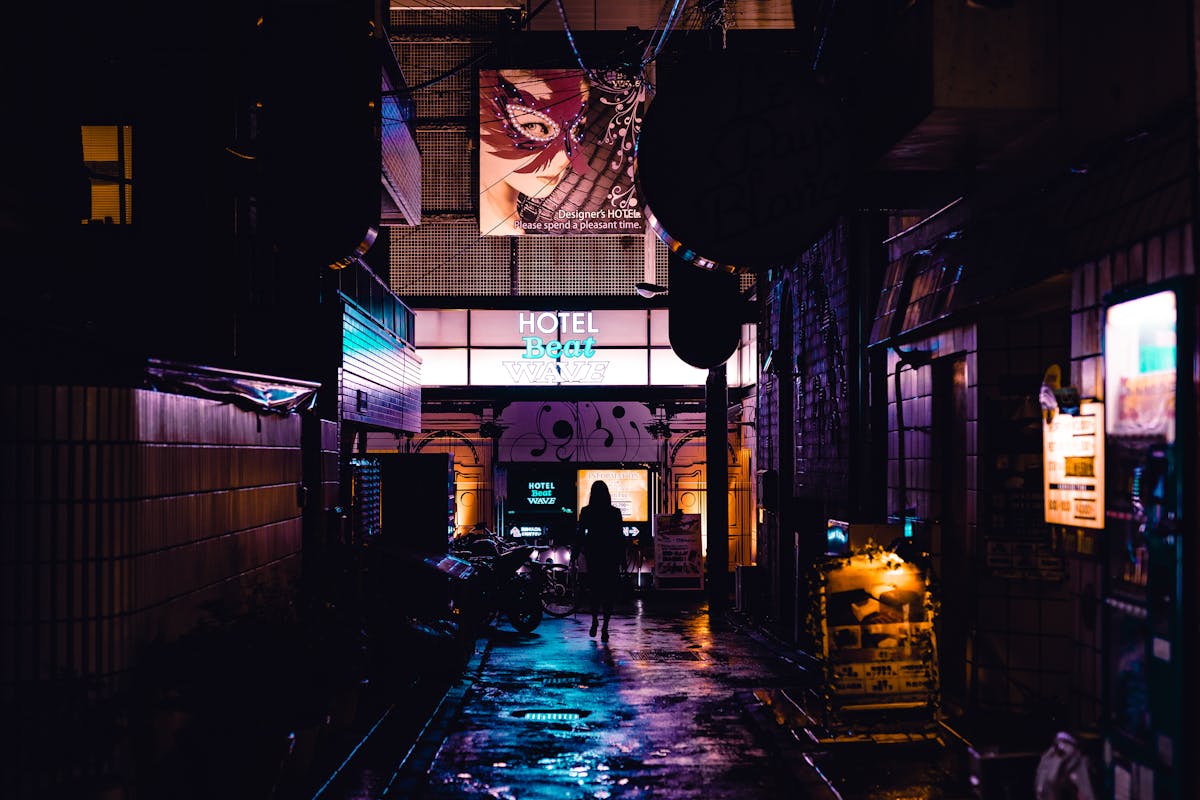
You are walking through Dogenzaka in Shibuya or Kabukicho in Shinjuku and you see them: buildings with neon castles, revolving carousels, and names like Hotel Casanova or Hotel Bali An. For more on this, see our 3 PM check-in wall.
You have been told these are no-tell motels. You think they are seedy, dark, and strictly for illicit rendezvous.
You are wrong. For the savvy traveler, Japanese Love Hotels are the cleanest, largest, and most high-tech rooms you can get in Tokyo for under 10,000 yen.
How the Pricing Model Works
A Love Hotel is not designed for tourists, but it is optimized for privacy and luxury. They operate on two pricing tiers:
- Rest: A 2–4 hour block during the day. Priced for short visits.
- Stay: An overnight booking, usually starting after 8 PM or 10 PM. This is the option you want.
Understanding this model is the first step. The Stay rate gives you a full night in a room that is often twice the size of a standard business hotel — at a comparable or lower price. For more on this, see our no-show penalty trap.
The 2026 Pricing Reality: What You Actually Pay
Love hotel pricing responds to demand in real time. Here are the working ranges for Tokyo in 2026:
Budget tier (weeknight Stay): ¥6,000–¥8,000. Older property, basic amenities, still immaculately clean. Rest rate ¥3,000–¥4,000.
Mid-range (weeknight Stay): ¥8,000–¥12,000. Jacuzzi bath, large bed, themed room options. Rest rate ¥4,000–¥6,000.
Premium (weeknight Stay): ¥12,000–¥18,000. Private Jacuzzi, sauna, karaoke, gaming PC, in-room amenity vending. Rest rate ¥6,000–¥9,000.
Weekend and holiday premium: Add 20–40% across all tiers. Friday night peaks hard.
The benchmark comparison: a mid-range business hotel double in Tokyo on a weeknight runs ¥12,000–¥16,000. A love hotel Stay in the same neighborhood for two people, with more square footage and a Jacuzzi bathroom, runs ¥8,000–¥10,000. The economics work — if you are a couple and you use the Stay rate.
Why You Should Actually Book One
The Space
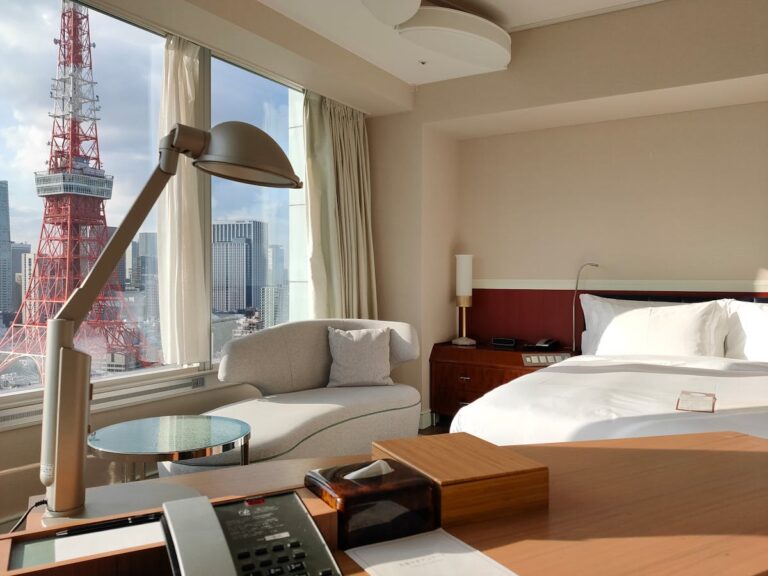
While a standard business hotel room is roughly 12 square meters, a Love Hotel room is often 25 square meters or more. You get a massive bed, a sofa, and themed decor that ranges from subtle elegance to full science-fiction spectacle.
The Bathrooms
Love Hotel bathrooms are legendary. Jacuzzi tubs, built-in TVs, nano-bubble showers, and an endless supply of high-end toiletries. The bathroom alone justifies the booking for many travelers.
The Anonymity
These hotels are designed for total privacy. You often pick your room from a backlit touchscreen in the lobby and pay via an automated kiosk. There is no front desk interaction, no judging eyes, and no awkward check-in conversation.
How to Actually Book One as a Foreign Traveler
Most love hotels do not appear on Booking.com or Expedia. They operate primarily through domestic channels, and many do not take advance reservations at all — you walk in, select from available rooms on the lobby display, and pay before entering the room.
Walk-in (most common approach)
Arrive after 9 PM. Look for the illuminated room selection panel in the lobby — available rooms are lit, occupied rooms are dark. Select your room, confirm the Stay rate is active, and proceed to the automated payment kiosk. Most accept IC cards (Suica, PASMO) and cash; credit card acceptance has improved significantly but is not universal.
Searching for your target area with a Stay filter will surface these listings. The advantage of pre-booking: you can confirm the property accepts solo travelers and read reviews before committing.
The neighborhood matters
Getting between neighborhoods requires reliable data — Google Maps is non-negotiable in Tokyo. If you haven’t sorted connectivity, Sakura Mobile eSIM activates before you land and keeps you online from the airport.
Dogenzaka in Shibuya is the most concentrated love hotel district in Tokyo, known for higher density of well-maintained, design-forward properties. Kabukicho in Shinjuku has high volume but more variable quality. Uguisudani in Taito Ward has older properties at lower price points. Outside Tokyo: Dotonbori in Osaka and streets adjacent to Gion in Kyoto both have significant clusters.
The Neon Sanctuary: What It Actually Feels Like
Step inside and the chaos of Tokyo disappears.
The room might have a planetarium projector, a karaoke machine, or a dedicated gaming PC. It is a meticulously clean, high-tech refuge that feels like a secret level in a video game.
There is no seediness here. Only efficiency, privacy, and amenities that outperform most 4-star Western hotels at a fraction of the price.
The Rules You Need to Know
The Curfew Trap
Once you check in for a Stay, leaving the hotel typically ends your booking. Buy your convenience store snacks before you enter. This is not negotiable at most properties.
Solo Travelers
Some Love Hotels are couples-only and may decline solo male travelers. Always check the lobby signage or confirm through an app before choosing a property. A quick search filters couple-friendly vs. solo-friendly options.
The Stay Start Time
Do not arrive at 3 PM expecting an overnight room. Love Hotels prioritize Rest bookings during the day. Check-in for Stays usually opens between 8 PM and 10 PM. Plan your evening accordingly.
Children and families
Love hotels are not appropriate for families traveling with children. The properties are designed for adult couples and the room configurations — oversized beds, Jacuzzi tubs, limited floor space — do not accommodate extra guests. This is not a judgment; it is a practical reality.
The Bottom Line
A Love Hotel stay is not for everyone. But if you are traveling as a couple, want more space than a business hotel offers, and value privacy over lobby aesthetics, it is one of the best-value accommodation options in Japan.
Book the Stay rate, arrive after 9 PM, and bring your own snacks.
Western platforms rarely carry the local inventory of independent ryokan and regional business hotels, so I tend to bypass them. To access these unlisted properties in English, I prefer to secure my accommodation through a domestic Japanese booking site.