How to Book a Ryokan in Japan Without Getting It Wrong
Booking the right ryokan requires navigating solo supplements and hidden inventory. Here is how to find properties that accept you and avoid those that do not.
What a Ryokan Actually Is (vs What Instagram Made You Think)
A ryokan is a Japanese inn built around a specific logic: you arrive, change into a yukata robe, and don’t leave the property again until morning. Dinner comes to your room or to a private dining area. Breakfast follows the same pattern. The bath — whether communal or private — operates on a schedule. The staff know when you’re eating, when you’re bathing, and when you checked in. This is not hospitality as service delivery. It’s hospitality as choreography.
What Instagram has done to the concept is flatten it into a single image: a cedar soaking tub cantilevered over a forested ravine, steam rising, mountains in the background. That image exists. It costs ¥60,000–80,000/night and requires booking four to six months ahead during peak season. It is also one specific category of ryokan — the rotenburo-equipped, kaiseki-serving, private-bath property that sits at the top of a well-structured market.
Below it are mid-range ryokan with shared baths, simpler kaiseki, and tatami rooms that are genuinely beautiful but don’t photograph as dramatically. Below that are minshuku — family-run guesthouses that operate on ryokan principles with thinner margins and fewer formal trappings. All of these are legitimate ryokan experiences. The mistake is assuming that the Instagram version is the only real one.
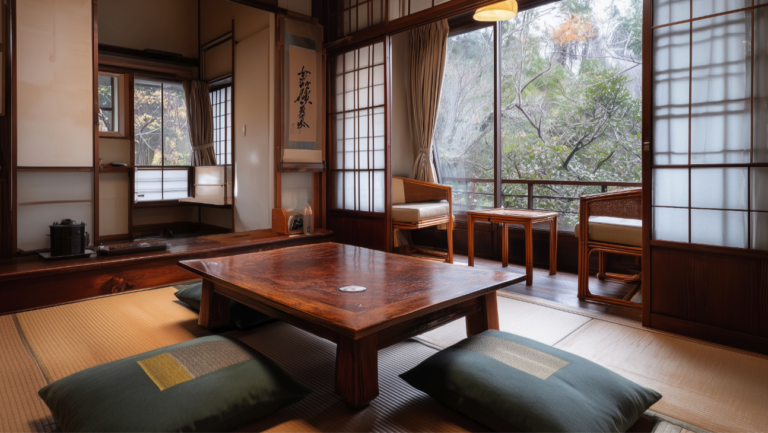
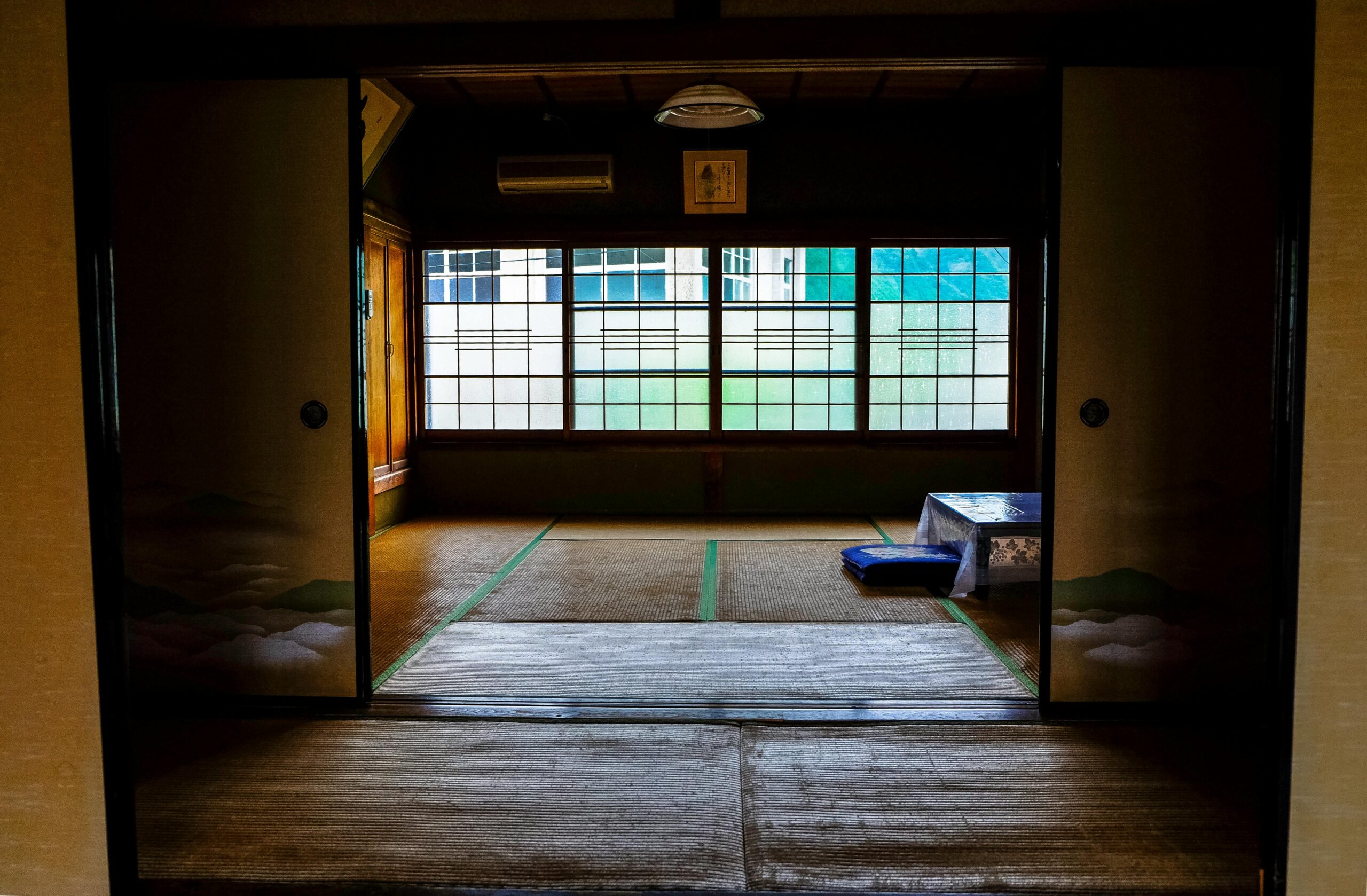
The structural elements common to all ryokan: tatami flooring (you remove footwear at the entrance and again at the room threshold), a tokonoma alcove with a seasonal scroll or flower arrangement, futon bedding laid out by staff in the evening, green tea and a small sweet on arrival, and — in almost every case — an onsen or at minimum a large communal bath fed by spring water.
The quality of the water, the mineral content, the temperature, the views from the bath — these are what separate properties from each other as much as the room design does.
The Booking Window Reality: When to Book by Region and Season
The booking window for ryokan is not uniform. It varies by region, by season, and by whether you’re looking at a property with ten rooms or one with three. Here’s what that actually looks like in practice:
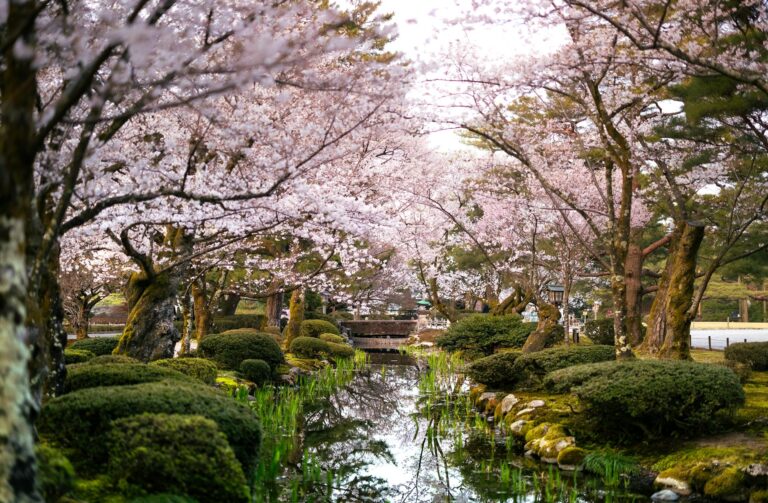
Cherry blossom season (late March–mid April): Book six months out minimum. The popular ryokan in Hakone, Kyoto, Nikko, and Kinosaki fill by October for April stays. If you’re planning a Japan trip around hanami and you haven’t looked at ryokan accommodation by September, you’re already late for the best properties. Mid-range options in secondary locations may still be available three to four months out.
Golden Week (late April–early May): Same window as cherry blossom, sometimes longer. This is the busiest domestic travel period in Japan.
Autumn foliage (mid-October–mid-November): Book by July. The foliage timeline varies by latitude — it peaks earlier in Nikko and later in Kyoto — so properties in prime viewing locations sell out for those specific peak weekends first.
Summer (July–August): More inventory available, but mountain onsen destinations like Hakone and Kusatsu fill up as Japanese families travel. Three to four months advance is a reasonable buffer.
Winter (December–February): The most flexible window, except for ski-adjacent onsen towns (Nozawa Onsen, Zao Onsen). A well-regarded ryokan in Kinosaki or Nikko in January may still have rooms six weeks out.
One structural note on booking: the time zone difference (Japan is ahead of most Western time zones by 9–17 hours) means that when a property opens bookings or releases a cancellation, it often happens while you’re asleep.
com vs Direct — An Honest Comparison
com, Expedia), or directly with the property. Each has genuine advantages and genuine costs.
| Platform | What to Know |
|---|---|
| Booking.com | English-first interface, familiar cancellation policies, good for ryokan with international booking experience Watch out: com inbox as frequently |
| Direct with property | Best rate (no OTA commission), ability to make specific requests, some properties only take direct bookings Watch out: Requires Japanese-language communication for many small ryokan; no standard cancellation policy; payment often requires Japanese bank transfer or credit card on arrival |
Meal plan options, onsen type (indoor/outdoor, private/shared), room size in tatami mats, and cancellation windows are all standardized across listings. The English version of the platform (travel. com/en) covers the major destinations and a large number of mid-range and premium properties.
Booking.com has improved its Japan ryokan inventory in recent years, but it skews toward properties that have invested in international marketing — which means it works well for Hakone properties that regularly host foreign guests, and less well for a small onsen ryokan in Yamagata that has three rooms and whose primary market is Japanese domestic travelers.
Booking direct is worth attempting if you’ve identified a specific property you want and it has a contact email or English-language inquiry form. A short, politely worded email in English — asking about availability, specifying dates, number of guests, and whether you have dietary restrictions — will often get a response.
Many ryokan staff have enough English to handle a booking even if they’d prefer Japanese. If you do book direct, confirm everything in writing and get the cancellation policy clearly stated before you pay.
What to Look For (and Avoid) When Reading Ryokan Listings
Ryokan listings on any platform carry a specific set of data points that are worth reading carefully rather than scanning. These are the ones that actually matter:
Meal plan type: The options in Japanese ryokan booking are typically nippaku nishoku (two meals: dinner and breakfast), breakfast only, or room only. The two-meal plan is the traditional ryokan model and is what most people picture. If you book room-only at a ryokan that serves kaiseki, you may find the property doesn’t have a restaurant open to guests who aren’t on the meal plan — or that dinner service ends at 7pm and there’s nothing else for kilometers. Read this carefully.
Bath type: The listing will specify whether the property has an onsen (true hot spring fed by geothermal spring water) or a sento-style bath (heated tap water). It will also specify indoor only, indoor + outdoor (rotenburo), shared communal bath, or private in-room bath.
Private baths (kashikiri buro or heya no ofuro) are worth clarifying — some are small in-room soaking tubs, others are full outdoor rotenburo accessible from your room. This distinction will be in the listing but sometimes requires reading the property description carefully.
Room size in tatami mats: A 6-mat room (about 9.7 square meters of sleeping area) is small for two people but standard for a single. An 8-mat or 10-mat room is more comfortable for a couple. The term to look for is jo (畸) — “8-jo room” means 8 tatami mats. Premium rooms run 12–16 mats.
Cancellation policy: Many ryokan charge cancellation fees starting 30 days out, with full charges for no-shows. This is not standard hotel policy — it reflects the fact that they’re preparing specific meals for you and staffing accordingly.
Read the cancellation window before booking, and if you’re booking months in advance, factor in whether you want to pay for travel insurance that covers cancellation. Sacraw is worth looking at before you finalize any multi-stop Japan itinerary with pre-paid ryokan nights.
What to avoid: Listings that describe the onsen without specifying whether it’s a true hot spring (look for the term onsen specifically, not just “hot spring bath”). Listings where the photos are exclusively of common areas and no room shots.
Properties with unusually low prices for their location during peak season — not because a deal is impossible, but because mid-tier pricing anomalies sometimes indicate a property that’s been bypassed by domestic travelers for reasons the listing doesn’t disclose.
Etiquette: What They Won’t Tell You on the Booking Page
Most ryokan expect arrival between 3pm and 6pm. Miss this window without calling ahead and dinner — which you paid for — may not be available. This isn’t a hotel. They’re cooking for you specifically.
The booking confirmation will tell you check-in time. What it won’t tell you is that the ryokan has organized its entire evening around the guests who are arriving. Dinner prep starts based on who’s checked in and when. The staff who will serve your dinner, lay your futon, and run your bath are working a coordinated schedule that has no slack in it.
If your train is delayed or you’re arriving after 6pm, call the property. Most have a main desk number, and enough staff speak navigable English that you can communicate a late arrival. Do this from the train if possible — not from the lobby at 7:30pm. They can often hold dinner or adjust, but not on five minutes’ notice.
Footwear: Remove shoes at the main entrance (genkan) and move into the provided slippers. Inside tatami rooms, remove slippers at the room threshold and walk in socks or bare feet. The tatami is the floor — it’s not decorative. Onsen facilities will have a separate set of bath slippers. This hierarchy matters to the staff and is obvious once you understand it.
Yukata: The robe provided in your room is meant to be worn around the property — to the bath, to the dining area if it’s informal, and to breakfast. Wearing it in the onsen area is incorrect (you go naked into the bath). The yukata wraps left-over-right for living people — right-over-left is for funerals. The staff will show you if you’re uncertain.
Onsen rules: Wash your body thoroughly at the seated wash stations before entering the bath. Tie or pin long hair up. Do not bring a towel into the bath itself (it goes on the side). Do not submerge your face. Most ryokan onsen are separated by gender; some have private reservation-based rotenburo that any guest can book. Some properties have shifted to private bath access only for guests with tattoos rather than outright exclusion.
Tipping: Do not tip. It is not the custom and will cause confusion. The service you receive at a well-run ryokan is included in the rate. If you want to express appreciation, a small gift from your home country — something packaged, not perishable — is appropriate in some contexts, though not expected.
Phone and noise: Ryokan corridors are quiet in the evenings. Other guests are in their rooms, having dinner, or bathing. Treat the common areas and hallways with the same quiet consideration you’d give a library. Most ryokan have a curfew for the main entrance — often 10pm or 11pm — after which you’ll need a door code or to ring the staff. This will be in your confirmation.
Budget Reality: The Real Cost Breakdown from ¥8,000 to ¥80,000/Night
The price of a ryokan night is not equivalent to a hotel night of the same price. At mid-range and above, your per-person rate includes dinner (kaiseki or regional cuisine, multiple courses), breakfast, use of the onsen and all facilities, the yukata, and in many cases, a welcome drink and seasonal sweet on arrival.
When you’re comparing a ¥25,000/person () ryokan rate to a ¥15,000/night hotel, you need to add back in the cost of two restaurant meals, which in Japan for the equivalent quality would run ¥5,000–8,000 per meal per person.
| Tier | Cost | What You Get |
|---|---|---|
| Entry | ¥8,000–12,000 (USD 55–80) | Basic tatami room, shared bath |
| Mid-range | ¥18,000–30,000 (USD 120–200) | En-suite, 2 meals included |
| Premium | ¥40,000–80,000+ (USD 270–545+) | Private onsen, kaiseki, personal service |
All yen figures as of March 2026. Exchange rates fluctuate — check before booking.
Entry tier (¥8,000–12,000 per person): At this level you’re typically looking at a room-only or breakfast-only option with shared baths. The tatami room will be small, the bath will be communal, and the property may be a minshuku rather than a formal ryokan. This is not a compromise experience — a well-run minshuku with a good shared onsen in a mountain location is an authentic way to stay. But dinner will require going out, and the personal service element of the ryokan experience is minimal.
Mid-range (¥18,000–30,000 per person): This is the sweet spot for first-time ryokan guests. Two-meal plan, communal or semi-private bath, a proper tatami room in the 8–10 mat range. The cuisine at this level is genuine regional cooking, not the elaborate kaiseki theatre of the top tier but food that reflects the local ingredients and seasonal calendar.
Premium (¥40,000–80,000+ per person): Private in-room or adjacent outdoor bath, full kaiseki dinner with regional specialty ingredients, high staff-to-guest ratio, larger rooms, and in some cases dedicated service staff assigned to your room for the duration.
At the very top of this tier — properties like Gora Kadan in Hakone or Nishiyama Onsen Keiunkan in Yamanashi — the experience is essentially a private version of Japanese hospitality with complete personalization. Book these six months or more ahead. Cancellation policies are strict.
The cost items that don’t show in the base rate: Most ryokan add a nyutou-zei (hot spring tax) of ¥150–300 per person per night — usually collected at checkout. Some charge a service fee (10–15%) that may or may not be included in the displayed price. And factor in the cost of getting there — many premium ryokan are not on a train line, requiring a taxi from the nearest station that can add ¥2,000–5,000 each way.
Specific Regions: First-Timers vs Repeat Visitors
Hakone (Kanagawa Prefecture) — Best for first-timers
Hakone is the most accessible onsen destination from Tokyo (90 minutes by Romancecar express from Shinjuku), has the broadest range of ryokan at every price point, and is the most practiced at hosting international guests. The Hakone Open-Air Museum and views of Fuji from the right locations mean there’s genuine daytime content beyond the onsen.
The downside: it’s popular, and the most famous views (Fuji from the lake, rotenburo over the valley) are replicated in property photography everywhere — which means managing expectations about what your specific room will overlook. Filter for outdoor bath (rotenburo) and two-meal plan to narrow the field.
Kinosaki Onsen (Hyogo Prefecture) — Best for first-timers who want a town experience
Kinosaki operates on a different model: the seven public bathhouses in town are the main attraction, and guests staying at any ryokan receive a pass to all of them. The town is walkable in an hour, willow trees line the canal, and the yukata-clad crowds moving between bathhouses in the evening create a streetscape that has been unchanged in its essential character for a century.
The ryokan themselves are mid-tier, mostly family-run, and focused on providing the full meal-and-bath experience. Kinosaki is about two hours from Osaka or Kyoto by limited express.
Nikko (Tochigi Prefecture) — Best for repeat visitors or temple-focused trips
Nikko’s primary draw is Toshogu Shrine — the elaborately decorated mausoleum complex of Tokugawa Ieyasu — and it sits at a higher elevation with mountain river scenery. The ryokan here are fewer and less varied than Hakone, and the town requires more planning to navigate well. First-timers often underestimate the temple complex and run out of time; staying at a ryokan here works best as part of a larger Kanto itinerary that includes Nikko as a dedicated two-night stop.
Arima Onsen (Hyogo Prefecture) — Best for repeat visitors or spa-focused stays
Arima sits in the hills above Kobe and is considered one of Japan’s oldest onsen towns. Its springs produce two chemically distinct waters: kinsen (gold spring, iron-rich, brown-red in color) and ginsen (silver spring, radium and carbonic acid). The ryokan here know this and build their identity around the specific mineral properties.
Arima is smaller than Hakone, less geared toward international visitors, and rewards guests who come specifically for the baths rather than as part of a broader sightseeing agenda. First-timers sometimes feel there’s less to do between bath sessions — which is precisely the point, but requires having reached that conclusion yourself.
Your Planning Sequence
Most first-time visitors to Japan make the mistake of booking flights and a Kyoto hotel first, then trying to fit a ryokan night around an already-structured itinerary. Ryokan — particularly the ones worth staying at — should anchor the itinerary, not be squeezed into it. Here’s the sequence that actually works:
Step 1: Get travel insurance first. You are booking non-refundable accommodation months ahead. Your ryokan cancellation fees can be ¥20,000–60,000 per person if you cancel within the window. Medical coverage, trip interruption, and trip cancellation are all relevant. Sort this before you pay for anything. Sacraw offers travel insurance with Japan coverage including medical evacuation — worth reviewing before you commit to non-refundable ryokan nights.
Step 2: Pick your region and dates. Cross-reference your target travel dates with the seasonal calendar above. If you’re going in April, decide whether Hakone or Kinosaki fits your broader itinerary and start there.
Use the filters: price range, meal plan (two meals), bath type (outdoor rotenburo), number of guests. Read the room descriptions and look at every photo. Note the cancellation policy on each listing.
Step 4: Book the ryokan before you book anything else. Seriously. The ryokan is your bottleneck. Hotels, day trips, transport — all of this is flexible. The ryokan at the price point and location you want in April is not.
Step 5: Sort connectivity. Japan has excellent mobile data infrastructure, but you need a SIM or eSIM before you land. Airalo’s Japan eSIM works on most unlocked phones and can be activated before departure. A reliable data connection matters for navigating to remote ryokan, communicating with property staff, and looking up train times from rural stations.
Step 6: Book day activities. Many ryokan include transport from the nearest station.
Western platforms rarely carry the local inventory of independent ryokan and regional business hotels, so I tend to bypass them. To access these unlisted properties in English, I prefer to secure my accommodation through a domestic Japanese booking site.