
The Pre-Existing Condition Minefield: When Stable Means Nothing
A medication change 60 days before departure can void travel insurance. Here is the stability clause most Canadians miss and how to keep your coverage valid.
You booked the trip of a lifetime to Kyoto. You are sixty days out. Your doctor adjusted your blood pressure medication two weeks ago—a minor tweak to keep you healthy. You feel great. You board the plane.
Three days into your trip, you experience a medical emergency in Shinjuku. You think you are covered by your premium credit card.
Then comes the word that can bankrupt a traveler: Excluded.
The Logistical Truth: The Medication Tweak Trap
In the world of standard credit card travel insurance (TD, RBC, Amex), Pre-existing does not just mean a chronic illness. It means any condition that was not stable for a specific period before your trip—usually 90 to 180 days. For more on this, see our claims denial guide.
Here is the forensic reality: Stable has a legal definition that is far stricter than your doctor’s definition.
If you had a new symptom, a change in medication dosage (up or down), or a pending test result within that window, your entire medical coverage for that condition is effectively void.
Why Credit Cards are a Minefield:
- The Dosage Death-Blow: Even if your doctor lowered your dosage because you are getting healthier, that is considered a change in medication, rendering you unstable in the eyes of an adjuster.
- The Investigation Lag: They do not check your stability when you buy the card. They check it when you are lying in a hospital bed in Osaka and they have requested your last 5 years of medical records.
- The Any Clause: Many card policies exclude any complication arising from a pre-existing condition, even if the emergency seems unrelated.
The Look-Back Period: What Insurers Are Actually Reviewing
The look-back period is the time window before your policy’s effective date during which any medical history can trigger an exclusion. It is the most variable and consequential number in travel insurance, and most travelers never look it up until after a claim is denied. For more on this, see our 72-hour communication blackout.
Look-back periods by coverage type:
- Premium credit card (TD, RBC, Amex): 90–180 day look-back. Stability requires no dosage change, no new diagnosis, no pending tests during that window.
- Standalone travel insurance (standard): 60–180 day look-back. Definitions vary — read the exact stability clause, not just the marketing summary.
- Standalone travel insurance with pre-existing rider: 0-day look-back for declared conditions. Medical questionnaire required at purchase. Higher premium, actual coverage.
- Specialized senior or medical travel insurance: 0-day look-back for all declared pre-existing conditions. Full medical questionnaire. Premiums priced accordingly. The correct product for anyone with managed chronic conditions.
For travel medical insurance, the policy’s effective date is your departure date – so the look-back period is the window (often 90 days) immediately before you depart, not the date you purchased the policy. If any medical change occurs between purchase and departure, you may already be excluded before you board the plane.
What “Stable” Actually Means in Policy Language
The legal definition of stable in most Canadian and US travel insurance policies requires all of the following for the look-back period:
- No new diagnosis related to the condition
- No change in prescribed medication (including dosage, frequency, or type — in either direction)
- No new symptoms, or worsening of existing symptoms
- No referral to a specialist or pending test results related to the condition
- No hospitalization, emergency room visit, or unscheduled physician visit related to the condition
Every single one of those triggers independently voids the stability window — even if the change was positive. A doctor reducing your blood pressure medication because your lifestyle improvements are working is still a dosage change. Your adjuster does not care that you are healthier. The legal definition does not make that distinction.
The Japan-Specific Problem: Cost Without a Guarantee of Payment
In most North American hospitals, you can negotiate payment plans, delay billing, and engage financial assistance programs. Japan does not operate this way for foreign patients.
Japanese hospitals routinely require a Guarantee of Payment letter from your insurer before proceeding with non-emergency treatment. If your claim is under investigation — which it will be the moment you disclose any chronic condition — the hospital may delay care, require a large cash deposit upfront, or transfer you to a facility willing to treat without guaranteed payment.
A two-night stay in a Tokyo hospital in a private room, including imaging, specialist consultation, and IV treatment, runs approximately ¥400,000–¥800,000 ($2,700–$5,400 USD). Without a Guarantee of Payment, that bill lands on your credit card before you are discharged.
A Japanese hospital requiring a Guarantee of Payment from your insurer before proceeding is not a hypothetical edge case — it is standard practice at most Tokyo and Osaka private hospitals. The only policies that can get a GOP issued immediately are standalone policies backed by an administrator with direct billing networks in Japan. Sacraw Financial – the brokerage I use – distributes a policy administered by TuGo, which runs those direct-billing networks; most Canadian bank-issued travel cards have nothing comparable.
The Cinematic Reality: The Waiting Room Silence
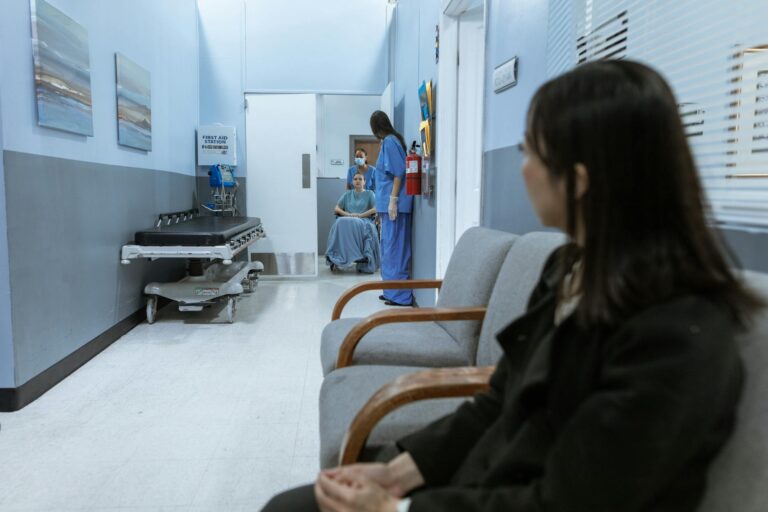
There is a specific weight to the air in a Japanese hospital waiting room when the Guarantee of Payment has not arrived. The staff is polite, bowing deeply, but the paperwork is at a standstill. You are 10,000 miles from your family doctor, and a Canadian claims adjuster is currently combing through your pharmacy records from three months ago to find a reason to say No.
In that moment, your Premium card feels like a plastic lie. You realized too late that you were walking a financial tightrope over a dosage change you thought was irrelevant.
How to Actually Protect Yourself
Option 1: The Medical Questionnaire Policy
Several travel insurance providers — including Sacraw and Medipac — offer policies where you declare your conditions upfront, complete a short medical questionnaire, and receive coverage explicitly including those conditions. Yes, the premium is higher. It is still a fraction of an uncovered hospital bill in Tokyo.
For Canadian travelers, the travel insurance you can get through Sacraw uses precisely this model — you declare your conditions, complete the medical questionnaire at purchase, and receive explicit coverage for those pre-existing conditions. The premium is higher than a credit card benefit, and significantly lower than a single uncovered hospital visit in Tokyo.
Option 2: Time the Purchase to the Stability Window
If you are on a stable medication regimen and no changes are anticipated, purchase your travel insurance the day your stability window is satisfied. If your policy requires 90 days of stability, and your last medication change was January 1, purchase your insurance on or after April 1. Do not buy earlier and risk the window being contaminated by a routine checkup that generates a new referral.
Option 3: Document the Reason for the Change
If your doctor makes a dosage change for a benign reason — reduced hypertension, successful diabetes management — ask them to document in writing that the change reflects improvement, not deterioration. This does not guarantee coverage under strict stability definitions, but it gives your claims adjuster context during review.
Forensic Action Plan
- The 90-Day Audit: Did you have any medication changes or new symptoms in the 3 months before your flight?
- Check the Change Definition: Does your current policy define stable as no change in dosage? (Most do).
- Secure a Rider: If you are not stable by their definition, do not guess. Buy a standalone policy that allows you to declare the condition and cover it explicitly.
- Print your policy summary: Carry a printed copy of your insurance policy and emergency assistance number. Japan’s hospital intake process is faster when you can hand them paper documentation immediately.
Resources
Travel insurance through Sacraw — The Medical Questionnaire model specifically addresses pre-existing condition coverage gaps.