Why Your Credit Card Won’t Save You in Japan (And What Will)
OHIP covers nothing in Japan. Your credit card has gaps. Here's what Canadian travelers actually need — and why I use Sacraw for every Japan trip.
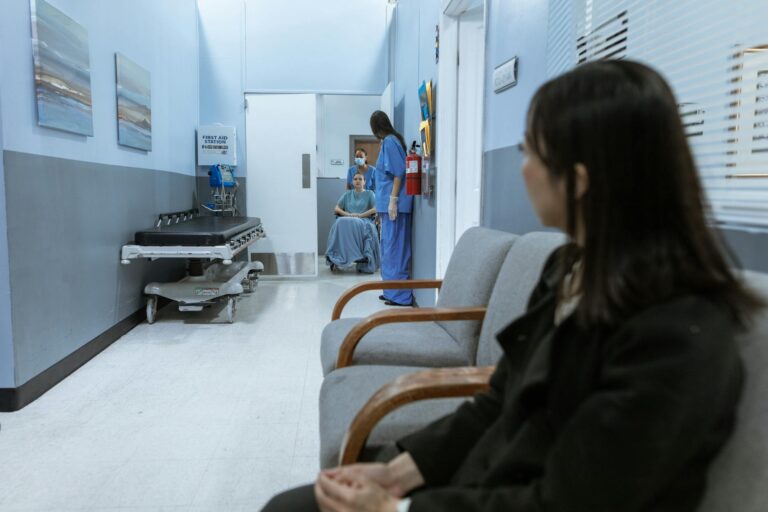
Let me tell you about a scenario that isn’t hypothetical. A Canadian traveler in Osaka — late fifties, fit, no major health history — collapses on the platform at Namba Station. Cardiac event. Ambulance. Japanese Red Cross hospital. Bypass surgery. The total bill: approximately ¥15 million (~CAD $135,000).
Their credit card travel insurance had a $15,000 emergency medical limit. Their OHIP coverage: limited – after a 2020 court ruling reinstated out-of-country OHIP, the cap is roughly $400/day for inpatient hospital services, a fraction of the bill. The gap: over CAD $120,000.
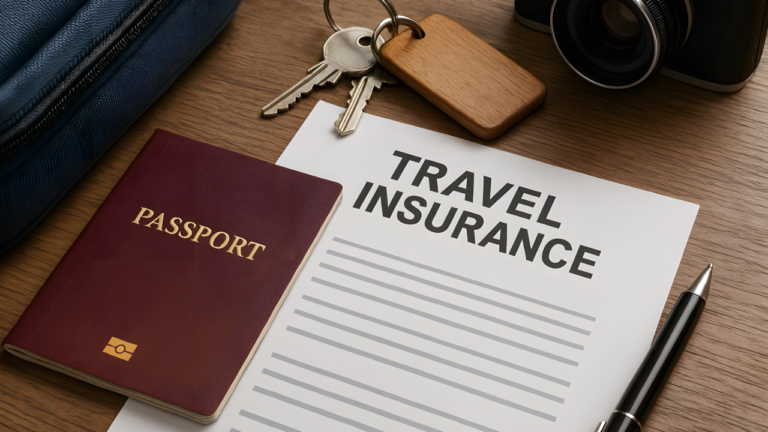
This is the math of traveling to Japan without proper coverage. And it is the single most underestimated risk in every Japan trip planning conversation I have with Canadian travelers. I use Sacraw for my Japan travel insurance. This article explains exactly why.
The Japan medical cost reality for uninsured Canadian tourists:
- Clinic visit (minor illness): ¥10,000–¥20,000 (~CAD $90–$180)
- Emergency room visit: ¥10,000–¥50,000 (~CAD $90–$450)
- After-hours ER fee (Japanese Red Cross): ¥11,000 flat (~CAD $100)
- Appendectomy + hospitalization: ¥500,000–¥1,500,000 (~CAD $4,500–$13,500)
- Bypass surgery (surgery only): ¥4,300,000–¥5,700,000 (~CAD $39,000–$51,000)
- ICU hospitalization per day (uninsured): ¥50,000–¥150,000+ (~CAD $450–$1,350/day)
- Medical evacuation to Canada: USD $120,000–$180,000 (~CAD $165,000–$245,000)
Figures represent 100% out-of-pocket costs for uninsured tourists. Japanese NHI participants pay 30% of these amounts — you are not covered by NHI as a tourist.
The OHIP Problem: Your Provincial Health Insurance Is Functionally Useless in Japan
Ontario tried to scrap out-of-country emergency health coverage in 2020, but a court ruling reinstated it – capped at roughly $400/day for inpatient services. BC, Alberta, and Quebec carry similarly limited out-of-country provisions. The effective coverage you carry from any Canadian province when you land at Narita: a fraction of the bill.
OHIP out-of-country coverage was reinstated by a 2020 court ruling, but it is capped at roughly $400/day for inpatient services – nowhere near a Japanese hospital bill.
Japan’s National Health Insurance covers residents — foreign nationals with valid resident status who have been in Japan 90+ days. Short-term tourists on 90-day visa-exempt entry are explicitly excluded. As a Canadian tourist, you pay 100% of all medical costs at point of service.
The Real Number Nobody Talks About: Medical Evacuation
Emergency treatment costs in Japan are serious. Medical evacuation costs are catastrophic.
If you need repatriation to Canada after a medical event, you need an air ambulance — not a commercial flight. International medical evacuation for intercontinental routes runs USD $100,000–$200,000. Asia-to-North America routes are documented at USD $120,000–$180,000. At current exchange rates: CAD $165,000–$245,000.
Emergency medical insurance available through Sacraw provides up to $10 million CAD per person, per claim. That limit exists because real worst-case scenarios approach it.
The Credit Card Problem: What Your TD, RBC, and Scotiabank Cards Actually Cover
| Coverage | Card vs. Sacraw |
|---|---|
| Emergency medical limit | Card: $15,000–$2,000,000 (card-dependent) · Sacraw: $10,000,000 CAD |
| Coverage age 65+ | Card: Often 3 days (Scotiabank Passport) · Sacraw: Full trip, all ages |
| Pre-existing conditions | Card: 180–365 day stability required · Sacraw: Documented, manageable |
| Medical evacuation | Card: Often excluded or capped · Sacraw: Included up to $10M |
| Trip cancellation | Card: Minimal or absent · Sacraw: Included + CFAR option |
| Purchase requirement | Card: 75%+ of trip on that card · Sacraw: None |
The Scotiabank Passport Visa Infinite — one of Canada’s most popular travel cards — provides 25 days of emergency medical for cardmembers under 65, and 3 days for those 65 and older. Most Japan trips run 10–21 days. If you’re over 65, your Scotiabank coverage may expire before you’ve finished your first week in Kyoto.
A blood pressure medication adjustment three months before departure can void your entire credit card medical coverage under the stability clause. Most people don’t read this clause until after a claim is denied.
The fundamental issue:
Credit card travel insurance is a marketing feature designed to reduce cardholder churn. It is not designed to be your primary coverage for a 14-day international trip to a country where a single hospitalization can exceed CAD $100,000. The risk profile doesn’t match the product.
The Natural Disaster Clause: What the Noto Peninsula Earthquake Teaches Us
On January 1, 2024, a 7.6 magnitude earthquake struck the Noto Peninsula in Ishikawa Prefecture. Travelers with Kanazawa bookings faced a simple question: am I covered to cancel?
The answer depends entirely on when you purchased your insurance. Once an event becomes public knowledge, it’s a “foreseeable event” — excluded from any new policy purchased after that date. Travelers who purchased before January 1, 2024 were generally covered. Those who purchased the same week were not.
Four clauses matter for Japan’s seismic risk:
- Trip Cancellation — Purchase timing is determinative. Buy before the event or you have no coverage for it.
- Trip Interruption — Covers unused costs and additional transport if a disaster forces you to cut the trip short.
- Non-Medical Evacuation — Gets you to a safe location if a disaster makes your area dangerous. This is separate from medical evacuation and must be explicitly confirmed in your policy.
- Cancel For Any Reason (CFAR) — Sacraw’s optional add-on. 50% reimbursement of non-refundable costs for any reason. Must be purchased within 5 days of your initial trip deposit.
Why I Use Sacraw
I have evaluated the Canadian travel insurance market in detail.
The $10M coverage ceiling is appropriate for Japan. A $1 million limit sounds large until you run the Japan evacuation math. $10M means coverage is not a constraint in any realistic scenario.
The policy structure is honest. Single-trip or annual multi-trip emergency medical. Trip cancellation and interruption. The All Inclusive Holiday Package bundles everything cleanly for a standard Japan vacation. The Non-Medical Package covers travelers with existing group benefits who only need cancellation/interruption/baggage coverage.
CFAR is available. For Japan specifically — seismic risk is real, news cycles shift confidence — the ability to recover 50% of non-refundable costs for any reason is meaningful insurance. Day-one decision, 5-day window from first deposit.
Claims are handled in Canada, in Canadian dollars, under Canadian law. Sacraw is underwritten by iA Financial Group. This matters when you’re dealing with a crisis in a foreign country and need a claims process that works with your reality.
Get your Japan travel insurance quote
Covers emergency medical up to $10M CAD, evacuation, trip cancellation, and optional CFAR — all in one policy.
One More Thing: Connectivity During an Emergency
Travel insurance covers the financial exposure of a medical emergency. It doesn’t help you communicate during one. If you’re in Hokkaido and something goes wrong, your ability to reach Sacraw’s emergency line depends on having a working data connection.
Airalo’s Japan eSIM activates before you land, works on your existing phone, no SIM swap. Sort this on the same day as your insurance.
The Pre-Trip Insurance Checklist for Japan
- Confirm your provincial coverage is zero. It is. OHIP and all provincial equivalents are functionally useless outside Canada.
- Pull your credit card certificate of insurance. Note the emergency medical limit, age restrictions, stability clause, and purchase requirement. Compare to the Japan cost table above.
- Decide on CFAR within 5 days of your first trip deposit. Non-refundable ryokan, bullet train passes, packaged tours — if you’re booking these, CFAR is worth the calculation on day one.
- Read the pre-existing conditions clause carefully. Any ongoing health conditions or recent medication changes warrant a conversation with your broker before purchasing.
- Purchase before anything becomes non-refundable. Start your Sacraw quote here.
- Set up your eSIM. Airalo Japan eSIM — activate before departure. Connectivity is infrastructure.
The Bottom Line
Japan is one of the safest countries on earth for travelers. The risk profile that matters for Canadians is not personal safety — it is medical and financial exposure.
Your credit card travel insurance was designed as a marketing feature. Your provincial health plan covers nothing outside Canada. Japan’s public insurance system does not apply to tourists.
What fills that gap is a dedicated policy with limits appropriate to the destination. That is why I use Sacraw. Get your quote before you book anything else.
Prices verified March 2026. Exchange rate: ¥110 = ~$1 CAD. Coverage terms and pricing subject to change — review current policy wording before purchasing.