Japan with Kids: The Logistics Nobody Talks About
Japan works well for families with the right logistics. Here is what nobody warns you about: strollers, jet lag, and station navigation with young kids.
Japan with Kids: The Logistics Nobody Warns You About
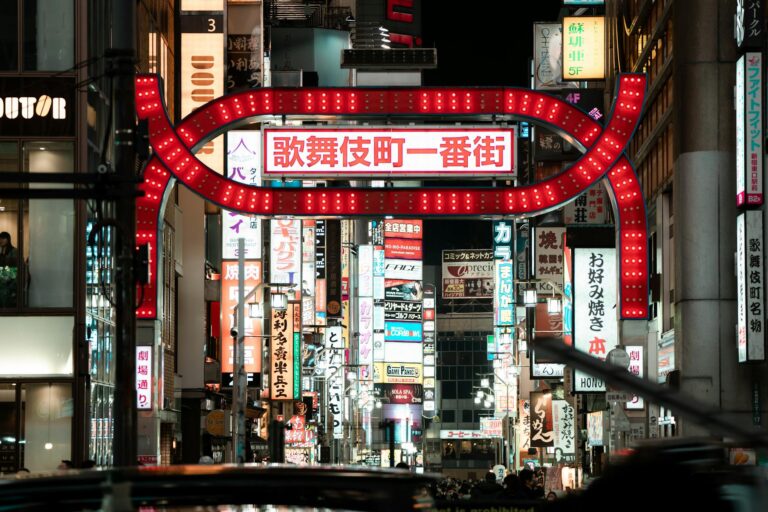
I watched a Canadian couple disintegrate at Shinjuku Station’s south exit on a Wednesday afternoon in November. Two kids under six, a double-wide stroller wedged between the fare gates, three full-size suitcases, and an audience of 400,000 daily commuters flowing around them like water around a boulder. The father was sweating through his jacket.
The mother was Googling “elevator Shinjuku Station” on a phone with no data connection. The toddler had removed both shoes and was screaming into the acoustic canyon of the Odakyu Line concourse.
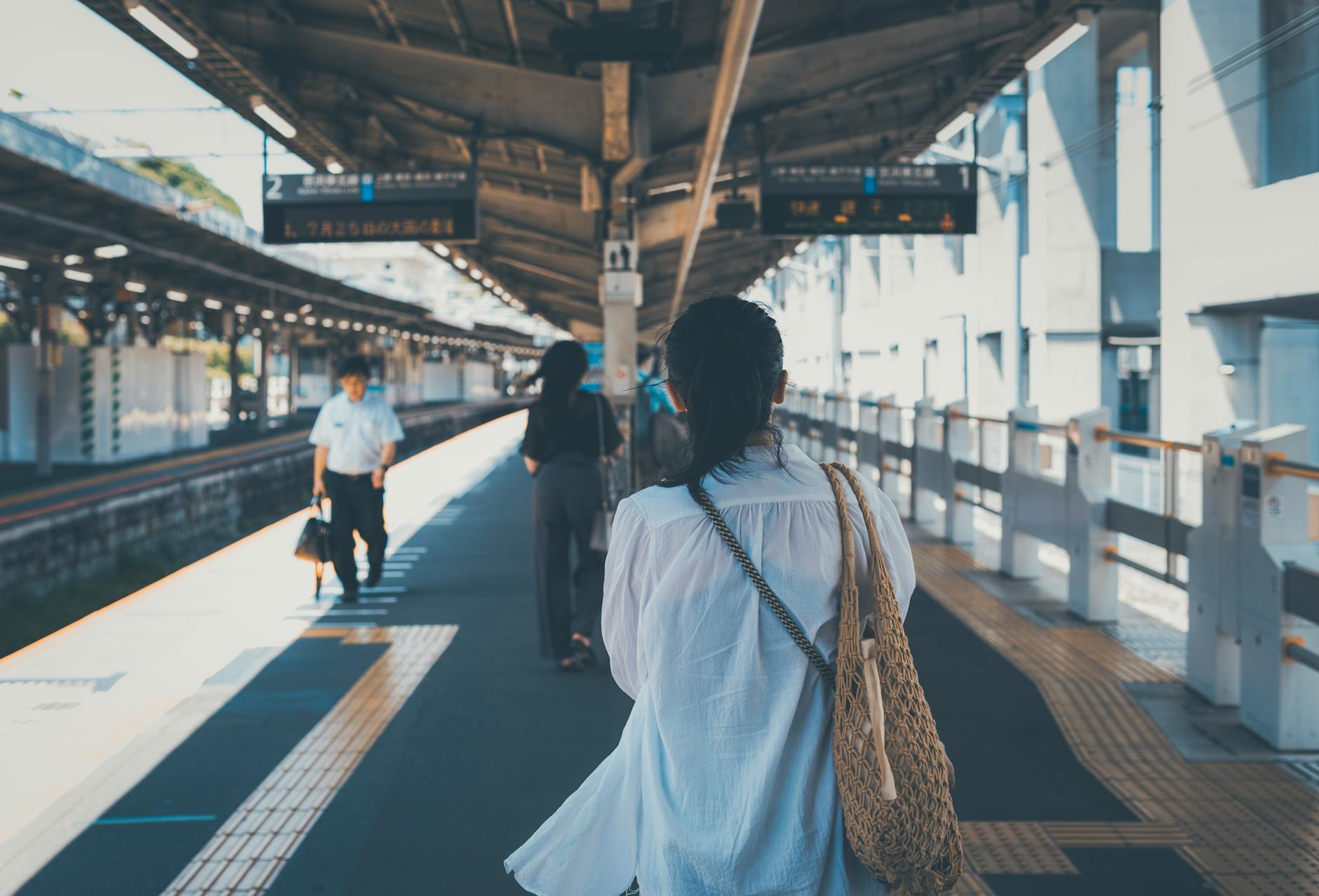
They were victims of a specific, structural mismatch: Japan’s transit infrastructure was engineered for unencumbered adults. Introduce a stroller, a diaper bag, a child who needs to eat now, and every mechanism that makes it seamless for solo travelers becomes a pressure point. What follows is the operational intelligence I wish someone had handed me before the first trip. Not the “Japan is magical” version. The version with platform numbers, yen amounts, and specific protocols.
How Japan’s Transit Fare System Works for Families
The JR Group classification system is ruthlessly precise. The age in your child’s passport dictates the fare tier, full stop.
| Age | Fare Rule | Seat Entitlement |
|---|---|---|
| 12+ | Full adult fare | Full reserved/unreserved |
| 6-11 | 50% of adult fare | Own seat with ticket |
| 1-5 | Free (max 2 per adult; 3rd child half-price) | Lap only unless you buy a child ticket |
| Under 1 | Free, no restrictions | Lap only |
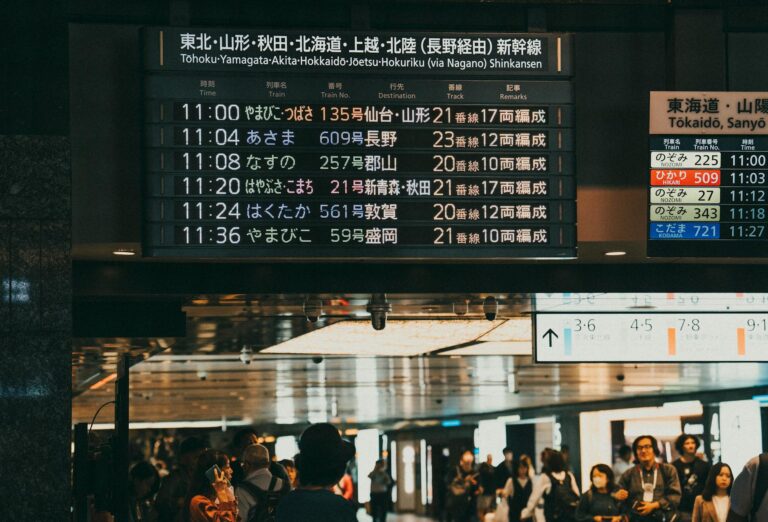
A free-traveling four-year-old on the Tokaido Shinkansen has zero right to a reserved seat. If you want your toddler to sleep horizontally instead of on your lap for two hours, you need a half-price child ticket — approximately ¥6,930 one-way (~$65 CAD). You can pre-purchase Tokyo–Kyoto Shinkansen tickets with reserved seats online — one less queue with kids in tow.
For two kids under six, the “free” children suddenly cost ¥13,860 round trip if you want them to actually sit. On Green Car tickets, only the Green Car surcharge is charged at the full adult rate – the child’s base fare still gets the 50% discount, so the whole ticket is not full price. If a child turns 12 during the trip, the age at ticket purchase dictates the tier. Buy before the birthday.
IC Cards and Rail Passes
Adults can load Suica or PASMO onto their iPhone. Children aged 6-11 cannot — there is no digital child IC card. You need a physical card from a staffed JR counter (JR-EAST Travel Service Centers at Narita and Haneda are easiest). Bring your child’s passport.
The card auto-deducts 50% child fares at every gate, and skipping this means buying individual paper tickets at every transfer point in a system where a Tokyo day involves four to six fare gates. Get it within the first hour of landing. For the full IC card walkthrough, see my Haneda vs. Narita airport breakdown.
After the 2023 price increase, families doing a standard Tokyo-Kyoto-Osaka loop should run the nationwide JR Pass against individual tickets – child passes stay half price, which can tip the math in the pass’s favour for larger families. But regional passes tell a different story — the 2-day Hakone Free Pass from Shinjuku is ¥1,600 per child (about 77% off the ¥7,100 adult price), and the transit itself becomes the activity. The pirate ship, ropeway, and cable car are the itinerary, not just transport links.
I broke down the current economics across all regional passes in my 2026 JR Pass and regional pass analysis.
Strollers and Luggage on the Shinkansen
Any luggage with total linear dimensions between 160-250 cm requires a mandatory advance reservation for a seat with access to the oversized baggage area behind the last row. Show up without that reservation and you pay a ¥1,000 penalty, and the conductor relocates your luggage. Over 250 cm is banned outright.
Strollers get a technical exemption from the oversized classification. But “exempt from penalties” and “physically fits” are different problems. There are no dedicated stroller bays on any Shinkansen car. Your options: fold it into the overhead rack, store it behind the last row of seats (if you reserved those seats), or stand in the vestibule holding a folded stroller while also holding a child.
The move: reserve the last row of seats in any car. Stroller goes behind your seatback, one carry-on beside it. Everything else was shipped ahead yesterday.
Takkyubin Luggage Forwarding: The Single Best Move for Families
If you take one operational change from this entire article, it is this: ship your luggage. Yamato Transport’s Takkyubin service will pick up suitcases from your hotel lobby and deliver them to your next hotel — typically next-day for intercity routes, same-day for intra-city.
| Size | Same Prefecture | Intercity |
|---|---|---|
| Carry-on / small duffel | ¥1,650 | ¥1,650 – ¥2,000 |
| Medium checked bag | ¥2,772 | ¥2,772 – ¥3,000 |
| Standard large suitcase | ¥3,157 | ¥3,157 – ¥3,500 |
Two large suitcases from Tokyo to Kyoto: roughly ¥6,300-¥7,000 (~$60-65 CAD). That transforms a transfer day from a logistics nightmare into a hands-free experience. You board the Shinkansen with a stroller, a backpack, and your children. Everything else arrives at your Kyoto hotel the next morning. Drop-off at hotel front desks, any convenience store, or Yamato counters at major stations.
Pack an overnight bag within your main suitcase for transit days. My luggage forwarding guide covers drop-off protocols, timing windows, and the forms you will fill out.
Stroller Navigation in Japanese Cities
Rush hours (7:30-9:00 AM, 5:30-7:00 PM) on Tokyo and Osaka subways are genuinely impassable with an unfolded stroller. Transport authorities explicitly mandate folding during capacity. Elevator access exists at major stations, but a platform transfer that takes an adult three minutes via escalator routinely takes fifteen to twenty minutes of elevator routing through corridors at platform ends.
Wide side-by-side doubles are functionally unusable. Narrow aisles, tight restaurant doorways, and small hotel elevators demand ultra-compact, one-hand-fold models. Heritage sites are the hardest terrain — Kiyomizudera’s steep uphill approach through crowds, deep gravel at Ginkaku-ji, steep grades at Osaka Castle. For temple days, a carrier wins over a stroller every time.
Where to Base Your Family
Tokyo — Ueno/Asakusa (recommended): Calmer pace, wider streets, flat terrain. Ueno Zoo, the National Museum of Nature and Science, and vast park space create a self-contained family ecosystem. Highest concentration of family apartment hotels (MIMARU has multiple properties). Direct Keisei Line to Narita with no transfers on departure day. Avoid Shinjuku (3.5 million daily passengers, adjacent red-light district) and Shibuya (severe hills) with young kids.
Kyoto — Station area (recommended): Not photogenic, but elevators everywhere, direct Shinkansen access, taxi ranks, and every chain restaurant your kids need at 6 PM. Cuts 30-45 minutes off every morning deployment for day trips. Avoid Gion/Higashiyama with strollers — narrow cobblestone streets with steps.
Osaka — Kita/Umeda (recommended): Modern, wide streets, smooth connections to Kyoto and Kobe. Sleeper pick: Tennoji — budget-friendly, peaceful park, excellent zoo, fraction of Namba’s chaos.
Accommodation: Apartment Hotels Over Business Hotels
Connecting rooms are a statistical anomaly in Japan outside international luxury chains. Business hotels (APA, Toyoko Inn) are designed for solo corporate travelers — 12-18 square metres, no connecting doors, barely floor space for luggage.
The solution: family-focused apartment hotels like MIMARU and &Here, with 35-80 sqm units, kitchenettes, in-room washers, bunk beds, and sliding partitions that let parents stay up while kids sleep in a darkened zone. That partition is the difference between functional jet lag management and a 2 AM hostage situation in a 15-square-metre room.
Co-sleeping is the default assumption — children under 6 stay free sharing an existing bed. Cribs are scarce and often capped at 12-24 months. For toddlers who sleep in cribs at home, ryokan futons on the floor eliminate fall risk entirely.
For ryokan stays with kids, verify the age policy directly (many ban children under 12), request kids’ meals at booking, and seek out kashikiri-buro (private family baths) since diaper-age children are banned from communal onsen. My KidZania Tokyo is a sleeper hit — kids run a miniature city with real brand storefronts while parents sit in the cafe.
Age 8+ wanting Super Nintendo World, USJ is the move, but budget for Express Passes (sell out weeks ahead) and expect per-person costs exceeding ¥15,000 (~$140 CAD). Both parks have Rider Swap programs so parents can take turns on thrill rides without re-queuing.
| Factor | Tokyo Disney Resort | Universal Studios Japan |
|---|---|---|
| Best ages | Toddlers through 8 | 7+ through teens |
| Line-skip | Premier Access: buy day-of via app | Express Pass: buy 60+ days ahead |
| Baby facilities | Dedicated Baby Centers with nursing, formula prep, microwaves | Adequate but below Disney’s standard |
Keep them engaged: Wandering shrines gets old fast for kids. Pre-book hands-on activities like a samurai sword lesson or kyudo archery class to give them a structured, physical outlet that still counts as cultural education.
Feeding Kids in Japan
Most Michelin-starred sushi counters ban children outright. For stress-free sushi, conveyor belt chains (kaiten-sushi) offer tablet ordering and an atmosphere where noise is normal. When specialized dining fails, the famiresu (family restaurant) is your rescue — Saizeriya, Gusto, Royal Host, Bikkuri Donkey.
High chairs, kids’ menus, and the legendary Drink Bar (unlimited self-serve beverages for ¥200-400) that functions as a pacification device. A family of four eats well for ¥3,000-4,000 (~$28-37 CAD).
Do not pack two weeks of diapers. Large drugstores (Matsumoto Kiyoshi, Welcia) are your source — convenience stores only stock emergency two-packs. Note: larger Japanese diapers are almost exclusively pull-up pants, not tape-style. Baby food is at drugstores and counterintuitively the toy floors of Bic Camera and Yodobashi Camera. Use a camera translation app for allergens.
Medical Care and Emergency Protocols
Life-threatening emergency: Call 119. Have this phrase saved: 救急車を呼んでください (“Please call an ambulance”). Show it to any bystander.
Pediatric issues after hours: Dial #8000 for the pediatric consultation hotline. English support varies by prefecture.
JNTO Visitor Hotline: 050-3816-2787 (24/7, multilingual) — they locate nearby hospitals, translate symptoms, and coordinate crisis support.
Japan’s system is specialist-driven: a fever goes to a shonika (pediatrician), an ear infection to a jibi-inkoka (ENT). Smaller clinics are cash-only. Uninsured pediatric visits run ¥8,000-¥15,000 (~$75-140 CAD) before tests. The rule that will blindside you: many hospitals prohibit parents from staying overnight with a hospitalized child. Hospitals that permit it (St. Luke’s, Aiiku in Tokyo) typically require a paid private room.
Travel Insurance: Non-Negotiable for Families
A child’s hospitalization without insurance can exceed ¥500,000 (~$4,600 CAD) in 48 hours. Provincial health coverage does not apply abroad. Credit card policies routinely exclude dependents under 2 or cap pediatric coverage at amounts that would not cover a single night in a Tokyo hospital.
For Canadian families, I carry coverage through Sacraw. Their policies cover dependents at all ages, provide trip interruption coverage for medical extensions, and support direct billing at hospitals — the difference between focusing on your child’s recovery and scrambling for an ATM at 3 AM. I covered the full structural analysis in my Canada-Japan travel insurance guide.
Connectivity: eSIM Before You Land
That couple at Shinjuku Station had turned off $16/day roaming to save money and were stranded without navigation. With children, you need working Google Maps, translation apps, and the ability to look up a pediatric clinic at any moment. This is operational necessity.
I use Airalo for eSIM data. Install before leaving Canada, activate on landing, data immediately — no SIM swap, no airport counter. My Japan eSIM guide for Canadians covers specific plans and configuration.
When to Travel
| Period | Dates | What to Know |
|---|---|---|
| Golden Week | Apr 29 – May 5 | Worst domestic peak. Hotels 2-3x price. Trains at 200% capacity. Avoid. Book ahead: 3-4 months |
| Obon | Aug 13-16 | Second-worst peak plus 35°C heat. Stroller + heat + crowds = brutal. Book ahead: 2-3 months |
| Cherry Blossom | Late Mar – mid Apr | Foreign tourist peak but parks are extraordinary for families. Book ahead: 3-6 months |
| Autumn Foliage | Mid Nov – early Dec | Mild weather ideal for stroller days. Temples at capacity. Book ahead: 2-4 months |
| Jan – mid March | After Jan 4 | Lowest density, best prices, excellent for lower-stress family logistics. Book ahead: 1-2 months |
The shoulder seasons — January through March (excluding New Year) and late May through June — offer the best intersection of manageable prices, lower crowds, and tolerable weather for families.
The Family Trip Execution Checklist
4-6 months before:
- Book accommodation. Apartment hotels in key cities, plus one ryokan with confirmed private bath and kids’ meals.
- Secure travel insurance. Canadian families: get a Sacraw quote. Verify all dependents covered, pediatric limits, and direct billing.
- Book theme park tickets. USJ Express Passes sell out 60 days ahead.
2-4 weeks before:
- Install eSIM. Set up Airalo or Sakura Mobile so data activates on landing.
- Purchase regional rail passes and transit tickets. Tokyo Subway tickets can also be pre-purchased for airport pickup.
- Map Takkyubin shipping days. Plan luggage forwarding for every intercity train transfer. Pack a labelled overnight bag within your suitcase.
On arrival:
- Get child IC cards. JR-EAST counter at Narita or Haneda. Bring passports. Allow 15-20 minutes.
- First drugstore run. Diapers and baby food within 24 hours. Matsumoto Kiyoshi or Welcia near your hotel.
- Save emergency numbers. 119 (ambulance), #8000 (pediatric hotline), 050-3816-2787 (JNTO). Plus 救急車を呼んでください saved in a note.
Japan with kids is not harder than Japan without kids. It is a different operational problem entirely. The infrastructure rewards meticulous preparation and punishes improvisation with compounding friction. The families who have the smoothest trips are the ones who understood the system before they entered it.