Toronto to Tokyo, First Time: The 12-Night Plan I Sent a Friend
The first-time Japan itinerary I'd actually send a friend leaving Toronto. Haneda vs Narita, the JR Pass math (don't buy it), 12 nights split 6 / 2 / 4 across Tokyo, Hakone, Kyoto, real hotels on real platforms, and the OHIP gap that wrecks Canadians. Forensic, not generic.
A friend asked me to plan their first trip to Japan last week. Toronto resident, partner in tow, twelve nights, four thousand Canadian dollars excluding flights, no Japanese language, no prior context. The kind of brief that gets you a generic “Tokyo–Kyoto–Osaka, here’s the JR Pass, have fun” answer from most of the internet, and a bewildering stack of conflicting advice from the rest.
What follows is the plan I actually sent them. It’s the corridor I run myself, compressed into a first-timer-shaped envelope. The math on the JR Pass is the math, not the marketing. The hotel shortlist is real properties on real platforms, not affiliate-bait blog rankings. The day-by-day rhythm is built around what jet lag actually does to a body that just spent fourteen hours in the back of an Air Canada cabin — not what looks good on a Pinterest itinerary.
The trip is October 15–28, 2026. Twelve nights on the ground, two nights inside aluminum tubes. Autumn shoulder season, which is the single most defensible time for a first visit: the maples have turned by mid-November in Kyoto, the rains of June are six months gone, the Golden Week and New Year crush both miss you, and the air is the kind of crisp that makes Tokyo’s neon look like it was built for camera sensors.
If you’re reading this and your dates aren’t October — most of this still works. The sequencing changes for cherry blossom (book ryokan five months out, not three) and the shoulders compress for summer (book everything earlier, expect typhoons in September). The architecture holds.
Toronto Pearson is the only question that isn’t really a question
YYZ to Tokyo is the simple half. Air Canada flies the corridor direct to both Haneda and Narita on the 787-9, fourteen hours outbound, twelve and a half inbound on the jet stream. ANA and JAL are technically present on the route via codeshare and one-stop routings through Vancouver, Chicago, or San Francisco — and the cabins on those metal-bird carriers genuinely are nicer — but you’re trading a clean direct flight for a US connection, US customs friction, and a missed-connection risk that compounds in October when the Pacific weather gets twitchy.
For a first-timer, the calculus is almost always: take the direct. The exception is if the one-stop fare on a partner carrier is more than $300 CAD per person cheaper than the Air Canada direct on the same dates, which happens rarely in October but more often in February or May.
Fare bands I’m watching as of May 2026, for an October departure window booked three to five months out:
| Cabin | Direct (Air Canada YYZ → HND/NRT) | One-stop (ANA/JAL/UA/DL) |
|---|---|---|
| Economy | CAD $1,548 – $1,827 | CAD $1,410 – $2,589 |
| Premium Economy | CAD $2,800 – $3,400 | CAD $2,650 – $3,500 |
| Business | CAD $4,263 – $6,500+ | CAD $4,100 – $7,200 |
Mid-week departures sit at the lower end of every band. Tuesday outbound, Wednesday inbound is the canonical optimization. If you’re hunting business class on Aeroplan points, Star Alliance availability opens at 355 days and gets aggressive again inside 14 days — almost nothing in between.
The actual question: Haneda or Narita
This is where most first-timer plans fall apart in the first six hours. Tokyo has two international airports. They are not interchangeable.
Haneda (HND) is twenty kilometers from central Tokyo, sitting in Ota Ward inside the metropolitan footprint. Narita (NRT) is seventy kilometers east of central Tokyo, in Chiba Prefecture. After fourteen hours of cabin air and a brutal time-zone inversion, those fifty extra kilometers are the difference between collapsing into your hotel by 6 PM and dragging luggage onto a Skyliner at 7:30 PM with the wrong adapter and the wrong yen.
I wrote the full transit comparison in the Narita vs Haneda piece, which I’d read alongside this one if you’ve never landed in Tokyo before. The short version:
| Airport | Method | Door-to-Hotel | Fare |
|---|---|---|---|
| HND | Tokyo Monorail + JR | 35–45 min | ¥690 / ~$6 CAD |
| HND | Keikyu + Toei Asakusa Line | 35–50 min | ¥400–550 / ~$4 CAD |
| HND | Limousine Bus | 45–70 min | ¥1,000–1,500 / $9–14 CAD |
| NRT | Keisei Skyliner | 60–75 min (then transfer) | ¥2,580 / ~$23 CAD |
| NRT | JR Narita Express (N’EX) | 75–100 min | ¥3,070+ / ~$28+ CAD |
| NRT | Limousine Bus | 100–140 min | ¥3,200–3,600 / $29–32 CAD |
Take Haneda unless the fare is more than CAD $150 per person cheaper into Narita. That’s the threshold where the financial saving offsets the temporal exhaustion of an extra hour-plus in Chiba. Below that, Haneda wins. The Limousine Bus from Haneda to Shinjuku — an excellent first-arrival option if your hotel is on the route — is bookable in advance through Rakuten’s Airport Limousine ticket page, which lets you skip the on-site queue.
The 12-night architecture: why 6 / 2 / 4
The instinct on a first trip is to pack in as many cities as possible. Tokyo, Kyoto, Osaka, Hiroshima, Nara, Mt. Fuji, Hakone, “maybe a quick night in Kanazawa.” This is how people end up living out of a rolling suitcase for twelve days and remembering nothing but train platforms.
Twelve nights divides cleanly into three regions. Two regions and you waste a fourth or fifth night on trains. Four regions and every transit day eats half a day on each end of a check-in.
The split I’d send a first-timer: 6 Tokyo / 2 Hakone / 4 Kyoto.
Tokyo gets the larger anchor because it absorbs jet lag better than anywhere else in Japan — the city is a 24-hour diversion machine, you can be functional at 4 AM in Shinjuku, and the density of cheap food, transit, and recovery options compresses the first 48 hours of zombie-walking into something productive. The 6 nights split into 4 on arrival (acclimatize, urban exploration, Asakusa/Akihabara/teamLab) and 2 on the back end (Ginza dining, last shopping, hotel near the airport for a clean departure).
Hakone in the middle is the deceleration. Two nights at a ryokan with onsen and kaiseki, ninety minutes from Tokyo on the Shinkansen via Odawara, and on a clear October morning you’ll see Mt. Fuji from the cable car over Owakudani. Two nights is the right length: one to arrive and soak, one to do the loop. Three nights is too many unless you actively want to be off-grid.
Kyoto gets four nights because the city’s transit is bus-dependent and slow, and you cannot do Fushimi Inari, Arashiyama, and the Higashiyama temple cluster in less than three full days without spending half your time stuck on the 100-bus. A half-day to Nara is built in.
Osaka is excluded as an overnight. Its food scene is genuinely world-class but its skyline overlaps too heavily with Tokyo for a first visit, and you can run a 15-minute Shinkansen day trip from Kyoto if you want a Dotonbori dinner. Hiroshima requires an extra two nights minimum to do justice and breaks the pacing of a sub-14-night trip. Nikko is the also-ran to Hakone, but Hakone wins on ryokan inventory.
If your group prefers fewer hotel changes, the backup is 7 Tokyo / 5 Kyoto, with the ryokan night folded into Kyoto and Mt. Fuji relegated to a weather-dependent day trip to Kawaguchiko from Tokyo. Cleaner luggage logistics, weaker rural reset.
Where I’d actually book in Tokyo
The accommodation question in Tokyo collapses to one variable: how close are you to a Yamanote Line station. The Yamanote is the loop train that makes the city navigable; everything else either feeds into it or you wait. If your hotel is more than 8 minutes’ walk from a Yamanote stop, you will lose 20–40 minutes a day to transit friction across the trip.
Four properties I’d shortlist for a mid-range couple, October 2026 pricing observed on Rakuten Travel. All real, all bookable — confirm current availability when you go to lock in. Rakuten Travel skews to a denser long-tail of Japanese-domestic properties that don’t show up on Western OTAs.
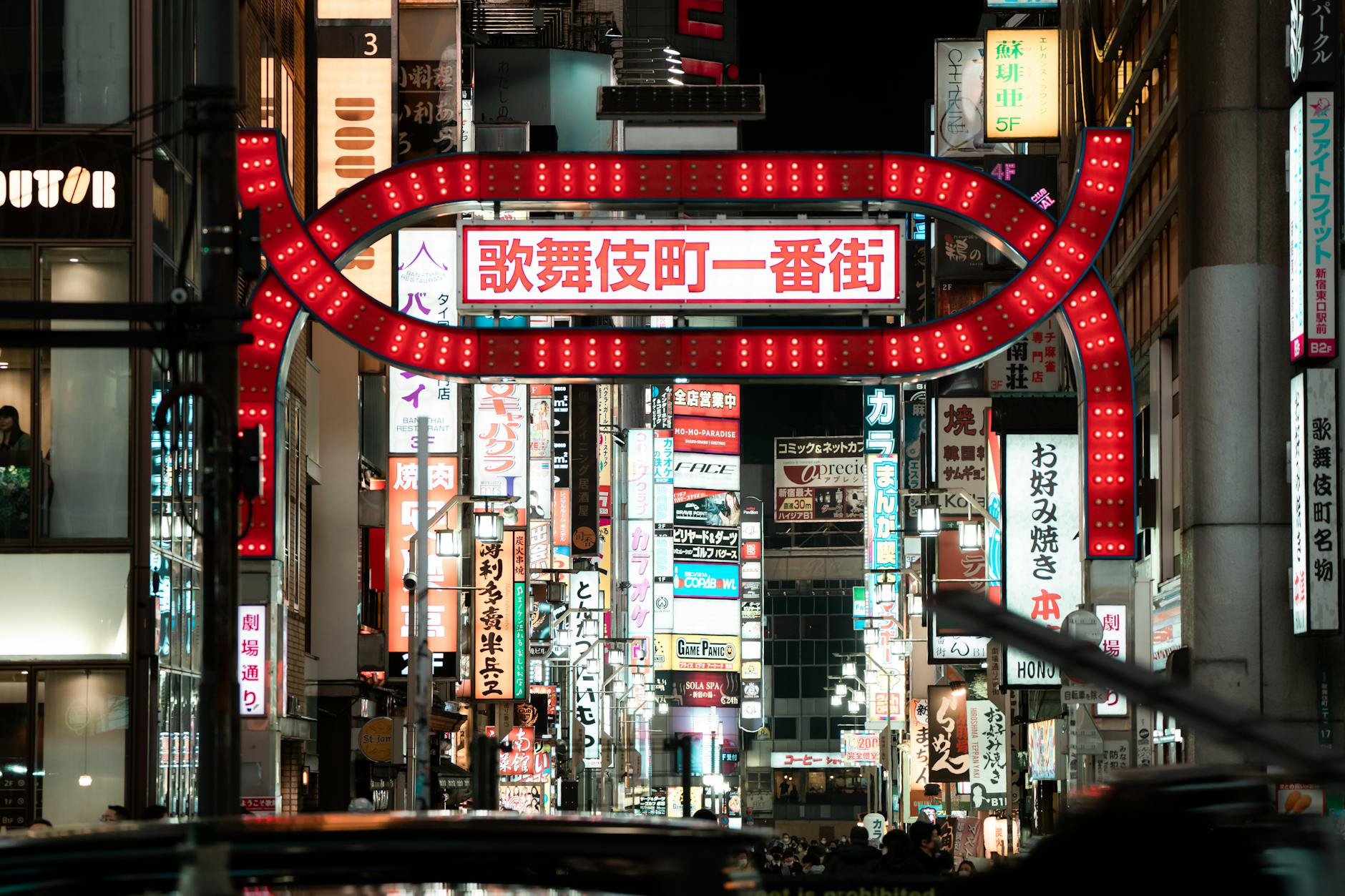
Hotel Gracery Shinjuku — 1-19-1 Kabukicho, 5 minutes from JR Shinjuku East Exit. ¥19,000–24,000/night (~CAD $171–216). The Godzilla head on the terrace is the meme; the actual reason to book it is that you’re 90 seconds from a Yamanote stop, the rooms are larger than the Tokyo norm, and the breakfast is well-priced. Kabukicho is louder than Shinjuku South but less seedy than its reputation suggests.
Sotetsu Fresa Inn Tokyo-Tamachi — 4 minutes from JR Tamachi. ¥14,000–18,000/night (~CAD $126–162). The workhorse of Tokyo business hotels. Rooms are 13 square meters, beds are firm, but the cleanliness is religious and you’re on the Yamanote with a direct Keikyu line to Haneda for departure day. I covered the business-hotel category in depth in the Toyoko Inn / APA / Dormy Inn breakdown — Sotetsu Fresa is the same value tier with slightly nicer interiors.
Toggle Hotel Suidobashi — 3 minutes from JR Suidobashi. ¥22,000–28,000/night (~CAD $198–252). The boutique pick. Color-blocked rooms, automated tablet check-in, and a location on the Chuo-Sobu line that bypasses the Shinjuku/Shibuya churn. Better for travelers who want a design-forward base without paying Aman money.
Onsen Ryokan Yuen Shinjuku — 8 minutes from Shinjuku-Gyoenmae. ¥25,000–35,000/night (~CAD $225–315). Not a true ryokan — it’s a modern hotel with a rooftop onsen sourced from Hakone hot spring water. If you want a taste of the soak experience but are skipping the Hakone overnight, this is the workaround. Western beds, urban location, no kaiseki commitment.
Avoid the Roppongi luxury cluster (Park Hyatt, Andaz, Aman) on a first trip — the lobbies are gorgeous but you’re spending 40% of your budget on the bed and 90 seconds further from any train. Save it for trip three.
Slotting in culture: Balance the neon lights with a guided historical tour through the city’s quieter side. Walking through the Edo-era Hamarikyu Garden and the nostalgic neighborhood of Yanaka provides essential context for Japan’s complex history.
The Hakone night: pick one ryokan
The Hakone leg is where the trip slows down and where the splurge night lives. The math here is different from Tokyo: rates are 3–5× higher per night, but they include kaiseki dinner and a traditional breakfast — figure two meals at restaurant prices factored into the room rate. The “expensive” Hakone night is often within 30% of a Tokyo hotel night plus two restaurant dinners.
Three properties across price tiers, all bookable on Rakuten Travel:
Hakone Pax Yoshino — Hakone-Yumoto, 12 minutes from Hakone-Yumoto Station (or a free shuttle). ¥35,000–45,000/night for two with half-board (~CAD $315–405). Entry-level authentic ryokan. River views, in-room cypress baths in the upper categories, kaiseki dinner served in private dining rooms. Books out for autumn foliage 8–10 weeks ahead.
Hakone Yumoto Onsen Tenseien — Hakone-Yumoto, 15 minutes from the station. ¥40,000–50,000/night (~CAD $360–450) half-board. The mid-tier option. The selling point is the rooftop open-air bath with mountain views and the on-site garden with a small shrine. Larger than Pax Yoshino, slightly less intimate.
Hakone Kowakien Tenyu — Kowakudani, shuttle from Kowakidani Station on the Hakone Tozan Railway. ¥60,000–75,000/night (~CAD $540–675) half-board. The splurge. Every room has a private open-air ceramic bath on the balcony staring into the forest. If your $4,000 CAD budget allows a single $675 night, this is the night to spend it on.
Cancellation windows on all three are 14–21 days because of kaiseki ingredient sourcing — book the ryokan immediately after the flight, not last.
Where I’d actually book in Kyoto
Kyoto’s hotel geography is the inverse of Tokyo’s. The relevant axis isn’t the Yamanote Line — it’s the intersection of Karasuma Subway and Shijo Street. Stay within a 10-minute walk of Shijo Station and you have direct subway access to the city’s two key lines, walking access to Nishiki Market and Pontocho, and a 12-minute taxi ride to most temple clusters. Stay outside that radius and you’re hostage to the bus network, which is congested by 9 AM and openly hostile to suitcases.
Four picks across tiers:
The Royal Park Hotel Kyoto Shijo — Shimogyo Ward, 2 minutes from Shijo subway. ¥16,000–22,000/night (~CAD $144–198). The logistical workhorse. Reliable service, modern rooms, walking distance to Nishiki Market. This is the boring correct answer for a first Kyoto stay.
Hotel Wing International Kyoto-Shijo Karasuma — Shimogyo Ward, 5 minutes from Shijo. ¥15,000–20,000/night (~CAD $135–180). The budget-friendly modern Japanese chain — same logistical position as Royal Park, slightly tighter rooms, better breakfast.
Candeo Hotels Kyoto Karasuma Rokkaku — Nakagyo Ward, 3 minutes from Karasuma Oike. ¥24,000–32,000/night (~CAD $216–288). The character pick. Lobby integrated into a preserved century-old machiya townhouse, rooftop public bath, and a slightly quieter location north of the Shijo crush. My personal preference if I’m not skipping straight to a ryokan.
Gion Ryokan Karaku — Gion district, 12 minutes from Gion-Shijo. ¥35,000–45,000/night (~CAD $315–405). If you skipped the Hakone overnight in the backup itinerary, this is where you do the ryokan night instead. Steps from Yasaka Shrine, tatami flooring, in the historic geisha district. Stricter 14-day cancellation.
Same booking instinct — start at Rakuten Travel for the long-tail of Japanese inventory. Cross-check on the property’s own site before locking — sometimes direct beats the OTA by 5–8% on autumn dates.
The JR Pass math (and when it’s worth it)
In October 2023, Japan Rail raised the price of the foreign-tourist JR Pass by roughly 70% — the 7-day Ordinary now costs ¥50,000 (~CAD $450). The 14-day is ¥80,000, the 21-day is ¥100,000. At the old prices, the pass was the default purchase for any first-timer. At the new prices, a tight Tokyo-Kyoto-Hakone itinerary often comes out cheaper on individual tickets, so run the numbers before you buy.
Do the math on this exact trip. October 2026 Shinkansen and local fares:
| Leg | Train | Reserved |
|---|---|---|
| Tokyo → Odawara | Hikari Shinkansen | ¥3,280 |
| Odawara → Kyoto | Hikari Shinkansen | ¥10,949 |
| Kyoto → Tokyo | Nozomi Shinkansen | ¥14,170 |
| Local JR (Yamanote, Nara day) | Various | ~¥3,500 |
| Total per person | ¥31,899 (~CAD $287) |
Pay-as-you-go saves CAD $163 per person versus the 7-day JR Pass. Plus you can ride the Nozomi — the fastest Shinkansen class — which the standard JR Pass excludes. Pass holders who accidentally board a Nozomi get hit with a punitive ¥9,920 supplemental fee.
Where the JR Pass does still make sense: a wider itinerary that adds Hiroshima or Hokkaido, or any plan involving a third or fourth Shinkansen leg beyond Tokyo–Kyoto. For this trip, skip it. Buy individual tickets via the official SmartEX app (English available) starting 30 days before each leg.
If you do end up doing the full transit math and the pass works for your route, you can buy it through JR Pass directly. Same operation also runs the Pocket WiFi rental, which I’ll get to in the connectivity section.
For the Hakone loop specifically, the Hakone Free Pass from Odawara (¥6,100, 2 days) covers the Tozan Railway, cable car, ropeway, pirate ship across Lake Ashi, and local buses. Buy it at the Odawara station Odakyu counter on arrival.
Connectivity: eSIM, not pocket WiFi
For a first-timer in 2026, the eSIM is the right answer. Airalo’s Japan eSIM downloads to your phone before you leave Toronto, activates the moment you disable airplane mode at HND, and sells a 10GB / 30-day package for around CAD $25 with no roaming gymnastics. iPhone XS or newer, any post-2020 Pixel, and most recent Samsungs all support it.
I covered the full breakdown in the SIM vs eSIM vs Pocket WiFi piece. The short version: pocket WiFi made sense in 2018 when devices were locked and eSIM was experimental. In 2026 you’re paying ~CAD $90+ for the pocket WiFi rental, queueing at the airport to collect a router, carrying a battery to keep it alive across 12-hour touring days, and remembering to mail it back before departure — all to solve a problem the eSIM solves for $25 with zero hardware.
The exception: if you’re traveling with three or more devices and don’t want to install eSIMs on all of them, the pocket WiFi router becomes economical again. JR Pass’s Pocket WiFi rental is the option I’d use in that case.
IC card: do this on day one
The Suica or Pasmo IC card is a tap-and-go prepaid card that pays for every subway, every bus, every train, every convenience-store snack, and most vending machines in Japan. The 2023 chip shortage that suspended sales of unregistered cards has been resolved as of March 2025 — physical Suica cards are back at JR East ticket machines in Haneda and Narita.
If you have an iPhone, skip the physical card entirely. Add a digital Suica directly to Apple Wallet before you leave Toronto, fund it with a Mastercard or Amex (Visa occasionally hits a fraud-prevention block on Japanese top-ups), and tap your phone at the gate. Android users with Google Pay can do the equivalent on supported devices, though the experience is slightly clunkier. Tokyo also has the tourist-specific Welcome Suica available at airport service centers — valid 28 days, no deposit, comes in a nice red sleeve.
For Tokyo specifically, the Tokyo Metro 24/48/72-hour subway pass can pencil out cheaper than IC card pay-as-you-go on heavy-touring days — math depends on how many rides you’re doing. Easy to bookend with IC card use elsewhere.
Money: how cash actually works in 2026
Japan is digitizing fast — contactless tap-and-go is rolling out at subway turnstiles in Tokyo through 2026, and most chain restaurants and department stores accept Visa/Mastercard cleanly. But the country is still meaningfully cash-heavy, especially in Kyoto temples, small izakayas, ramen ticket machines, and anything older than a decade. I covered the full payment landscape in the cash-vs-card breakdown.
The two rules:
Don’t exchange CAD to JPY in Canada or at the airport. The spread is 4–8% worse than what you’ll get from a Japanese ATM. Even the seemingly-good airport exchange counters are a financial trap.
Use 7-Eleven (7-Bank) ATMs in Japan. They’re 24/7, English-menu, accept every Canadian debit card I’ve tested, and pull at near-interbank rate with minimal fees. Withdrawal cap is ¥100,000 per transaction. Take out ¥30,000–50,000 on arrival at the Haneda 7-Eleven, repeat as needed.
Travel insurance: the OHIP gap that wrecks Canadians
This is the single most expensive thing Canadians ignore. Effective January 1, 2020, the Ontario government cancelled the Out-of-Country Travellers Program under OHIP. Ontario residents have zero provincial coverage for emergency medical expenses abroad. Even before the cancellation, the program covered $400 CAD per day for inpatient care — meaningless against a Japanese hospital bill that runs into the tens of thousands for a single ICU night.
If your trip goes sideways — a slip in a Hakone bath, a heart attack in Akihabara, a luggage handler who misplaces a critical medication — you are personally on the hook for ambulance, ICU, surgery, and repatriation. Premium credit cards (Visa Infinite Privilege, Amex Platinum) include some travel medical coverage, but it’s frequently insufficient and the exclusions matter. Read your card’s fine print — the age cap, the trip-length cap, and the pre-existing condition definition will all matter.
If your card doesn’t cover or you want supplemental coverage, this is one of the few areas where I have a financial relationship to disclose: I’m licensed under Sacraw Financial and write travel medical policies for Canadian residents heading to Japan. Day-rate quotes for a healthy couple aged 30–50 land in the CAD $4–8 per person per day range for Japan-grade coverage. Bind it before you leave Pearson.
The 12-day rhythm
One bullet per day. Don’t over-engineer the sub-hour scheduling — leave room for the wandering that’s actually the point.
- Day 1 — Arrival. Land at HND, Limousine Bus to Shinjuku hotel, Suica top-up, ¥30,000 from the 7-Eleven ATM, simple ramen at street level, force-walk Shinjuku until 9 PM. Do not nap.
- Day 2 — West Tokyo. Morning at Shinjuku Gyoen (autumn maples just starting), Harajuku/Takeshita-dori at noon, Yoyogi Park if the weather holds, Shibuya Crossing at sunset. Eat at Hakata Ippudo or wherever the line is moving.
- Day 3 — East Tokyo. Early Senso-ji at Asakusa (arrive 7 AM, the temple is silent), Ueno Park afternoon, Akihabara for the electronics crawl. Late dinner at a Yurakucho gado-shita izakaya under the JR tracks.
- Day 4 — Bay & Art. teamLab Planets in Toyosu (book the morning slot — afternoons sell out), then walk to Tsukiji Outer Market for late lunch. Optional Shibuya Sky in the evening.
- Day 5 — Transit to Hakone. Shinkansen Tokyo→Odawara mid-morning, Hakone Tozan Railway to Hakone-Yumoto, into the ryokan by 3 PM. Onsen, kaiseki, sleep early.
- Day 6 — Hakone loop. Hakone Free Pass route: pirate ship across Lake Ashi, Owakudani ropeway over the volcanic valley, Hakone Open-Air Museum if Mt. Fuji is hiding behind clouds. Second ryokan night.
- Day 7 — Transit to Kyoto. Hakone-Yumoto down to Odawara, Hikari Shinkansen to Kyoto (about 2h20). Check in to Karasuma/Shijo hotel. Evening walk through Pontocho Alley under lanterns.
- Day 8 — Higashiyama. Kiyomizu-dera at 6:30 AM (this is non-negotiable — by 9 AM the steps are unwalkable), Sannenzaka and Ninenzaka preserved streets, Yasaka Shrine, Gion at dusk for the chance of seeing geiko en route to ozashiki appointments.
- Day 9 — Arashiyama & Kinkaku-ji. Arashiyama Bamboo Grove at 7 AM, Tenryu-ji temple, lunch at the riverside, taxi or bus across town to Kinkaku-ji (the Golden Pavilion) in afternoon light.
- Day 10 — Fushimi Inari & Nara. Fushimi Inari at 7 AM (climb to the bamboo midpoint at minimum), back to Kyoto Station, JR Nara Line to Nara for the deer and Todai-ji’s Great Buddha. Back to Kyoto for dinner.
- Day 11 — Return to Tokyo. Nozomi Shinkansen Kyoto→Tokyo (2h15), check in to the Tamachi/Shibaura-area hotel for the easy Haneda departure tomorrow. Final dinner in Ginza.
- Day 12 — Departure. Souvenir hunt at Don Quijote or a depachika basement food hall, Keikyu line directly to Haneda from Tamachi.
Booking sequence and lead times
Japan’s tourism infrastructure is rigid about release windows. Miss them and you’re not on the trip you planned.
- Flights — 3 to 5 months out (May–July 2026). Watch the Air Canada direct fare; one-stop fares need to be at least CAD $300 cheaper to justify the connection.
- Ryokan in Hakone — 3 months out (mid-July). Autumn foliage demand peaks October 20 onward, and the better ryokan are inventory-constrained at under 30 rooms. Lock the Hakone night second, immediately after flights.
- Tokyo and Kyoto hotels — 6 to 8 weeks out (late August).
- Travel insurance — 6 weeks out. Bind once flights are non-refundable. Earlier coverage activates the trip-cancellation rider.
- teamLab Planets — 4 to 6 weeks out. Dynamic pricing, earlier is cheaper.
- Ghibli Museum tickets — September 10, 10:00 AM JST. Tickets for October release on the 10th of the prior month. Be on the Lawson Ticket site at the exact minute, expect a queue.
- Shibuya Sky — 14 days out, midnight JST. Sunset slots evaporate in minutes. Ground-floor 7 PM slots are easier.
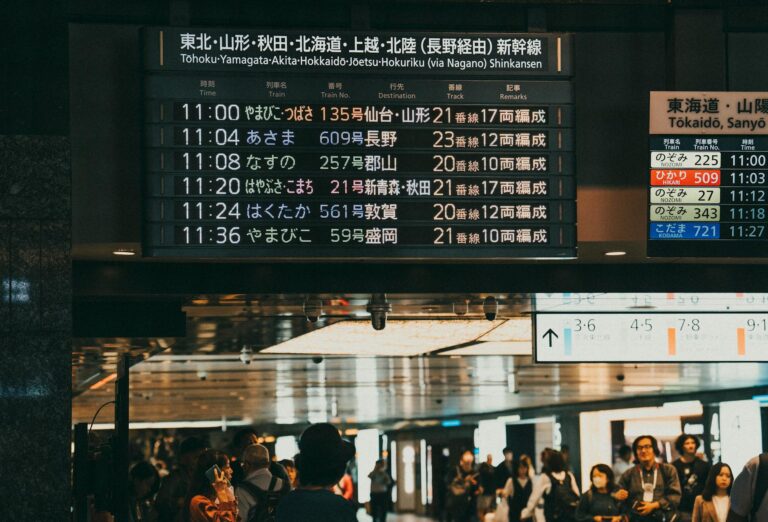
- Shinkansen seats — 30 days out. Use the SmartEX app. Book the oversized-luggage seat reservation if you have a 28-inch suitcase or larger — it’s mandatory now on Nozomi/Hikari.
- Airalo eSIM — 1 to 2 weeks out. Install on the device but don’t activate until you’re at Haneda.
First-timer mistakes I’d warn a friend about
- Buying the JR Pass on autopilot. Run the math on your specific route before purchasing – for a tight Tokyo-Kyoto-Hakone loop, individual tickets are often cheaper, while a wider route can make the pass the better buy.
- Riding the Yamanote Line at 8:30 AM with two suitcases. Don’t. Either move during 9:30–11:00 AM windows or use Yamato Transport’s takuhaibin luggage forwarding service — it ships heavy bags hotel-to-hotel for ~¥2,000 per bag, arriving by next afternoon.
- Missing the last train. Tokyo subway service ends between 12:00 and 12:30 AM. Plan dinner endings accordingly or budget for taxi (¥3,000–6,000 across central wards).
- Eating while walking. Buying takoyaki at Nishiki Market or yakitori at Asakusa and walking down the street with it is genuinely rude in Japanese commercial-street etiquette. Eat standing at the stall, or in the designated eating area. Locals will not say anything but they will notice.
- Showering in your room before the ryokan onsen. The wash stations are at the onsen itself — sit-down showers with a small stool and bucket. Wash, rinse thoroughly, then enter the bath. Tattoos may need to be covered or pre-cleared with the property.
- Stacking three Kyoto temple clusters in one day. Fushimi Inari (south), Kinkaku-ji (northwest), and Higashiyama (east) are bus-network apart. You’ll spend 4 hours moving and 90 minutes seeing things. Group by neighborhood.
- Exchanging cash at YYZ or NRT counter booths. Just don’t. Walk to a 7-Eleven ATM in arrivals.
The action list, in order
If you’re going to do this trip, here’s the sequence for a Toronto-resident couple, October dates, $4,000 CAD non-flight budget:
- Book Air Canada YYZ→HND direct round-trip (3–5 months out).
- Lock the Hakone ryokan night on Rakuten Travel or direct (3 months out).
- Bind travel medical insurance through Sacraw Financial (after flight non-refundable).
- Compare Tokyo and Kyoto hotels on Rakuten Travel; book 6–8 weeks out.
- Install Airalo Japan eSIM on your phone two weeks before departure.
- Add a digital Suica to Apple Wallet the day before you fly.
- Book Shinkansen seats via SmartEX 30 days before each leg.
- Hit Ghibli Museum tickets at September 10, 10:00 AM JST sharp.
- teamLab Planets and Shibuya Sky inside the 14-day window.
- Pre-book the Airport Limousine Bus to your Tokyo hotel 48 hours before landing.
- Land at Haneda. Don’t nap. Walk Shinjuku until 9 PM.
That’s the trip. The rest is pacing — and pacing is the only thing that separates a memorable first Japan visit from a blurred slideshow of stations and Shinkansen platforms. Twelve nights, three regions, one ryokan, individual tickets over the pass for this particular route. If you do this and still come back saying “we should have done one more city,” ignore yourself. You did the right number of cities.