Golden Week Japan: What Nobody Tells Tourists (And Why You’re Probably Booking It Wrong)
Golden Week 2026: exact dates, crowd numbers, booking windows for hotels and shinkansen, and whether travellers should go — or wait.
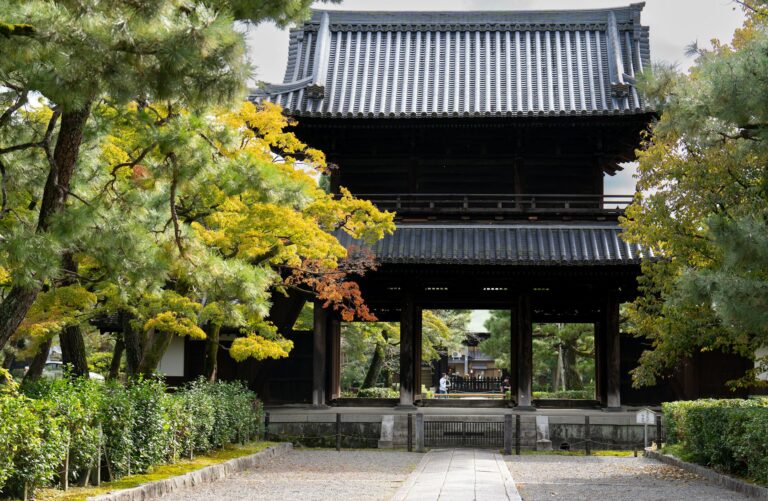
Kyoto during Golden Week is a specific logistical problem worth understanding before you book. Kinkaku-ji during Golden Week mid-morning is a documented capacity problem. Peak arrival — 10:00–11:30 a.m. — brings queue lengths of 300–500 metres and shoulder-to-shoulder density at every viewpoint. That’s not a complaint about Kinkaku-ji.
It’s genuinely one of the most beautiful things in Japan. The problem was everything around it — the human infrastructure failure of arriving at one of Japan’s most visited shrines on the peak day of the peak week without understanding what that actually means.
Golden Week is Japan’s busiest domestic travel period, full stop. Not “one of the busiest.” The busiest. An estimated 23.9 million Japanese people travel domestically during these eight days (JTB’s 2026 projection; the 22.8 million figure was from 2024).
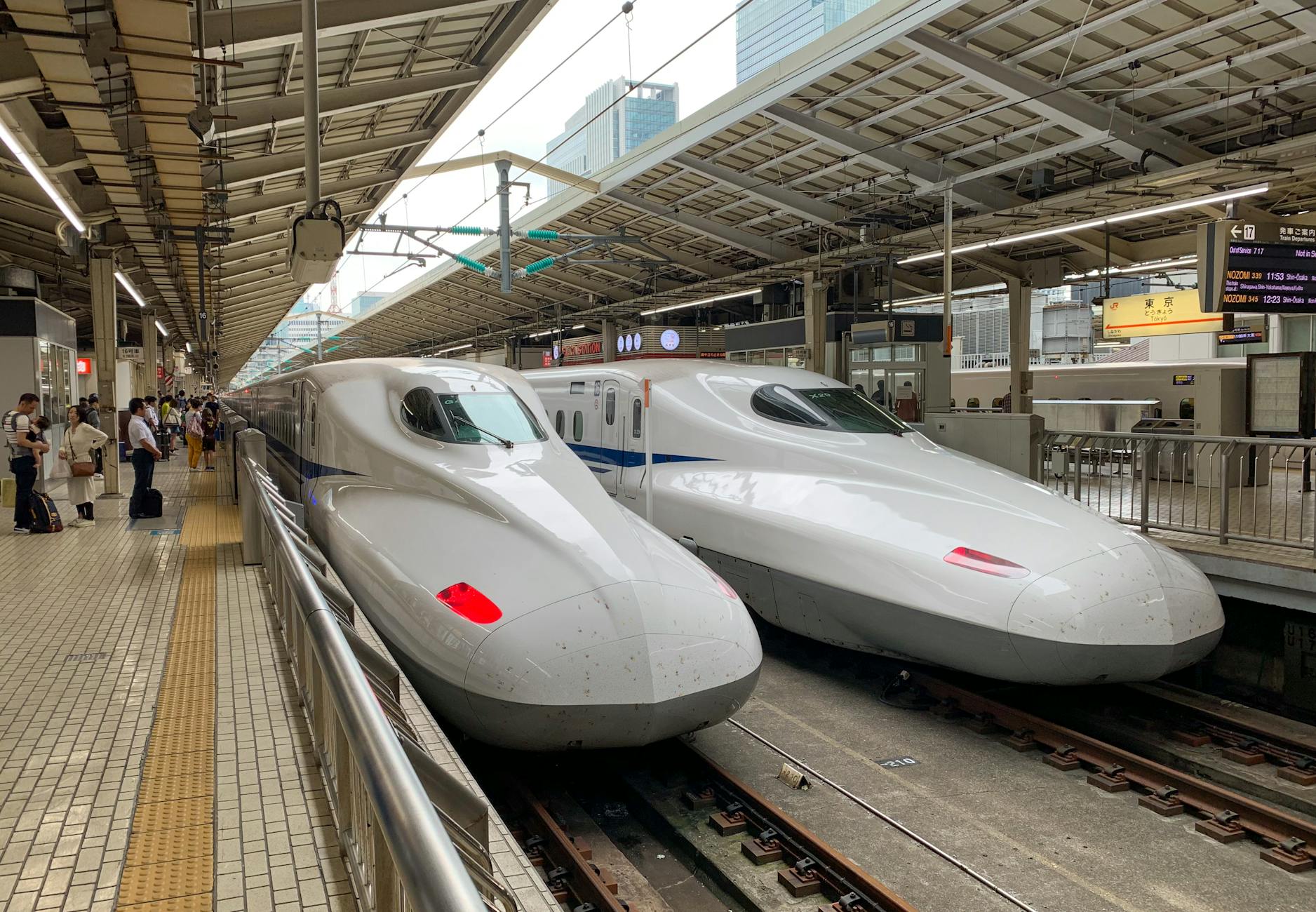
The Tokaido Shinkansen — the line running Tokyo to Kyoto to Osaka — operates at maximum capacity with reserved seats selling out thirty days ahead of travel, often within minutes of reservations opening. Hotels in Kyoto and Tokyo charge two to three times normal rates, if they have availability at all. A ryokan room that costs ¥15,000 on a Tuesday in March will run ¥35,000 or more on May 3rd.
Most foreign tourists encountering Golden Week for the first time have no idea any of this is happening. They find a flight deal, they book the dates, they open Booking.com and discover with some confusion that everything is gone. This guide is written for those people — and for the people who’ve heard Golden Week is crowded but don’t yet have a specific, sequenced plan for handling it.
The honest answer to “should I go to Japan during Golden Week?” is: it depends entirely on how far ahead you’ve planned, where you’re going, and whether you understand what you’re trading. Let me give you the specific information to make that call.
What Golden Week Actually Is: The Structure in 2026
Golden Week is not a single holiday. It’s a collision of four separate national holidays that fall within a seven-day span, which — when combined with surrounding weekends — creates Japan’s longest guaranteed stretch of consecutive days off for the majority of workers. For 2026, the four holidays are:
- April 29 — Shōwa Day: Commemorates the birthday of Emperor Shōwa (Hirohito). This is the opening gun.
- May 3 — Constitution Memorial Day: Marks the enactment of Japan’s postwar constitution in 1947.
- May 4 — Greenery Day: Originally Emperor Shōwa’s birthday, now dedicated to nature and the environment.
- May 5 — Children’s Day (Kodomo no Hi): The traditional final holiday of the cluster, marked by koinobori — large carp-shaped streamers flown from homes, parks, and riverbanks across the country. Visually, this is one of the more striking things to see during the period.
- May 6 — Substitute Holiday: When a holiday falls on a Sunday, Japan observes it on the following Monday. In 2026, May 5 (Children’s Day) falls on a Tuesday, but the preceding weekend creates a substitute holiday on May 6.
In 2026, the structure is slightly unusual. April 29 is a Wednesday, followed by two regular business days (Thursday April 30, Friday May 1), then a five-day consecutive run from Saturday May 2 through Wednesday May 6. If a Japanese worker takes paid leave on April 30 and May 1 — and many do — they get eight consecutive days off from April 29 through May 6. If you count from the preceding weekend on April 26, it’s a potential eleven-day stretch.
Peak congestion inside those eight days is not uniform. The highest-density periods are the opening travel days (April 29 and the morning of April 30 for those taking the full leave), and the return rush of May 5 and 6 as everyone attempts to get back to Tokyo and Osaka before the working week resumes on May 7. May 1 and 2 are marginally less congested departure days.
If you’re going to move between cities during Golden Week, move on May 1 or 2. Do not attempt unreserved travel on April 29, May 5, or May 6.
The Accommodation Reality: Numbers That Should Change Your Plans
The booking window for Golden Week accommodation in Tokyo and Kyoto is not “book early.” It’s book six months in advance, and even then you’re competing. Here’s what that actually looks like in practice:
A mid-range Tokyo hotel — the kind with a reasonable central location, standard Western rooms, and ¥15,000-per-night pricing in a normal week — runs ¥30,000 to ¥45,000 per night during Golden Week peak days. That’s a two to three times price premium applied uniformly across the market.
Budget business hotels in Shinjuku or Asakusa that hover around ¥8,000 on a quiet February Wednesday regularly hit ¥20,000 to ¥25,000 on May 3rd. This isn’t a strategy by individual hotels — it’s the entire market responding to demand that genuinely outstrips supply.
Kyoto runs worse. The city’s accommodation capacity is smaller relative to its visitor demand, and domestic Japanese tourists specifically target Kyoto during Golden Week. Quality ryokan in Gion and Higashiyama can sell out for Golden Week dates before the end of the previous calendar year.
If you’re reading this in January or February 2026 and you want a specific Kyoto ryokan for late April, call the property directly rather than relying on availability showing online. Some allocate rooms differently between direct booking and OTA channels.
The booking timeline, simplified:
- October–November 2025: Top-tier ryokan and sought-after hotels in Kyoto and Tokyo are already filling for Golden Week. If you’re targeting premium accommodation, this was your window.
- December 2025–January 2026: Mid-range inventory moves fast. Any property with a strong TripAdvisor ranking within 1km of major Kyoto sights is largely gone by January for May 3–5.
- February 2026: You’re now competing for what’s left. This is still workable, but requires flexibility on location and price.
- March 2026 onward: Cancellations surface but inconsistently. Options exist, but you’re not choosing — you’re taking what’s available.
com or Expedia are working from a subset of available inventory.
The Shinkansen Problem
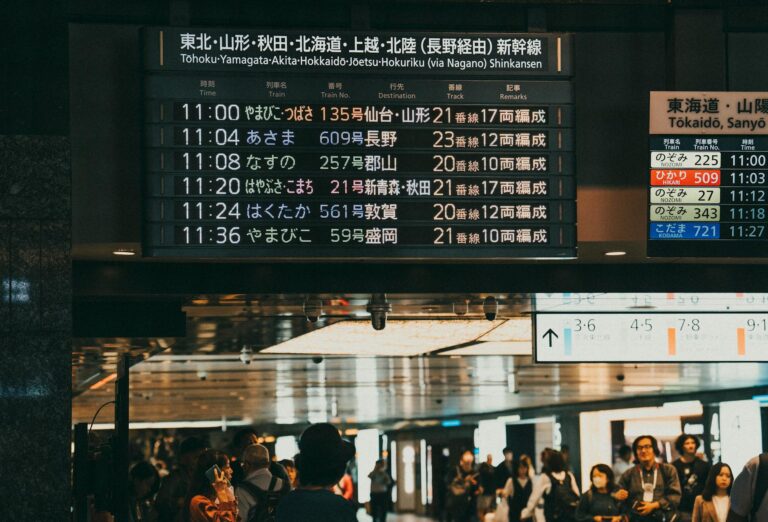
The Tokaido Shinkansen — the Tokyo-Nagoya-Kyoto-Osaka corridor — is the central circulatory system of Golden Week travel. Approximately 22 million people are trying to use Japan’s transportation network simultaneously. What that looks like in practice:
Reserved seats on peak-direction trains (Tokyo to Kyoto/Osaka on April 29; Kyoto/Osaka to Tokyo on May 5–6) open for booking exactly 30 days in advance. For the busiest departures — the 8:00 to 10:00 morning window on peak days — seats sell out within minutes of reservations opening. This is not hyperbole. JR’s online booking system, SmartEX, sees those seats disappear in under ten minutes when the reservation window opens at midnight on the 30-day mark.
If you hold a JR Pass, the pass itself does not expire or lose validity during Golden Week — there are no blackout dates on the JR Pass in the traditional sense. However, during peak periods including Golden Week, JR is permitted to convert normally unreserved cars to reserved-only seating.
In 2026, the Tokaido Shinkansen’s unreserved cars may be entirely reserved-only on the highest-demand days. What this means for JR Pass holders: you can still ride, but you may be required to book a reserved seat rather than simply boarding an unreserved car.
The reservation itself is free with the JR Pass — you pay nothing extra at the ticket window — but if you show up at Tokyo Station on April 29 hoping to hop on an unreserved car to Kyoto, you may be turned away or forced to wait for a much later departure.
The correct protocol with a JR Pass during Golden Week:
- Activate your JR Pass on or before April 28.
- On activation day, immediately go to the JR ticket office (みどりの窓口, Midori no Madoguchi) and book reserved seats for every shinkansen leg you plan during the Golden Week window. Do not wait. You have one shot at the 30-day inventory window and it’s worth using.
- Build flexibility into your plan. If your reserved seat train is cancelled or you miss it, alternatives exist — but they will take longer and involve multiple changes.
If you don’t yet have a JR Pass and you’re planning a Tokyo-Kyoto routing for this period, the break-even math works in your favor if you’re doing the full circuit. A 14-day ordinary JR Pass runs approximately ¥50,000 (~USD 330). Tokyo–Kyoto return on the shinkansen without a pass runs approximately ¥27,000 round trip.
Add Kyoto–Osaka day trips, any detours to Hiroshima or Nara, and the math closes quickly. Purchase the JR Pass here before departure — it must be bought outside Japan.
Where to Go (And Where to Accept You Can’t This Time)
Tokyo During Golden Week: Counterintuitively Manageable
This surprises most people: Tokyo during Golden Week is not the worst choice. The reason is demographic. Japanese domestic travelers leave Tokyo for Golden Week — they’re going to Kyoto, to their hometowns, to Okinawa. The city itself is actually marginally less congested than a normal peak tourist Saturday, because 22 million outbound travelers thin the urban baseline.
Popular areas still get busy, but the queues at teamLab Borderless, the lines at Shibuya Crossing, the crowd at Senso-ji — they’re manageable relative to what you’d experience at Kyoto’s equivalent sights on the same days.
The specific experience worth booking ahead in Tokyo during Golden Week: teamLab Borderless at Azabudai Hills. The digital art museum is one of the most genuinely impressive installations in Japan and it books out during this period. Evening slots (after 17:00) are less crowded inside the venue even on busy days.
Ueno Park holds late-season cherry blossoms through early May some years and hosts outdoor food festivals during Golden Week. The park is large enough to absorb the crowds without feeling claustrophobic, which is more than can be said for most Kyoto blossom sites.
Kyoto During Golden Week: The Honest Assessment
Kyoto is simultaneously the worst choice for Golden Week and the most understandable one. The worst choice because: Kinkaku-ji, Fushimi Inari, Arashiyama, Gion Shijo — all at maximum human density. Two to three hour waits to enter major temples are documented and not unusual on May 3rd and 4th. Rickshaws are stacked through Arashiyama’s bamboo path. It’s genuinely difficult to have an unmediated experience of the city.
The understandable choice because Kyoto is what it is — and if this is someone’s one Japan trip, the crowds may be worth paying. The way to do Kyoto during Golden Week is arrival before 08:00 at every major site, strict avoidance of the 10:00–16:00 window at Arashiyama, and a willingness to exit a site rather than wait in queue. Fushimi Inari at 06:00 in the morning is still quieter than Fushimi Inari at 10:00 even during Golden Week.
The Kamogawa Odori — a traditional geisha dance performance held in May at Ponto-cho’s Kaburenjo Theatre — runs exactly during Golden Week dates in 2026. Tickets go on sale in March and sell through quickly. This is one of the specific things that is worth seeing even with crowds, because it’s time-limited and indoors. Add it to the strategy alongside Kinkaku-ji early morning access rather than treating it as optional.
Osaka: The Practical Compromise
Osaka is cheaper than Kyoto for accommodation, has better nightlife infrastructure, and Dotonbori at night during Golden Week is loud and worth experiencing once for the full sensory assault. Day-trip access to Nara (30 minutes by Kintetsu) and Kyoto (15 minutes by shinkansen) makes it a workable base if you’ve already accepted you can’t afford Kyoto accommodation for these dates.
The Universal Studios Japan situation — 3+ hour waits on peak days — should be factored out of your plan unless you have USJ Express Passes booked months ahead.
Fukuoka: The Underrated Play
Fukuoka gets the Hakata Dontaku Festival on May 3rd and 4th — Japan’s second-largest festival by attendance, transforming the city with dance performances, street parades, and music across multiple venues simultaneously.
The festival draws domestic crowds but the city’s accommodation market is less compressed than Kyoto or Tokyo, and the food infrastructure (Fukuoka ramen, yatai street food stalls) is genuinely among Japan’s best. If your Golden Week isn’t already locked to the Tokyo-Kyoto circuit, Fukuoka in early May is a legitimate argument for routing change.
The Alternative Destinations: Where Japanese Domestic Tourists Don’t Go
This is the actual question for foreign travelers with flexibility: which destinations does Japan’s domestic market underweight during Golden Week? The answer:
- Kanazawa, Ishikawa Prefecture: Known as the “Kyoto of the North” for its preserved Edo-era districts, Kenrokuen Garden, and geisha culture — but without Kyoto’s mass tourism infrastructure. The Hokuriku Shinkansen runs direct from Tokyo in approximately 2h30m. Cherry blossoms are finished by Golden Week, but late spring at Kenrokuen has its own quality. Accommodation books out less aggressively than Kyoto.
- Matsue, Shimane Prefecture: A castle town on Shinji-ko lake, rarely on international itineraries. Gets minimal Golden Week overflow.
- Iya Valley, Shikoku: Vine-bridge gorges, remote onsen ryokan, zero international tour bus traffic. The logistics require planning (rental car strongly recommended) but the payoff is access to traditional Japan without the human infrastructure of Golden Week.
- Akan-Mashu National Park, Hokkaido: Volcanic crater lakes and wide open land. Sapporo gets crowded; the national park doesn’t.
- Amami Oshima: If Okinawa is on your list and you want the beach without the Golden Week crowds that descend on Naha and the main island — Amami Oshima is Okinawa-adjacent in climate and marine environment, without the same demand concentration.
What’s Actually Better During Golden Week
The contrarian case for Golden Week is not imaginary. There are specific things that are genuinely worth experiencing in this window that don’t exist at any other time:
- Koinobori everywhere: Children’s Day on May 5 means carp streamers hung from poles, bridges, and riverbanks across the country. In some river valleys — the Sagamigawa in Kanagawa is the most famous — hundreds of koinobori are strung across the water simultaneously. It’s a visual that only exists for a few weeks around Golden Week and is worth building an itinerary around if you find the right location.
- Hakata Dontaku, Fukuoka (May 3–4): As mentioned — Japan’s second-largest festival is worth attending once. The street performance energy in Fukuoka on these two days is specific to the holiday.
- Hamamatsu Festival, Shizuoka (May 3–5): Kite battles during the day, processions of illuminated floats at night. Hamamatsu is on the Tokaido Shinkansen line, which makes it accessible as a stop between Tokyo and Kyoto if your routing accommodates it.
- Kamogawa Odori, Kyoto: The geisha dance performance at Ponto-cho — runs through early May. If you’re going to be in Kyoto regardless, booking tickets to this is the version of Golden Week Kyoto that’s worth having.
- Late-season cherry blossoms in higher elevations: Yoshino in Nara, Hirosaki in Aomori — high-altitude and northern destinations that miss the early April blossom window see late sakura that can overlap with Golden Week. Check bloom forecasts if this is part of your plan.
The Shoulder Strategy: May 7 Onward
May 6 (the substitute holiday) is the peak U-turn day. Every Japanese family and salesman who left Tokyo for the week is attempting to return on May 5 and 6. The shinkansen stations are at their most chaotic. This is the single worst day to be an unbooked traveler attempting to move cities.
May 7 — a Thursday — is the first working day after Golden Week. The transformation is immediate and noticeable. Accommodation prices drop back to normal rates for new check-ins. Trains run with seats available. The queue at Kinkaku-ji goes from two hours to twenty minutes. Fushimi Inari’s lower trails empty by 09:30.
The shoulder strategy that works best for travellers with flight flexibility: fly into Tokyo before Golden Week (April 25–28), use the city when it’s marginally quieter, then position yourself in Kyoto or an alternative destination by May 7 for the back half of the trip.
You experience the Golden Week atmosphere — the koinobori, the festival energy, the country running at full capacity — from a stable accommodation base you booked months ahead, then the crowd disperses and you get the sights you actually came for at normal density.
One caveat on May 7: some small restaurants and independent shops that closed for the full week are not yet back to normal hours. The konbini (convenience stores) are always open. Larger attractions — major temples, national museums — operate their standard schedules. But in smaller neighborhoods or regional towns, give it another day before expecting everything to be operational.
The Booking Sequence: What to Do in What Order
If you’re targeting Golden Week 2026 and you’re reading this with more than eight weeks to go before April 29, this is the specific sequence:
-
Travel insurance — do this first, before any money moves.
A policy you can get through Sacraw covers trip cancellation and emergency medical for Japan trips. Sort your coverage before you book flights or hotels. A Japan trip during Golden Week involves non-refundable bookings made months in advance — the cancellation risk alone justifies the policy. Understand what your emergency medical evacuation covers and confirm there are no Japan-specific exclusions given ongoing seismic activity in some regions. -
Accommodation — book immediately after insurance.
Filter by your target city. The properties still available are moving. Pay attention to cancellation terms — many will be non-refundable at this booking window for peak dates, which is why insurance is step one, not step two. -
JR Pass — purchase before you leave home.
The pass cannot be purchased inside Japan. While you’re sorting logistics before departure, also lock in data — a Sakura Mobile Voice & Data SIM delivers reliable coverage across the Tokaido corridor and gets you online the moment you land. Buy the JR Pass online here — you’ll receive a voucher to exchange for the physical pass at a JR office on arrival in Japan. For Golden Week travel, the 14-day ordinary pass makes sense if you’re doing the full Tokyo-Kyoto-Osaka circuit with any regional extensions. -
Shinkansen reserved seats — book 30 days ahead, at midnight.
The day your Golden Week travel date is exactly 30 days out, book through SmartEX (Japan’s JR online seat reservation system) or at a JR ticket office in Japan if you’ve already arrived. Midnight on the 30-day mark is when the inventory opens. Peak-direction trains on April 29 and May 5–6 sell out fastest. Set a reminder. Don’t wait until morning. -
Experiences — book 4–6 weeks out minimum.
TeamLab sells timed-entry tickets that disappear for Golden Week weeks in advance. Any Kyoto tea ceremony or cultural experience with limited capacity follows the same pattern. -
Restaurant reservations — one month ahead for anything serious.
Tokyo and Kyoto’s noteworthy restaurants (anything on Tabelog’s top 100 lists) have 30-day advance booking windows that open at 10:00 on the dot. If you want a specific kaiseki dinner or a Michelin-listed sushi counter on May 3rd, that reservation opened at 10:00 on April 3rd. Plan accordingly, or adjust expectations toward walk-in ramen and izakaya.
The Honest Answer to “Should I Go During Golden Week?”
Here is the version of this question that nobody in the generic travel blog world will give you directly: Golden Week Japan is survivable, occasionally spectacular, and genuinely miserable if you arrive without a plan.
The people who have terrible Golden Week experiences are universally in one of two categories: they booked late (accommodation that’s overpriced and poorly located, no shinkansen seats, scrambling for alternatives), or they had the right bookings but the wrong expectations (they expected a normal Japan trip and got Japan running at 140% capacity).
The people who have good Golden Week experiences understood the premise going in. They booked accommodation six months ahead at 2.5x normal cost and accepted that as the price of admission. They had shinkansen seats locked. They built their itinerary around the events and experiences that only exist during this window — the koinobori, the Fukuoka festival, the late-season blossoms — rather than trying to do the standard Tokyo-Kyoto circuit at normal pace and normal density.
If you have already booked flights for Golden Week 2026, the decision is made. Execute the planning sequence above. Get the accommodation and the seats locked, build the experience bookings, and adjust your expectations for daily crowd density. The country is extraordinary even at maximum occupancy. Fushimi Inari with 3,000 other visitors is still Fushimi Inari.
If you haven’t booked yet and you have flexibility: May 15–25 is the window I’d recommend for first-time Japan visitors who want the spring greenery without the crowd infrastructure. The weather is warm, the landscape is at its most verdant, the shinkansen has available seats, and the accommodation market has returned to reality. Golden Week will still be there next year.
Japan in late May is a version of Japan that most international tourists never see, and it may be the better version for your first trip.
Either way — go. Just plan it properly.
Prices verified March 2026. Exchange rates fluctuate — verify before booking. Shinkansen fare estimates based on JR published rates for Tokaido Shinkansen reserved seating; verify current pricing at SmartEX or JR West English booking site. Hotel price premiums based on aggregated market data for Golden Week 2024–2025 seasons; individual property pricing will vary.
Golden Week 2026 dates confirmed: April 29 (Shōwa Day), May 3 (Constitution Memorial Day), May 4 (Greenery Day), May 5 (Children’s Day), May 6 (Substitute Holiday).