Japan Travel Packing Intel: What to Bring, What to Buy There, and What Gets Confiscated at Customs
Packing for Japan from Canada means leaving half of it behind. Here is what to bring, what to buy after landing, and what customs flags on the way home.
Packing for Japan from Canada is less about what you bring and more about what you leave behind. Japan’s retail infrastructure is so dense and so convenient that half the stuff travel blogs tell you to pack can be bought better and cheaper after you land. As of 2026, updated tax-free rules, Shinkansen luggage restrictions, and strict pharmaceutical import laws mean you need to rethink everything. Here’s what actually matters.
What to Pack vs. What to Buy There
The biggest mistake in most packing guides is the “just in case” mindset. Japan has 24/7 convenience stores on every block, world-class drugstores, and airport retail designed to outfit you on arrival. Your Canadian luggage space should be reserved strictly for things you literally cannot get in Japan.
What to Bring from Canada
A few things are genuinely hard to find in Japan due to different regulations, consumer preferences, and pricing.
Antiperspirant. Japanese deodorants focus on odor control, not sweat blocking. Due to genetic differences in sweat gland activity (the ABCC11 gene mutation common in East Asian populations), local products aren’t formulated for heavy perspiration. If you rely on aluminum-based antiperspirant, bring your full supply. Japanese roll-ons will not cut it during a humid Tokyo summer.
SD cards and camera batteries. Despite Japan’s electronics reputation, physical stores like Yodobashi Camera and Bic Camera charge brutal markups on storage media — often 100-150% above online prices. A 128GB SanDisk Extreme Pro that’s around 7,000 JPY on Amazon Japan can hit 17,000 JPY in-store. Buy all your memory cards and spare batteries before you leave.
A grounded power adapter. Japan uses Type A ungrounded outlets (two flat pins). Your Canadian laptop charger or camera charger likely has a three-prong grounded plug. Finding a 3-to-2 adapter at a Japanese convenience store is nearly impossible since domestic electronics are built for two-prong. Pack a compact grounding adapter.
What to Buy After You Land
A huge category of items — clothing layers, toiletries, travel gear — should be intentionally left out of your Canadian suitcase. This cuts your outbound weight and takes advantage of Japan’s superior products.
Airport retail is your first stop. At Haneda Terminal 3, the Uniqlo on the 3rd floor (07:30–23:00) stocks HEATTECH layers for winter arrivals and AIRism for summer. At Narita Terminal 2, MUJI to GO (Center 4F, 07:30–21:00) sells modular suitcases, travel toiletries, and conversion plugs. You can land light and gear up immediately.
None of this works without mobile data the moment you clear customs. I covered the full breakdown in a separate piece, but the short version: activate an Airalo eSIM before you board in Canada, and you land with working data — no SIM counter queues, no rental Wi-Fi puck. Google Maps, Suica, and Shinkansen timetables are live before you hit arrivals.
100-yen shops and konbini replace your toiletry kit. Daiso and Seria sell travel containers, compression bags, and laundry nets that are better designed and cheaper than anything at Shoppers Drug Mart. FamilyMart, 7-Eleven, and Lawson are open 24/7 with rain ponchos, electrolytes, and hygiene products. Stop hoarding these in your departure luggage.
Japanese sunscreen is world-class. Canadian sunscreens use older UV filters that feel heavy and leave white residue. Japanese formulas like SKIN AQUA Tone-up UV (SPF50+ / PA++++) and Biore UV Aqua Rich use advanced filters that feel like moisturizer. Grab them at any Matsumoto Kiyoshi drugstore after arrival.
Medication Rules: What Japan Bans and What You Need to Declare
This is where most Canadian packing guides fail you completely. A valid Canadian prescription does not guarantee entry into Japan with your medication. Getting this wrong can mean confiscation, deportation, or criminal charges.
The Import Certificate (Yunyu Kakunin-sho)
Under Japan’s Pharmaceutical Affairs Law, carrying certain quantities of medication requires an advance Import Confirmation certificate (Yunyu Kakunin-sho).
The 2026 thresholds: prescription drugs exceeding a one-month supply need certification. External-use drugs (ointments, medicated eye drops) are limited to 24 items per product. OTC drugs are capped at a two-month supply. Injectable drugs and syringes are limited to one month, restricted to pre-filled devices like EpiPens or insulin pens.
Cosmetics over 24 items per category and medical devices (CPAP machines, contact lenses over 60 pairs) also require certification. Apply through the MHLW online portal at least four weeks before departure. You’ll need to present the printed certificate at customs.
Substances Japan Treats as Illegal
Japan classifies several compounds that are common in Canada as prohibited narcotics or stimulants. No exceptions, even with a prescription.
Adderall is banned outright. Amphetamine-based ADHD medications are illegal under the Stimulants Control Act. Importing them will result in arrest. Vyvanse (lisdexamfetamine) is classified differently and can be imported, but only with advance permission from the Narcotics Control Department — a separate process from the standard import certificate.
Pseudoephedrine is restricted. High-dose pseudoephedrine (the active ingredient in Sudafed) above 10% concentration risks a customs violation. Leave it home.
This is the part most guides skip entirely. If your medication is confiscated — or you need emergency medical care for a condition your seized prescription was managing — Canadian provincial health coverage does not apply abroad. OHIP, MSP, and Alberta Health all cover only a sliver out-of-country – OHIP roughly $400/day inpatient (reinstated by a 2020 court ruling), MSP about $75/day, AHCIP about $100/day inpatient. Against a Japanese hospital bill, that barely registers.
Sacraw covers exactly this Japan-bound scenario: trip disruption from a customs pharmaceutical seizure. A good policy covers emergency medical, trip interruption, and cascading flight-change costs. The math on skipping insurance does not survive contact with Japanese customs.
Japanese OTC Drugs Worth Buying There
Japan’s domestic OTC drugs are excellent. Skip packing Canadian equivalents and buy locally.
Taisho Pabron Gold A — granular cold and flu relief, a staple in Japanese households. EVE pain relievers — ibuprofen formulations optimized for fast absorption, better than standard Advil. Panshiron Cure — instant acid reflux and stomach relief in portable single-use packets, essential when your digestive system meets tempura and ramen back-to-back.
Alinamin EX Plus — a B-vitamin formula designed for severe fatigue from high daily step counts. Salonpas patches — anti-inflammatory patches for your calves and feet at the end of a 25,000-step day.
Electrical Stuff: What Actually Works
Japan runs on 100V (Canada is 120V), and the grid splits by region: 50Hz in Eastern Japan (Tokyo, Hokkaido), 60Hz in Western Japan (Kyoto, Osaka).
Modern electronics are fine. Laptops, phones, camera chargers, and power banks all have switching power supplies rated 100V–240V. You just need the physical Type A plug adapter. No transformer needed.
Hair tools are not fine. A 120V Canadian hair dryer on a 100V Japanese outlet loses about 30% of its heat output. Flat irons may not reach styling temperature. Cheap “travel converters” will destroy digital hair tools like Dyson products. Either bring dual-voltage tools with a physical 120V/240V switch, or use the ionic hair dryers provided by Japanese hotels and ryokans — they’re usually quite good.
Getting Your Bags Around Japan
Moving luggage across Japan requires understanding the rules for trains, forwarding services, and storage.
Air Canada Baggage Basics
Standard economy allows one or two checked bags (depending on fare class), max 23 kg and 158 cm total dimensions. Overweight (23–32 kg) or oversized bags trigger a $100–$120 CAD penalty per direction. An extra bag beyond your allowance costs $225–$270 CAD on international routes.
Shinkansen Luggage Rules
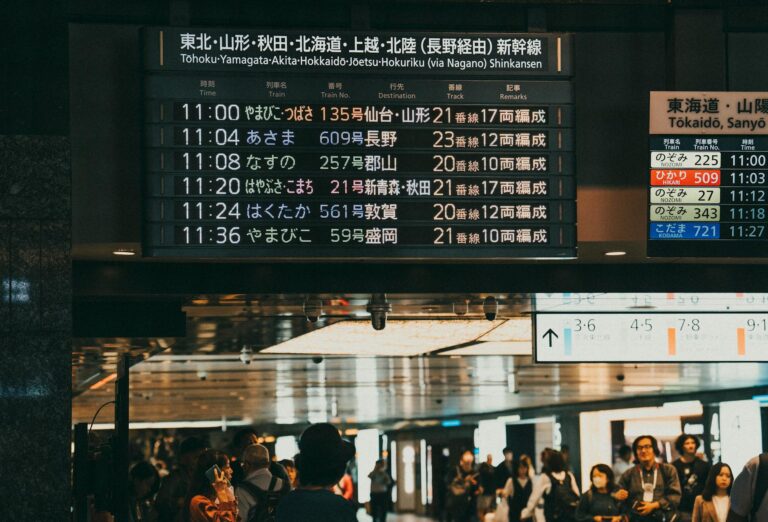
You can’t just wheel a massive suitcase onto a bullet train anymore. The Tokaido, Sanyo, and Kyushu Shinkansen lines enforce strict size rules.
| Size Class | Dimensions (L+W+H) | What Happens |
|---|---|---|
| Standard | Up to 160 cm | No reservation needed. Goes in overhead racks. Free. |
| Oversized | 160–250 cm | Must reserve a rear-of-car seat in advance (free). Without reservation: ¥1,000 fine and stowed wherever crew says. |
| Prohibited | Over 250 cm | Boarding denied. Ship it instead. |
Reserve oversized luggage seats via the SmartEX app or JR West portal — it’s free if you book ahead. Without a reservation, you’ll be fined 1,000 JPY and forced to stow wherever the crew directs you.
If you’re booking reserved seats with oversized luggage, do it before you arrive. Rakuten Experiences sells Tokyo-Shin-Osaka Shinkansen tickets with seat selection, and the English interface avoids the SmartEX friction that trips up first-timers. The reservation window opens 30 days before departure.
Ship Your Bags Instead: Yamato Takkyubin
The smartest move for getting between cities is not dragging your suitcase through subway turnstiles — it’s shipping it ahead. Yamato Transport (Kuroneko Yamato) runs a nationwide luggage forwarding network called Takkyubin. Drop your bag at a hotel front desk or convenience store, and it arrives at your next hotel by the next morning. You travel with just a daypack.
2026 rates from Tokyo to Kyoto/Osaka:
| Size | Max Dimensions (L+W+H) | Max Weight | Rate (JPY) |
|---|---|---|---|
| 100 cm | Within 100 cm | 10 kg | 1,650 |
| 120 cm | Within 120 cm | 15 kg | 1,970 |
| 140 cm | Within 140 cm | 20 kg | 2,310 |
| 160 cm | Within 160 cm | 25 kg | 2,630 |
Drop off directly at a convenience store or Yamato office for a 100 JPY discount per parcel. Paying 2,630 JPY to move 25 kg across the country beats hauling it through Tokyo Station at rush hour. Note: convenience stores won’t accept parcels larger than Size 180 — those go to a Yamato depot.
For travelers who’d rather skip logistics entirely, Rakuten Experiences lists guided Tokyo activities that include luggage storage coordination — useful on transit days when you’re between hotels.
Coin Lockers for a Few Hours
Need to store a bag for a few hours between check-out and check-in? Coin lockers are at every major station.
| Size | Dimensions (H x W x D) & Daily Fee (JPY) |
|---|---|
| Small | 33 x 34 x 65 cm — 400 |
| Medium | 50 x 34 x 65 cm — 800 |
| Large | 86 x 34 x 65 cm — 1,000 |
| Extra-Large | 115 x 35 x 57 cm — 1,000+ |
Lockers reset at midnight — retrieve after that and you’re charged another day. Max storage is three days before contents are impounded.
Dressing for Japan’s Weather
Japan’s climate swings hard depending on season and where you’re going.
Spring and Fall
Temperature swings between sunny afternoons and mountain evenings are real. Pack modular layers — a packable down jacket and removable long-sleeve base layers handle the range.
Surviving Summer
Late June through September is brutal — high heat plus oppressive humidity. Cotton traps moisture and wears you down fast. Buy these locally instead:
- Cooling towels — under 1,000 JPY at Bic Camera or Matsumoto Kiyoshi. Wet them, snap them, and they drop to -3°C to -5°C on skin.
- Handheld fans — rechargeable, often with carabiners and neck straps. Essential on stagnant train platforms. Available at electronics stores and Loft.
- Mentholated body wipes — Gatsby Ice-Type or Biore Cooling Mist from any konbini. Instant cold sensation.
- UV parasols — sun umbrellas are normal here and drastically cut perceived temperature on exposed pavement.
- Nitori N-Cool sheets — cooling pillows and mattress pads for surviving hot nights in accommodation without strong AC.
Winter varies by destination. Hokkaido demands serious cold-weather gear and waterproof boots. Tokyo winters are mild and dry — a heavy Canadian parka becomes dead weight when you’re constantly ducking into heated subways and malls. Uniqlo HEATTECH plus a packable windproof shell beats a single heavy coat.
Rain means umbrellas, not Gore-Tex. Wearing a dripping rain jacket into a crowded train or restaurant is considered rude. Japan manages rain with umbrellas — every building entrance has umbrella stands or plastic wrapping machines. Buy the 500–700 JPY clear vinyl umbrellas at any konbini. They’re disposable by design and give better visibility in crowded crossings than a folding umbrella from home.
Shoes Make or Break Your Trip
This is the single most important packing decision. You’ll walk 15,000 to 25,000 steps a day on concrete and tile. Flat-soled sneakers like Converse or Vans will destroy your feet and lower back within three days.
What to Wear
You need real cushioning — EVA or foam midsoles that absorb impact over 15–20 km of pavement daily. Top picks: ASICS Gel-Nimbus 28, Gel-Kayano 32, New Balance 990v6, Hoka Clifton 10. For wet conditions (tile floors and tactile paving get dangerously slippery in rain), go for Gore-Tex models like ASICS GT-2000 12 GTX or On Cloud 5 Waterproof.
Slip-On or Lace-Up?
You’ll remove your shoes constantly — shrines, temples, ryokans, tatami rooms, even some fitting rooms. Wrestling with tightly laced boots at a temple entrance while a line forms behind you is not a good look. High-performance slip-ons like On Cloud 5 Push or Skechers GO WALK 6 solve this. If you prefer lace-ups for the cushioning, swap the factory laces for elastic no-tie locking laces — instant slip-on conversion.
Camera Gear: Leave the Tripod Home
If you’re planning to document your trip, rethink bringing a full-sized tripod. Kyoto’s major cultural sites have cracked down hard on photography equipment due to over-tourism and crowd management.
Tripods, monopods, and selfie sticks are banned at Kiyomizu-dera, Fushimi Inari (the torii tunnels are too narrow), and throughout the Gion district. Gion has legally enforceable fines of 10,000 JPY for entering restricted alleys to photograph Geisha. During special exhibition openings at non-public cultural properties, interior photography is often banned entirely.
A 1.5 kg tripod is dead weight. Rely on fast lenses, in-body stabilization, and handheld technique. Also pack silica gel desiccants and a rain cover for your camera body — summer humidity causes fungal growth inside lens elements.
The 2026 Tax-Free Overhaul: How It Changes Your Packing
Major change coming November 2026 that affects how you pack for the return flight.
New Refund System
Previously, tourists got the 10% consumption tax removed at the register. Starting November 1, 2026, you pay the full tax-inclusive price upfront. At the airport, you scan your passport at a customs kiosk, verify the goods are leaving Japan, and the 10% gets refunded to your credit card (1–2 weeks) or bank account (2–4 weeks).
What This Means for Packing
The old system required “consumable” goods (skincare, snacks, cosmetics) to be sealed in tamper-proof bags that couldn’t be opened until you left Japan. That’s gone. The 2026 reform abolishes sealed packaging, the 500,000 JPY daily cap on consumables, and the separate consumable/general goods categories.
You can now pack your return luggage however you want — stuff socks with matcha Kit-Kats, distribute skincare across compartments. The goods still need to be physically present at customs to trigger the refund (don’t consume them during the trip), the 5,000 JPY minimum per store still applies, and items shipped internationally no longer qualify for tax-free status.
Customs Entry Limits for Canadians
Use the Visit Japan Web portal to generate a QR code for faster processing. Duty-free allowances for adults:
- Alcohol: 3 bottles (~760ml each)
- Tobacco: 200 cigarettes, 50 cigars, or 10 packages of heat-not-burn
- Perfume: 2 ounces
- Other goods: Up to 200,000 JPY total market value (items under 10,000 JPY individually are exempt)
- Biosecurity: Meat, meat products (including beef jerky), fresh fruits, and vegetables are banned. Fines up to 3 million JPY.
The Bottom Line: Pack Light, Buy Smart
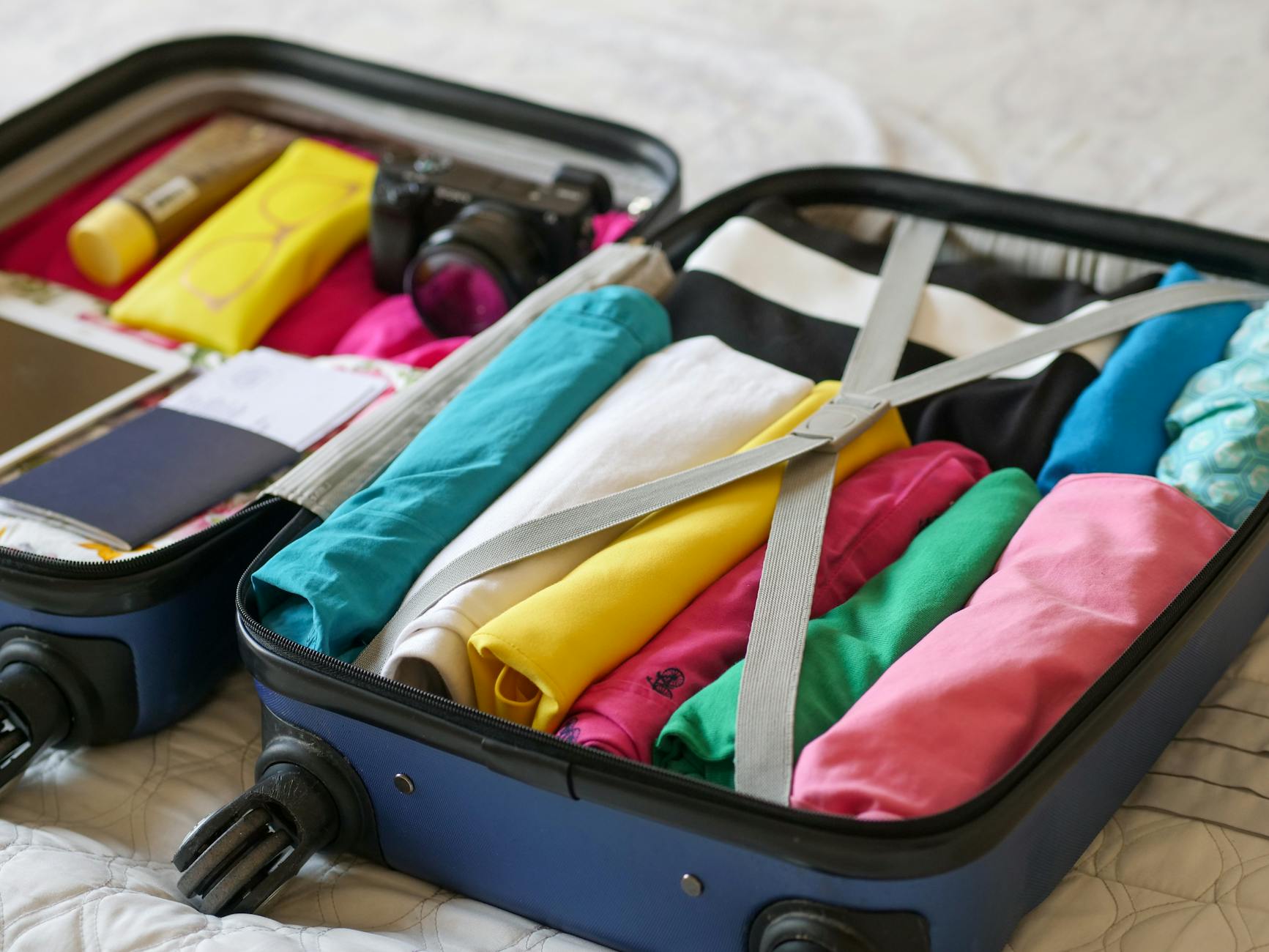
The winning approach for Canada-to-Japan in 2026 is deliberately asymmetric. Your outbound bag carries only what Japan can’t provide: antiperspirant, documented prescription meds, power adapters, SD cards, and broken-in high-cushion shoes. Everything else — layers, rain gear, toiletries, OTC medication, cooling gear — gets bought within hours of landing.
Use Yamato Takkyubin to ship bags between cities instead of hauling them through train stations. Follow the pharmaceutical import rules to the letter. And leave the tripod at home.
Pre-Departure Checklist
30 days out: Install your Airalo eSIM (don’t activate data until landing). Reserve oversized-baggage Shinkansen seats via Rakuten Experiences if your bags exceed 160 cm total.
2 weeks out: Lock in a travel insurance policy through Sacraw. Check your prescriptions against Japan’s banned list — if flagged, file the Yunyu Kakunin-sho with your regional Bureau of Health and Welfare now.
Pack day: Antiperspirant, prescription meds (with documentation), power adapters, SD cards, broken-in walking shoes. Everything else — you buy there.