Japan Tax-Free Shopping: The System, the 2026 Overhaul, and What Canadian Customs Actually Checks
Japan replaces instant tax-free checkout with a pay-first-claim-later system on November 1, 2026. Here is what changes and what customs checks on return.
Japan’s tax-free shopping system is about to change completely. On November 1, 2026, the country is scrapping its instant-discount model and replacing it with a pay-first-claim-later system, similar to what you’d find in Europe. If you’ve ever walked up to a Don Quijote register, flashed your passport, and watched the 10% vanish at checkout — that experience is ending. What replaces it is more transparent, more digital, and a lot less convenient.
This guide covers how the current system works until the deadline, what the 2026 overhaul actually changes, and — for Canadians — what the CBSA expects when you land back home with a suitcase full of electronics, cosmetics, and whiskey.
How Tax-Free Shopping Actually Works
Japan’s consumption tax is 10% on most goods, with a reduced 8% rate on takeaway food and drinks. Non-residents are exempt because the tax targets domestic consumption — if you’re buying something to take out of the country, the tax doesn’t apply.
Who Qualifies
Tax-free shopping is limited to non-residents: foreign nationals on a “Temporary Visitor,” “Diplomat,” or “Official” visa staying under six months. Japanese nationals who’ve lived abroad for two or more continuous years and are visiting for under six months also qualify.
| Eligibility | Documentation & Stay Limit |
|---|---|
| Foreign Tourist | Passport with “Temporary Visitor” stamp. (Stay: < 6 months.) |
| Foreign Diplomat | Diplomatic Passport / Official Visa. (Stay: No specific limit.) |
| Japanese National Living Abroad | Residency Certificate or Family Register. (Stay: < 6 months.) |
| Cruise Ship Passenger | Ship Landing Permit. (Stay: Duration of permit.) |
| U.S. Military (SOFA) | Passport with SOFA status stamp. (Stay: Duration of deployment.) |
Retailers verify your status by scanning your passport digitally. If your visa status doesn’t read “Temporary Visitor,” they can’t process the exemption.
For a breakdown of what the first 48 hours in Japan look like from a logistics standpoint, see my Haneda vs. Narita airport breakdown.
Don’t Skip the Immigration Stamp
This trips people up constantly. The automated facial recognition gates at Narita, Haneda, and Kansai get you through immigration fast — but they don’t stamp your passport. And without that physical “Temporary Visitor” stamp, no store can process your tax-free purchase. After you clear the gate, walk straight to an immigration officer and ask for the stamp. This is the number one reason people get denied at checkout.
General Goods vs. Consumables
Until November 2026, Japan splits tax-free purchases into two categories with different rules.
General goods — electronics, clothing, shoes, bags, jewelry, watches. You can use these in Japan, but they must leave the country within six months.
Consumables — food, drinks, alcohol, cosmetics, supplements. These must be exported within 30 days and stay sealed in tamper-evident bags until you leave. Break the seal early, and you owe the 10%.
| Feature | General Goods | Consumables |
|---|---|---|
| Minimum Purchase | ¥5,000 (excluding tax). | ¥5,000 (excluding tax). |
| Maximum Purchase | None. | ¥500,000 per store/day. |
| Can You Use It in Japan? | Yes. | No (stays sealed). |
| Export Deadline | Within 6 months of entry. | Within 30 days of purchase. |
| Packaging | Normal. | Mandatory tamper-evident bag. |
You can combine both categories to hit the ¥5,000 threshold, but the entire purchase then follows consumable rules — meaning everything gets sealed and you can’t use any of it. Keep general goods on separate receipts if you want to use them during your trip.
Shopping at Don Quijote
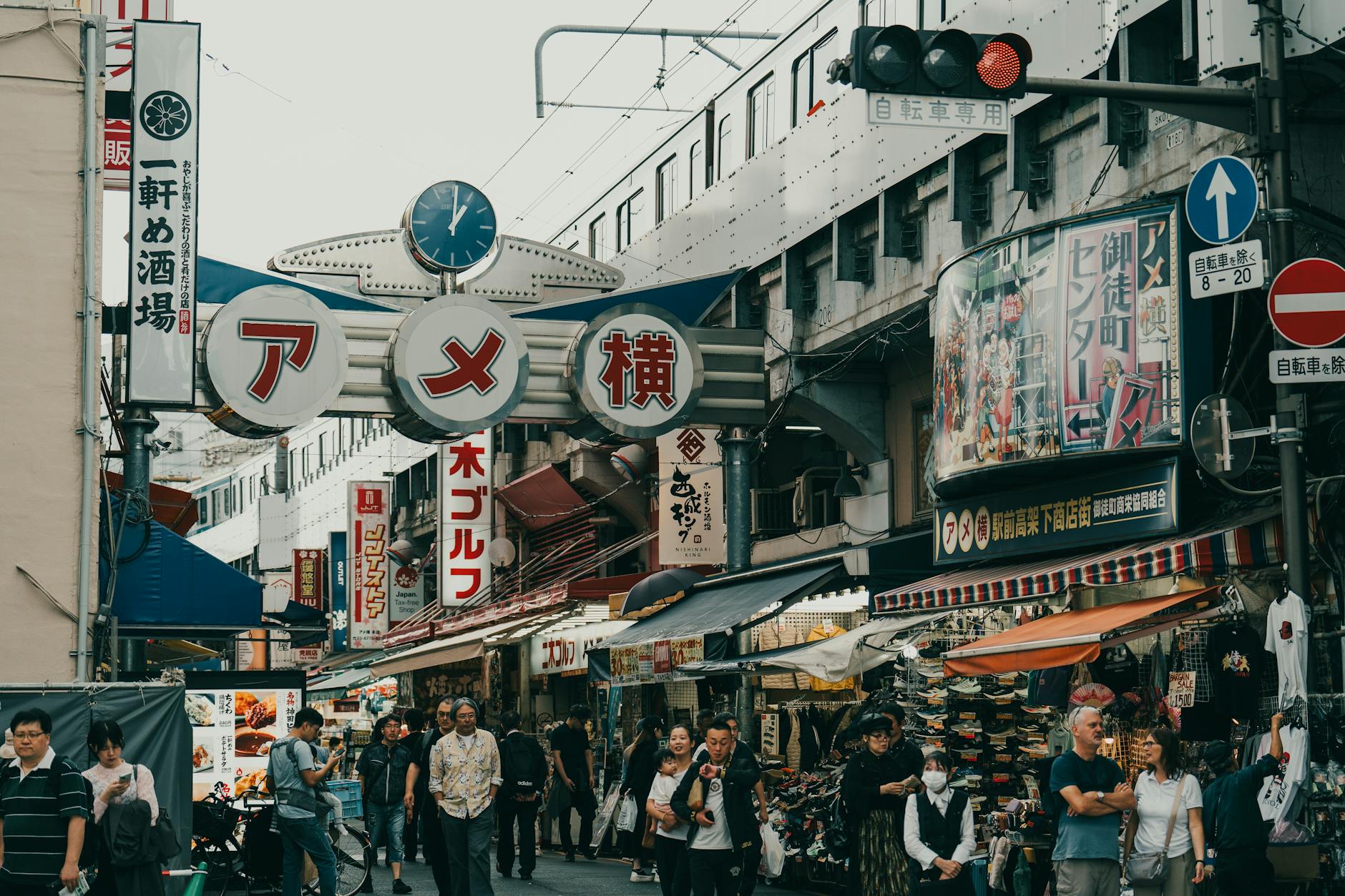
Donki is the king of tax-free shopping in Japan, especially the Mega stores in Shinjuku and Shibuya. Here’s what to know:
- Dedicated tax-free lanes. Major locations have specific floors or checkout banks for tax-free processing. Shibuya’s 7th floor is the usual spot.
- Coupon stacking. Digital coupons give you an extra 5-7% off on top of the 10% tax exemption for purchases over ¥10,000 or ¥30,000. Must be scanned at checkout — can’t be applied after.
- The double dip. Present your discount coupon first to lower the pre-tax price, then scan your passport for the tax exemption. Order matters.
Akihabara Electronics
Bic Camera and Yodobashi Camera both offer 5-7% discounts for international credit cards (Visa, Mastercard, UnionPay) on top of the tax exemption. Watch out for “Japan-Domestic” models — they may not have global warranties, and manufacturers in Canada won’t service them.
If you’re hitting multiple shopping districts in one day, a Tokyo subway day pass pays for itself in three or four rides. The 24-hour ticket covers all Metro and Toei lines — every major shopping district without touching JR.
Department Stores and Their Handling Fees
Takashimaya, Isetan, Mitsukoshi, and Daimaru don’t deduct tax at the register. You pay full price at the counter, then visit a separate “Tax Refund Counter” upstairs. And they charge a handling fee — usually 1.1% to 1.55% — so your real savings drop from 10% to about 8.45%.
| Department Store | Handling Fee | Refund Process |
|---|---|---|
| Takashimaya | 1.55% | 11F Counter (varies). Credit card must match passport. |
| Isetan Mitsukoshi | ~1.55% | Central Counter. Strict credit card and passport matching required. |
| JR Nagoya Takashimaya | 1.1% to 1.55% | 11F Counter. Same-day receipts only. |
If you’re spending time in the Shinjuku or Ginza shopping areas, consider pre-booking experiences through the Tokyo Subway Ticket on Rakuten Travel Experiences — these districts have the highest density of cultural activities, and popular ones sell out fast.
Visit Japan Web and QR Codes
Japan killed the paper purchase record slips (the ones stapled into your passport) back in 2021. Everything’s digital now. The Visit Japan Web service lets you generate a QR code linked to your passport — scan it at participating stores instead of handing over your physical passport.
One thing the official documentation doesn’t mention: that QR code needs a live data connection to work at the register. If you haven’t sorted connectivity before landing, the whole digital workflow breaks. I’ve used Airalo’s Japan eSIM on every trip since 2024 — it activates before you clear immigration, so your QR is ready the moment you walk into a store.
What’s Changing on November 1, 2026
Japan is ending the instant tax-free discount at checkout. The new system works like Europe: you pay full price including tax, then claim a refund at the airport before you fly out.
- At the store: Pay the full tax-inclusive price. The purchase gets linked to your passport digitally.
- At the airport: Visit a tax refund kiosk or customs counter before departure.
- Verification: Scan your passport and boarding pass. Customs may inspect your goods.
- Refund: The 10% tax comes back via credit card, digital wallet, or cash.
This means you need the cash or credit limit to cover the tax during your trip. It also means arriving at the airport earlier to process refunds. The upside: the government plans to drop the general goods vs. consumables distinction, kill the sealed packaging requirement, and remove the ¥500,000 cap.
| Aspect | Current System (2025) | New System (Nov 1, 2026) |
|---|---|---|
| What You Pay | Tax-exempt price. | Tax-inclusive price. |
| When You Get the Discount | Immediately at checkout. | At the airport before departure. |
| Packaging Rules | Strict sealing for consumables. | Expected to be abolished. |
| Purchase Caps | ¥500,000 on consumables. | No caps planned. |
Also worth knowing: as of April 1, 2025, you can no longer ship tax-free items home via courier. Everything must be in your possession — carry-on or checked — when you depart.
Getting Through the Airport
At all major international airports, you scan your passport at a customs kiosk after security but before immigration. This matches the store records against your departure. Most people get waved through, but customs may spot-check high-value items or large volumes of consumables. If you can’t show the goods, you pay the tax on the spot.
The Checked Luggage Problem
If you pack tax-free consumables (alcohol, cosmetics) in checked luggage and customs asks to see them, they’re already in the hold — and you’re technically in violation. Tell the airline check-in agent you have tax-free items in your bags. Some airports have customs officers verify items at the check-in counter.
Liquids in Carry-On
Tax-free sake, whiskey, and skincare over 100ml must go in checked luggage — the sealed tax-free bag doesn’t exempt you from the liquid restriction. Items bought at duty-free shops inside the departure lounge are fine for carry-on.
Coming Home to Canada: What CBSA Wants
Canadian residents get personal exemptions based on how long they’ve been out of the country.
| Time Away | Exemption (CAD) | Alcohol/Tobacco Included? |
|---|---|---|
| Under 24 hours | None. | No. |
| 24-48 hours | $200. | No. |
| 48+ hours | $800. | Yes (within limits). |
| 7+ days | $800. | Yes (within limits). |
For a standard Japan trip (7+ days), you get $800 CAD. The exemption is per person — a couple can’t combine theirs to cover a $1,600 watch.
Here’s something Canadian travelers overlook: you’ve spent ¥300,000 on a camera in Akihabara and ¥150,000 on cosmetics across three Donki runs. That’s roughly $4,500 CAD in your luggage. If your bag gets lost, most credit card travel insurance caps electronics coverage well below what a mirrorless body costs. Sacraw lets you set coverage limits that match what you’re actually carrying — not a generic $500 cap in the fine print.
Duty on Excess Goods
Over the $800 exemption, duties and taxes kick in on the full excess value. Many Japanese electronics are duty-free under MFN tariff but still get hit with GST/HST. Clothing and footwear can attract 16-18% duty on top of sales tax. In Ontario (13% HST), $1,000 in excess clothing at 18% duty could cost you around $310 CAD at the border.
Alcohol Limits
You must be legal drinking age in your province of arrival (18 in AB, MB, QC; 19 elsewhere).
- Wine: Up to 1.5 litres (two 750ml bottles).
- Spirits: Up to 1.14 litres (one standard bottle).
- Beer: Up to 8.5 litres (about 24 cans).
You can bring more than these amounts (up to 45 litres in Ontario or BC), but the provincial markups are brutal — an extra bottle of Japanese whiskey into Ontario can hit 60-140% of the purchase price in levies.
Tobacco Limits
- 200 cigarettes.
- 50 cigars.
- 200 grams of manufactured tobacco.
- 200 tobacco sticks.
Japanese-domestic cigarettes rarely carry the “DUTY PAID CANADA” excise stamp, so a special duty rate applies even within the exemption limit.
The insurance angle on alcohol matters too: a ¥15,000 bottle of whiskey breaking in your checked bag usually isn’t covered by basic policies. I’ve written a full breakdown of travel insurance gaps for Canadians heading to Japan that covers these scenarios.
Food and Biosecurity
The Canadian Food Inspection Agency (CFIA) is strict about what comes in. This is where most travelers run into problems.
Instant ramen: Most packets contain meat extract, meat powder, or animal broth. If CBSA officers spot the character “肉” (meat) on the packaging, it gets confiscated. Stick to seafood-based or vegetarian flavors — those are generally fine if commercially packaged and shelf-stable.
Wagyu beef: You can’t bring raw Wagyu into Canada for personal use. Only shelf-stable products in sealed retort pouches (canned or jarred, room-temperature stable) are allowed, and even those face heavy scrutiny.
What’s safe to bring:
| Item | Status | Limit (per person) |
|---|---|---|
| Tea / Coffee | Allowed. | 20 kg. |
| Candy / Sweets | Allowed (if meat-free). | 20 kg. |
| Condiments (Miso, Wasabi) | Allowed. | 20 kg / 20 L. |
| Dried Seafood | Allowed (no pufferfish). | 10 kg. |
| Crackers / Baked Goods | Allowed (if meat-free). | 20 kg. |
| Fresh Fruit / Veg | Highly restricted (check AIRS). | Varies. |
The broader question of hidden return costs is something I’ve covered in the Japan trip cost breakdown.
Before You Shop: The Checklist
The system is shifting under your feet. By November 2026, the instant discount is gone and you’re fronting the tax on every purchase. Here’s how to protect your savings and your sanity at the border.
- Sort connectivity before you land. The Visit Japan Web QR code needs a data connection at the register. Set up an Airalo eSIM for Japan before departure — it activates on arrival.
- Get the immigration stamp. After the automated gate at Narita, Haneda, or Kansai, go straight to an immigration officer for the physical “Temporary Visitor” stamp. No stamp, no tax-free.
- Plan your transit around shopping districts. Covering Akihabara, Shinjuku, and Ginza in one day? A Tokyo subway day pass covers all Metro and Toei lines.
- Keep receipts separate. Don’t mix general goods and consumables unless you want your new camera sealed in a tamper-evident bag for the rest of your trip.
- Check your insurance. Returning with ¥300,000+ in gear? Most credit card baggage policies cap at $500. Sacraw lets you set coverage that matches what you’re actually carrying.
- Photograph everything. Having photos of receipts and goods on your phone saves time at the CBSA line.
The financial case for shopping in Japan is still strong — weak yen, deep retail discounts, and a 10% tax exemption that persists through the 2026 transition. But the system rewards preparation. The travelers who do the homework before checkout are the ones who keep the margin.