
The JR Pass in 2026: When the National Pass Pays Off (and When a Regional Pass Fits Better)
The 7-day JR Pass costs ¥50,000 after the 2023 hike. Here is the Golden Route math, when the pass pays for itself, and which regional passes beat it in 2026.
The JR Pass used to be the first thing every Japan guide told you to buy. “It pays for itself!” “Unlimited travel!” “No brainer!”
That advice needs updating.
In October 2023, JR raised pass prices by roughly 70 percent. A 7-day pass jumped from ¥29,650 to ¥50,000. The 14-day pass went from ¥47,250 to ¥80,000. But here is what most guides will not tell you: Japanese domestic ticket prices barely moved. The gap between pass price and actual ticket cost collapsed overnight — so it is worth re-running the numbers for your specific route rather than assuming 2019 pricing. I keep a live JR Pass price breakdown — checked daily, in six currencies — for exactly that.
The national pass requires a special upgrade ticket for Japan’s fastest trains, and there is a category of regional passes that did not change with the 2023 hike worth weighing alongside it. This is what the math actually looks like in 2026. For more on this, see our airport arrival breakdown.
The Real Math: Golden Route 2026
The Tokyo-Kyoto-Osaka Golden Route is the exact itinerary the JR Pass was designed for. Here is what it actually costs.
Without the JR Pass (Individual Tickets)
- Tokyo → Kyoto (Nozomi): ¥13,320
- Kyoto → Osaka (local): ¥430
- Osaka → Tokyo (Nozomi): ¥13,870
- Total: ¥27,620
With the 7-Day JR Pass
- Cost: ¥50,000
- Restriction: No Nozomi trains. You are locked into the Hikari, adding 20–30 minutes per leg.
You would need to almost double that itinerary just to break even — and you would still be riding slower trains to do it.
The Break-Even Calculation
- Tokyo ↔ Hiroshima round trip: ¥37,540 — still short of the pass price
- Tokyo → Hiroshima → Fukuoka → Kyoto → Tokyo: approximately ¥58,000 — break-even territory
When I ran the numbers for my Tohoku loop — Tokyo to Sendai, across to Akita, down to Niigata, and back — individual tickets totaled ¥67,400. The JR East Pass covered the same route for ¥27,000. That is when the math works. For a standard Golden Route trip, it rarely does.
Unless you are covering extreme distances across multiple regions in a single week, the pass costs more than buying individual tickets — platforms like pre-purchased Tokyo–Kyoto Shinkansen seats let you skip the station counter entirely.
Before committing, run your actual itinerary through HyperDia or Google Maps and compare against individual ticket prices on Japan Rail — individual Shinkansen bookings are available there alongside regional passes, so you can price both options before making a decision.
The Nozomi Exclusion Problem
The JR Pass excludes Japan’s fastest and most frequent Shinkansen. On the Tokyo-Kyoto route:
- Nozomi: 2 hours 15 minutes, runs every 10 minutes
- Hikari (JR Pass allowed): 2 hours 40 minutes, runs every 30 minutes
You are paying more — for slower, less frequent service. That trade-off compounds across every leg of your journey.
On high-demand travel dates — Golden Week, New Year, cherry blossom season — Nozomi trains book out days in advance. Pass holders competing for Hikari seats on the same dates face longer queues and fewer available departure windows. The pass restricts you to the most crowded trains precisely when demand is highest. For more on this, see our Golden Week pricing guide.
The Regional Pass Breakdown: Your 2026 Options
The national pass is the broad, all-in-one option. Regional passes are the targeted alternative. They are geographically focused, significantly cheaper, and — critically — several of them allow the fast Nozomi-class trains that the national pass explicitly excludes.
Here is every major regional pass worth knowing in 2026, with current pricing and honest break-even analysis:
| Regional Pass | Price | Details |
|---|---|---|
| Kansai-Hiroshima Area Pass | ¥17,000 | Duration: 5 days · Key Coverage: Osaka–Hiroshima on Sanyo Shinkansen; Kyoto, Nara, Kobe · Fast Trains Allowed?: Yes — Mizuho + Sakura (same speed as Nozomi on this corridor) |
| Sanyo-San’in Area Pass | ¥23,000 | Duration: 7 days · Key Coverage: Osaka → Hiroshima → Fukuoka; San’in coast · Fast Trains Allowed?: Yes — Nozomi included on the Sanyo corridor |
| JR Kansai Wide Area Pass | ¥12,000 | Duration: 5 days · Key Coverage: Osaka, Kyoto, Nara, Kobe, Hiroshima (limited express routes) · Fast Trains Allowed?: No |
| Hokuriku Arch Pass | ¥35,000 | Duration: 7 days · Key Coverage: Tokyo – Kanazawa – Osaka via Hokuriku Shinkansen; also covers Matsumoto, Hakuba from March 2026 · Fast Trains Allowed?: Yes — Hokuriku Shinkansen Kagayaki included |
| JR Kyushu All-Area Pass | ¥26,000 | Duration: 7 days · Key Coverage: Full Kyushu Shinkansen + all JR Kyushu limited expresses · Fast Trains Allowed?: Yes — Mizuho + Sakura on the Kyushu corridor |
| JR East Wide Area Pass (from March 14, 2026) | ¥35,000 | Duration: 5 days · Key Coverage: Kanto + Tohoku Shinkansen, covering the Sendai, Aomori and broader Tohoku region · Fast Trains Allowed?: No Nozomi (no Nozomi operates on these routes) |
Kansai-Hiroshima Area Pass: The Best Value in 2026
At ¥17,000 for five days, the Kansai-Hiroshima pass covers the stretch most foreign tourists actually travel. Osaka to Hiroshima on the Sanyo Shinkansen using the Mizuho and Sakura services — equivalent speed to the Nozomi on this segment — plus Kyoto and Nara day trips. That restriction that makes the national pass inferior does not exist on this product. The route Osaka → Hiroshima on individual tickets alone costs ¥11,500 return. Add Kyoto and two day trips and the pass pays off within two days. For more on this, see our rural driving guide.
Hokuriku Arch Pass: The Scenic Route That Now Makes Financial Sense
The Hokuriku Arch Pass connects Tokyo and Osaka via the Hokuriku region — Kanazawa, Toyama, Fukui — rather than the standard Pacific coast corridor. As of March 14, 2026, coverage expanded to include Matsumoto, Kofu, Hakuba, Obama, and Maizuru, and the price increased from ¥30,000 to ¥35,000. The pass is valid for seven consecutive days and includes the Hokuriku Shinkansen Kagayaki express. For travelers who want to see the Japan Sea coast and arrive in Osaka via a different route than they left Tokyo, this pass covers both transit and exploration simultaneously — something the national pass cannot efficiently do at twice the cost.
JR East Wide Area Pass: The Tohoku Play
Note the timing: the JR East Tohoku Area Pass (previously ¥30,000 for 5 days) ended sales on March 13, 2026. The replacement is the JR East Wide Area Pass at ¥35,000 for 5 days or ¥50,000 for 10 days, with expanded coverage across broader Kanto and the Tohoku region. If your itinerary involves Sendai or Aomori without covering Kyushu or Hiroshima, this is the pass to look at. For Hokkaido itineraries, pair it with a separate Hokkaido pass or compare against the nationwide JR Pass.
JR Kyushu All-Area Pass: The Island-Specific Option
At ¥26,000 for seven days, the JR Kyushu All-Area Pass covers the full Kyushu Shinkansen network plus all JR Kyushu limited express trains — Beppu, Yufuin, Nagasaki, Kagoshima, Kumamoto, Fukuoka. If your Japan trip is anchored in Kyushu rather than the Kansai-Kanto corridor, this pass beats the national option by ¥24,000 while giving you deeper local coverage than the national pass provides on the island anyway.
The Hybrid Strategy: One-Way Bullet + Regional Pass
The most underused rail strategy in Japan is the hybrid: buy one long-distance individual ticket, then activate a regional pass for the rest of the trip. This structure works particularly well for the most common foreign tourist itinerary — flying into Tokyo, traveling west.
Example: Tokyo → Kansai → Hiroshima, 10 days
- Tokyo → Shin-Osaka (Nozomi, individual ticket): ¥14,720
- Kansai-Hiroshima Area Pass (5 days): ¥17,000
- Osaka → Tokyo return (Nozomi, individual ticket): ¥14,720
- Total: ¥46,440
A 7-day national JR Pass covering the same general route: ¥50,000. With the hybrid, you rode the Nozomi both ways — faster, more frequent, no fighting for Hikari seats on the most crowded rail corridor in Japan — and saved ¥3,560 in the process. On a 14-day itinerary extending into Hiroshima and the San’in coast, the hybrid saves you ¥33,000+ over the national 14-day option.
The IC Card Strategy: What Every Traveler Needs Regardless
The JR Pass covers long-distance Shinkansen and JR express lines. It does not cover most urban subway systems. In Tokyo, the Metro network — covering the Ginza, Hibiya, Marunouchi lines and nine others — requires a separate IC card regardless of what pass you hold. In Kyoto, the city bus network and the Kintetsu line to Nara are outside JR coverage entirely.
Every Japan traveler should carry a Suica or PASMO IC card for urban transit, whether or not they hold any rail pass. Load it with ¥3,000–¥5,000 at the start of each city stay. The IC card works at convenience stores, vending machines, and station lockers. It is not optional infrastructure — it is the baseline that the JR Pass cannot replace.
Alongside the IC card, get mobile data sorted before you navigate any of this. Sakura Mobile eSIM activates before you land and keeps Google Maps and HyperDia running the moment you step off the plane — essential when you’re cross-referencing train connections across multiple passes at a busy station.
Booking Without the Queue
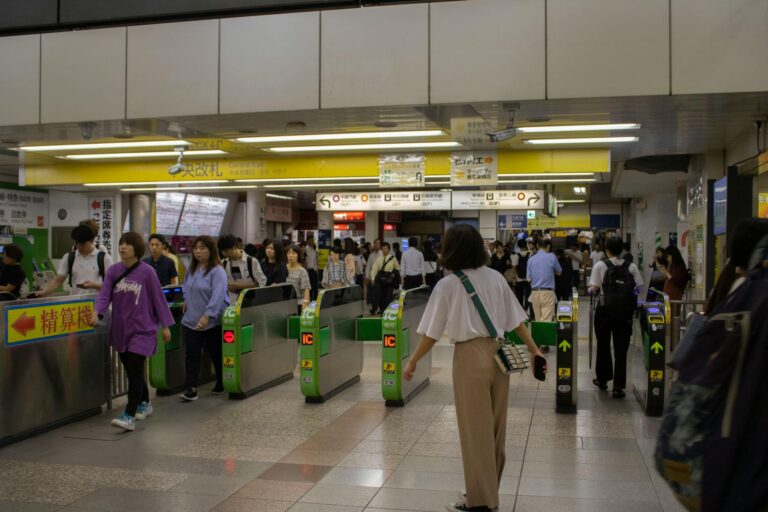
JR Pass redemption and individual ticket purchasing at major stations — Tokyo, Shin-Osaka, Kyoto — means queuing at a green-windowed JR ticket office (Midori-no-madoguchi). On peak travel dates, that queue runs 45–90 minutes. It is one of the few genuine friction points in an otherwise frictionless country.
The alternative: pre-book individual Shinkansen tickets online through Japan Rail or the official JR website (eki-net.com for domestic bookings). QR code pickup is available at green-screen vending machines, bypassing the manned counter entirely. Regional passes purchased in advance through official channels can be collected at the same machines.
Traveling as a group? You can pair it with a rented pocket Wi-Fi unit so a whole group shares one bill instead of buying a SIM for every device.
When the JR Pass Still Works
The pass is not a scam. For certain itineraries, it still delivers genuine value:
If your itinerary lands in that bracket, order the JR Pass before you fly — the exchange order ships to your home address.
- You are doing four or more long-distance legs in a single week (Tokyo–Hiroshima–Fukuoka–Kyoto–Tokyo)
- You are traveling with children — child passes remain half price, which significantly changes the group math
- Your itinerary covers Hokkaido and Kyushu in the same trip — where cumulative distances genuinely push past the pass price
- You value simplicity over savings — one card, zero planning, no ticket queues
- You are doing a full-country sweep in 21 days — Shikoku, Kyushu, Tohoku — where the 21-day pass at ¥100,000 can still break even
When a Regional Pass or Point-to-Point Wins
- Golden Route only (Tokyo–Kyoto–Osaka) — individual tickets are cheaper by ¥22,000+
- Staying in one city with day trips – local passes and IC cards usually come out cheaper
- Flying into Osaka, out of Tokyo — a one-way Shinkansen is smarter and cheaper
- Any itinerary under three major city hops with no Hokkaido or Kyushu extension
- Any trip where you actually want to ride the Nozomi — the pass explicitly excludes it
The Bottom Line
Before you buy any rail pass, run your actual itinerary through HyperDia or Google Maps. Add up the individual ticket prices for every leg. If the pass saves you at least ¥10,000 and does not restrict you from trains you actually want to ride, it is a buy; if not, point-to-point tickets or a regional pass may serve you better.
The math changed in October 2023. Regional passes existed before that change and largely did not follow the national pass pricing upward. The Kansai-Hiroshima Area Pass is ¥17,000 for five days. The national 7-day pass is ¥50,000. For most itineraries, those two numbers tell the whole story.
One thing the math does not account for: rail passes are non-refundable after activation. If illness, injury, or an emergency cuts your trip short, that ¥50,000 is gone. A comprehensive policy through Sacraw covers trip interruption costs including pre-paid non-refundable transportation — worth having before you activate any pass.
Keep wandering — but do the math first.
Resources
Japan Rail — Book individual Shinkansen tickets and regional passes; the Kansai-Hiroshima Area Pass is available here alongside individual Nozomi bookings. QR voucher pickup at green-screen vending machines skips the 90-minute JR ticket office queue entirely.