Driving in Japan on the Left — A Canadian’s Guide to Left-Hand Traffic
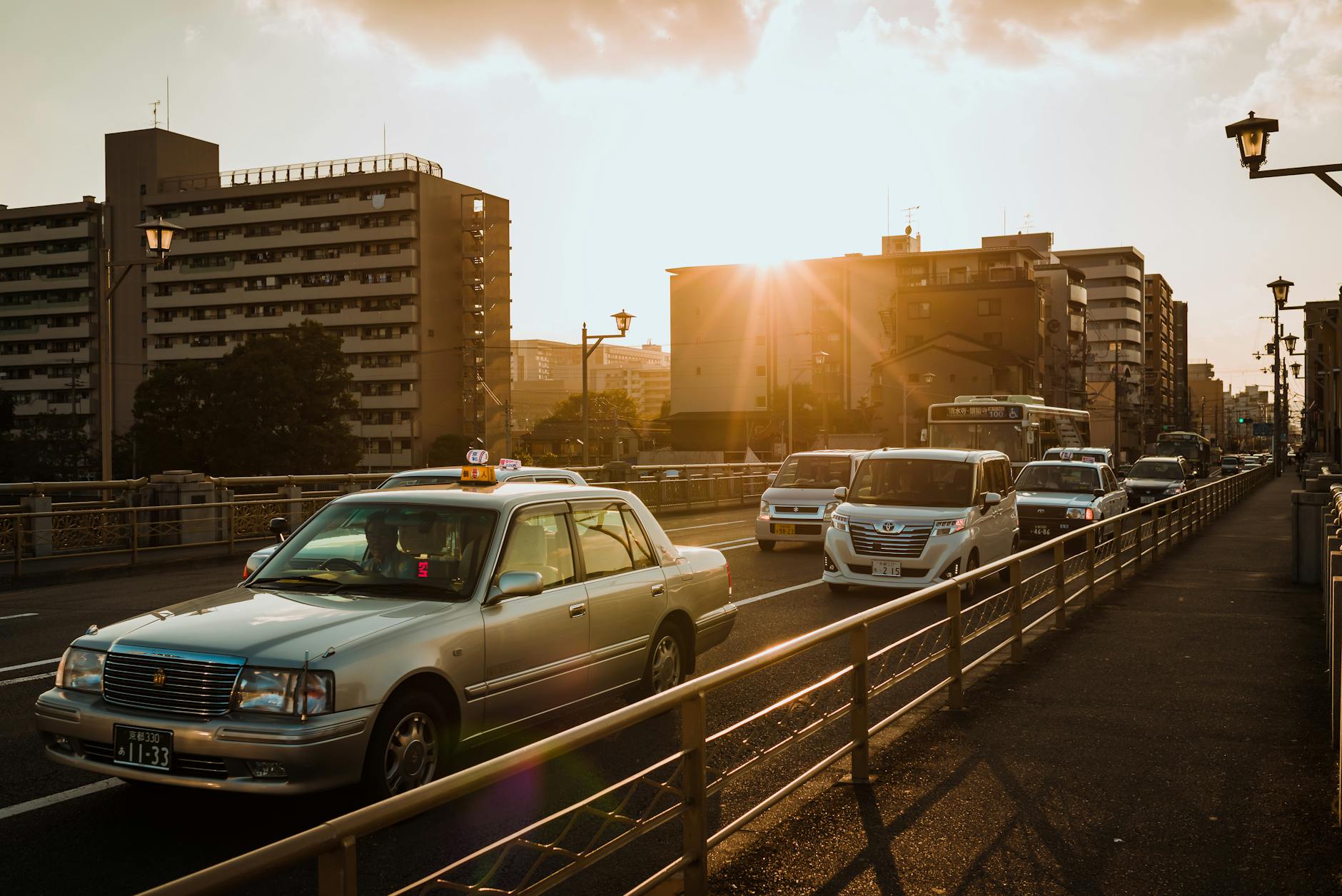
It takes about 30 minutes to adjust to driving on the left in Japan. The hardest part is not the steering wheel — it is the turn signals, the lane positioning, and the quiet panic at every intersection. Here is what a Canadian driver actually needs to know.
It takes about 30 minutes to adjust to driving on the left in Japan. The hardest part is not the steering wheel — it is the turn signals, the lane positioning, and the quiet panic at every intersection. Once the muscle memory kicks in, left-hand traffic feels natural. But those first thirty minutes will test you in ways you do not expect.
{
“@context”: “https://schema.org”,
“@type”: “BreadcrumbList”,
“itemListElement”: [
{
“@type”: “ListItem”,
“position”: 1,
“name”: “Home”,
“item”: “https://steviethewanderer.com/”
},
{
“@type”: “ListItem”,
“position”: 2,
“name”: “Getting Around”,
“item”: “https://steviethewanderer.com/category/getting-around/”
},
{
“@type”: “ListItem”,
“position”: 3,
“name”: “Driving in Japan on the Left — A Canadian’s Guide to Left-Hand Traffic”
}
]
}
{
“@context”: “https://schema.org”,
“@type”: “HowTo”,
“name”: “How to Adapt to Left-Hand Driving in Japan”,
“description”: “A step-by-step guide for Canadian drivers adjusting to left-hand traffic in Japan, covering the IDP requirement, first-day driving, highway navigation, and rural road strategy.”,
“totalTime”: “PT30M”,
“step”: [
{
“@type”: “HowToStep”,
“name”: “Get your International Driving Permit before leaving Canada”,
“text”: “Visit any AAA, CAA, or motoring association office with your valid Canadian driver’s license, two passport photos, and $32. The IDP is issued same-day and is valid for one year. Japan only recognizes IDPs issued under the 1949 Geneva Convention — the Canadian IDP qualifies.”
},
{
“@type”: “HowToStep”,
“name”: “Book your rental and request an ETC card”,
“text”: “Reserve through a major rental agency. Request an ETC card for automated toll payment at booking. Pick up outside major city centers to avoid dense urban traffic on your first drive.”
},
{
“@type”: “HowToStep”,
“name”: “Set your GPS to English voice guidance before leaving the lot”,
“text”: “Most rental cars include a Japanese GPS unit. Switch it to English before pulling out. The voice cues give your brain the extra second it needs to process left-side positioning.”
},
{
“@type”: “HowToStep”,
“name”: “Drive the first 30 minutes on quiet local roads”,
“text”: “Avoid highways immediately. Drive through a residential area first. Focus on keeping left, using the turn signal (not the wiper stalk), and positioning yourself in the left half of the lane.”
},
{
“@type”: “HowToStep”,
“name”: “Use the hug-the-center-line technique for lane positioning”,
“text”: “Your instinct as a right-hand driver is to drift left toward the curb. Counter this by keeping your body aligned with the center line. If the center line feels uncomfortably close, your car is correctly positioned.”
},
{
“@type”: “HowToStep”,
“name”: “Stop at rest areas every 90 minutes”,
“text”: “Driving on the opposite side demands more cognitive energy than you realize. Japanese expressways have rest stops every 15 to 40 kilometers. Use them.”
}
]
}
The IDP Requirement: Do This Before You Leave Home
You cannot rent a car in Japan without an International Driving Permit. There are no exceptions, no workarounds, and no way to get one once you land.
Walk into any CAA (Canadian Automobile Association) office with your valid provincial license, two passport-sized photos, and thirty-two dollars. They issue the IDP on the spot — same day, no appointment. It is valid for one year.
Japan only recognizes IDPs issued under the 1949 Geneva Convention on Road Traffic. Canada is a signatory, so the standard CAA-issued IDP qualifies. Countries operating under the 1968 Vienna Convention are not recognized. For the full documentation hierarchy, the 2026 rural driving guide covers what happens when it goes wrong.
Carry both the IDP and your original Canadian license at all times. The IDP alone is not valid — it is a translation document, not a replacement.
The First 30 Minutes: What Actually Happens
You pull out of the rental lot, and three things go wrong immediately.
The turn signal. In a Japanese car, the turn signal stalk is on the right side of the steering column — opposite to every Canadian car. Your muscle memory will activate the windshield wipers every time you signal a turn. This is universal. It took me about two days before the wipers stopped going off at intersections, and about a week before the correct stalk felt instinctive.
The lane drift. Your spatial awareness is calibrated for sitting on the left side of the car. Now you are on the right. Your brain compensates by drifting toward the left curb, because it is trying to maintain the familiar distance to the center line — except from the wrong side. You will clip curbs. You will crowd guardrails. This is normal.
The intersection panic. Turning right in Japan is the equivalent of turning left in Canada — you cross oncoming traffic. The first time you sit at an intersection waiting to turn right, every instinct says you are about to drive into oncoming cars. The GPS voice helps. Trust it.
Roundabouts flow clockwise. If you have driven them in Canada (counterclockwise), the reversal is disorienting for exactly one roundabout. After that, it clicks.
Highway Driving: Tolls, Speed, and Rest Stops
Japanese expressways are well-maintained, lightly trafficked compared to the 401, and expensive. Tokyo to Hakone (80 km) costs around 2,500 yen (~$23 CAD as of early 2026). Tokyo to Osaka tops 10,000 yen (~$91 CAD) one-way.
ETC cards. Most agencies provide an ETC (Electronic Toll Collection) card for a flat fee of about 330 yen per rental. Get one. It saves you from stopping at every toll gate fumbling for cash. The ETC lane is on the left — purple signs, barrier lifts automatically at 20 km/h. ETC also unlocks 30 percent discounts on late-night and weekend tolls that cash payers do not get.
Speed limits. Posted at 80 to 100 km/h on expressways. Traffic flows at 100 to 120. Fixed speed cameras (“orbis”) and occasional mobile radar handle enforcement. The tolerance is roughly 15 to 20 km/h over, but I would not test it as a foreign driver — a ticket means a police station visit.
Rest stops. Two tiers: PA (Parking Area) — toilets and vending machines every 15 to 25 km. SA (Service Area) — restaurants, convenience stores, gas stations, sometimes hot springs, every 40 to 60 km. The food is better than it has any right to be. Stop every 90 minutes — the mental load of left-side driving causes fatigue faster than you expect.
Rural Roads: Where Left-Hand Driving Gets Real
Single-lane mountain roads. Common in Hakone, Izu Peninsula, and rural Shikoku. When you meet oncoming traffic on a switchback, someone reverses to the nearest wide spot. Etiquette: the uphill car has right of way. Flash your hazards as a thank-you. For a full account of what this looks like in practice, see the Nikko driving guide and the Hakone by car guide — both cover specific mountain roads with real approach notes.
No shoulders. The pavement ends and a ditch or rice paddy begins. Combined with the lane drift problem, your left mirror needs constant attention. I scraped a mirror on a stone wall in Nikko. The rental agency charged 20,000 yen (~$182 CAD).
Wildlife. Deer, wild boar, and tanuki are common after dark. Hokkaido adds bears. No streetlights on rural mountain roads — drive slowly after sunset. The Okunikko driving guide goes into the specific wildlife zones and seasonal hazards on that route.
Kei trucks. Small cargo trucks doing 30 km/h on mountain roads. Passing is rarely safe. Patience is the only strategy.
Parking: Coin Lots, Phone Numbers, and Cities
Coin parking. You drive in, a metal plate rises behind your rear tire to lock the car, and you pay at a central machine when you leave. Rates range from 200 yen/hour in suburbs to 1,500 in central Tokyo. Most accept coins, 1,000-yen bills, and increasingly IC cards (Suica/Pasmo).
Navigation by phone number. Japanese GPS units accept destinations by phone number — the standard local method. Look up the phone number of your destination before driving, not the address. The in-car GPS with phone number input is more reliable than Google Maps for parking lots and small businesses.
City parking. Do not drive into central Tokyo, Osaka, or Kyoto. Park at a suburban station and train in. If you must, department stores offer validated parking — spend 2,000 yen and get two hours free.
Gas Stations: Full-Service and Self-Service
Full-service stations are the majority outside cities. Pull in and say “regyuraa, mantan” (regular, full) — the attendant handles everything. No tipping.
Self-service stations are marked セルフ. One difference from Canada: touch the static-discharge pad (metal plate on the pump) before grabbing the nozzle. Regular is the green handle. Most accept credit cards, though some rural stations are cash-only.
Prices run 170 to 185 yen per liter (~$1.55–$1.68 CAD/L as of early 2026). Rental compacts return 15 to 18 km/L — budget 5,000 to 7,000 yen (~$45–$64 CAD) per full tank.
My Adaptation Tips After 4,000+ Kilometers on the Left
Hug the center line. If the center line feels uncomfortably close, your car is positioned correctly. If it feels comfortable, you are too far left and about to clip something.
GPS voice on at all times. Even when you know the route. The two-second advance warning on turns is the difference between a smooth lane change and a panicked correction. You need a live data connection for this to work properly — I use Airalo for Japan eSIM data. A Japan plan runs about $5 USD, activates before you land, and keeps Google Maps and your insurer’s emergency line reachable the entire trip. The Japan eSIM guide for Canadians covers which plans are worth it and which are overpriced.
Short first day. Under three hours of total driving. Use every rest stop. The mental load drops dramatically by day two, but day one is exhausting.
Pick up outside the city. Take the train to Odawara or Gotemba and rent there. Your first left-hand experience should not be Shinjuku traffic.
Start on the expressway. No intersections, no pedestrians, no right turns across traffic. Get the basic left-side feel before tackling urban streets.
Get full insurance. Canadian auto insurance does not cover Japan. Credit card coverage varies. The rental CDW runs 1,000 to 2,000 yen per day — take it. For additional coverage, TuGo offers travel insurance covering rental vehicle damage for Canadian travelers. Given the mirror-scraping reality of narrow Japanese roads, full coverage is essential.
Before You Go — Action Checklist
- Get your IDP before departure — walk into any AAA, CAA, or motoring association office with your license, two passport photos, and $32. Same-day issue. There is no way to get one in Japan.
- Request the ETC card at booking, not at pickup.
- Set up your eSIM before boarding — get an Airalo Japan plan so GPS is live the moment you pick up the keys. Do not depend on rental car GPS alone — the maps are often outdated.
- Read the route-specific guides — Nikko, Hakone, and Okunikko each have specific road hazards, parking notes, and mountain road strategies that this article does not cover.
- Sort travel insurance before you fly — get a quote from TuGo. Rental CDW covers the car; travel insurance covers you. You need both.
- Plan your first pickup point — Odawara, Gotemba, or another suburban city outside the main urban grid. Your first thirty minutes on the left should not include Shinjuku or Shibuya.
- Save 110 and 119 in your phone contacts — 110 is police (required call for any accident), 119 is ambulance. These are the two numbers you need if something goes wrong.
Frequently Asked Questions
Can I drive in Japan with just my Canadian license?
No. You need both your valid provincial license and an International Driving Permit issued by CAA. The IDP costs $32 and is issued same-day. You cannot obtain one in Japan.
How long does it take to get used to driving on the left?
About 30 minutes for basic lane keeping, one to two days for the turn signal stalk, and roughly a week before it feels fully automatic. The first day is mentally exhausting — plan a short drive.
Is it worth renting a car or should I just use trains?
Trains for Tokyo, Osaka, and Kyoto. The best strategy is train for cities, car for rural legs.
Do I need an ETC card for highway tolls?
Not strictly — you can pay cash. But the ETC card saves time, unlocks 30 percent discounts on late-night and weekend tolls, and costs only about 330 yen as a flat fee per rental. It pays for itself on one toll road.
What side of the car is the steering wheel on?
The right side. You sit on the right, drive on the left, and everything that was on your left in Canada is now on your right — turn signals, gear shift, traffic flow. The pedal layout (accelerator right, brake left) stays the same.
What happens if I get into an accident?
Call 110 (police) immediately — legally required for all accidents, even minor ones. Do not move vehicles until police arrive. The rental agency needs a police report number for insurance. If anyone is injured, call 119 (ambulance) first.
This article complements The 2026 Rural Driving Guide, which covers documentation requirements, toll logistics, and recommended routes in detail. Read both before picking up your rental keys.
A foreign driver’s licence is invalid here without an International Driving Permit, which must be acquired from the CAA or AAA before leaving home. Once my paperwork is in order, I usually arrange my vehicles through a Japanese car rental aggregator.