Japan IC Card Guide — Suica, Pasmo, ICOCA: Which to Get in 2026
Suica, Pasmo, or ICOCA? A field-tested guide to Japan's IC transit cards in 2026 — which to get, where to buy, mobile setup, and how the balance system works.
Short answer: get a Welcome Suica or Pasmo Passport at the airport when you land. They cost nothing upfront, work on virtually every train, bus, and convenience store in Japan, and save you from fumbling with cash or ticket machines in a language you probably don’t read. If your phone supports it, skip the plastic entirely and add a mobile Suica to Apple Wallet or Google Pay before you even board your flight.
What Is an IC Card and Why Do You Need One?
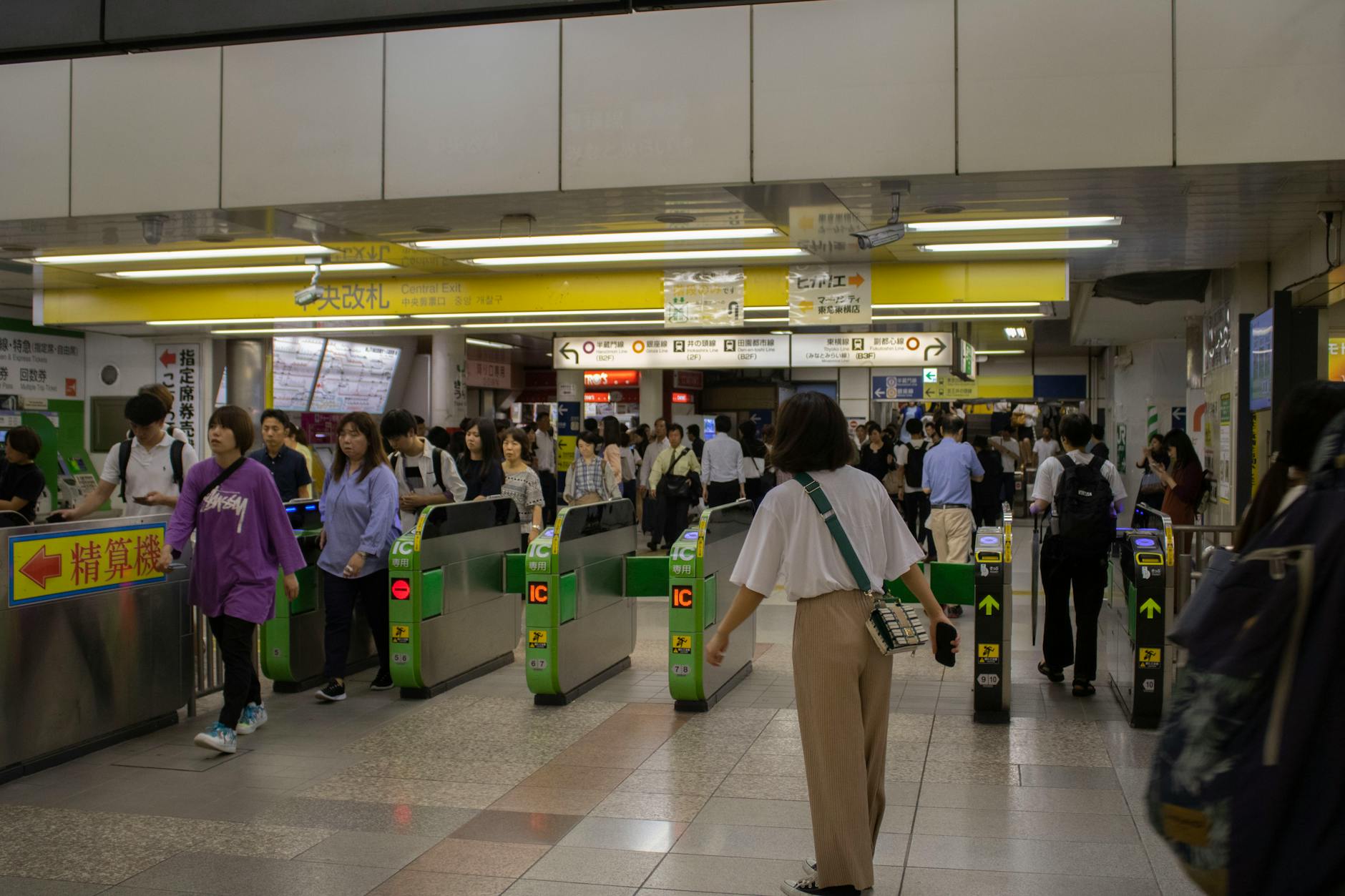
An IC card is a rechargeable contactless smart card that works as your transit pass and everyday wallet across Japan. You tap it on a reader when you enter a train station, tap again when you exit, and the correct fare is deducted automatically. No more standing in front of a fare chart trying to figure out how much a ticket to Shibuya costs.
Beyond transit, IC cards are accepted at convenience stores (7-Eleven, Lawson, FamilyMart), vending machines, coin lockers, and thousands of shops and restaurants. After a few days in Japan, you’ll find yourself tapping your card for almost everything. It’s faster than cash, eliminates the pile of coins you’d otherwise accumulate, and works without needing a Japanese bank account or phone number.
Understanding how IC cards fit into your broader payment strategy is worth doing before you land. If you haven’t figured out the cash vs. card question yet, read my Japan cash vs. card breakdown first — IC cards sit right in the middle of that equation.
The Cards: Suica vs Pasmo vs ICOCA
Japan has 10 different IC card brands, but only three matter for visitors:
Suica
Issued by JR East. This is the default card for Tokyo and the broader Kanto region. The penguin mascot is everywhere. You’ll find Suica machines and counters at all JR East stations, including Narita and Haneda airports. As of 2026, JR East has resumed selling regular plastic Suica cards – sales restarted on March 1, 2025 – and the tourist version (Welcome Suica) is also available.
Pasmo
Issued by the consortium of private railways and metro lines in Tokyo. Pasmo works on the exact same network as Suica — every reader that accepts one accepts the other. The only real difference is branding and where you buy it. You’ll find Pasmo at Tokyo Metro stations, Toei Subway stations, and private railway counters. Its tourist version is called Pasmo Passport.
ICOCA
Issued by JR West, covering Osaka, Kyoto, and the broader Kansai region. If you’re flying into Kansai International Airport, ICOCA is what you’ll find at the JR ticket office. Functionally identical to Suica and Pasmo — it works nationwide on all interoperable networks. There’s a tourist version called ICOCA Haruka (bundled with a discounted Haruka Express ticket to central Osaka or Kyoto).
The bottom line: all three cards work everywhere. A Suica bought in Tokyo taps fine on Osaka Metro. An ICOCA bought in Osaka works on JR Yamanote Line in Tokyo. Just get whichever is available at your arrival airport and don’t overthink it.
Welcome Suica and Pasmo Passport: The Tourist Versions
Since regular IC cards have been hard to buy since 2023, JR East and the Pasmo consortium rolled out tourist-specific versions that are easy to get at the airport:
Welcome Suica — available at JR East Travel Service Centers at Narita Airport (Terminal 1 and 2/3), Haneda Airport Terminal 3, Tokyo Station, Shinjuku Station, and other major JR hubs. No 500 yen deposit (~$4.50 CAD) required. Valid for 28 days from purchase. You load money onto it and use it like a normal Suica. When it expires, any remaining balance is gone — spend it down before your last day.
Pasmo Passport – note that this tourist card was discontinued in August 2024 and is no longer sold. Regular Pasmo and a Welcome Suica are the options at the airport counters for Keikyu (Haneda) and Keisei/Skyliner (Narita), plus Tokyo Metro and Toei station offices. Comes with a tourist design that’s honestly a decent souvenir.
Both cards cost nothing to acquire — you just load a starting balance (minimum 1,000 yen is a reasonable start; I usually load 3,000 yen (~$27 CAD) on day one, as of early 2026). I’ve carried a Welcome Suica on my last four trips and never had an issue.
Apple Wallet and Google Pay: Mobile IC Cards
This is the move, honestly. If your phone supports it, set up a mobile Suica or Pasmo before you even leave home.
iPhone (Apple Wallet): Open Wallet, tap the “+” button, search for Suica or Pasmo, and create a new card. You can add money via any international credit card. It works with Face ID or double-click on Apple Watch. No deposit. No expiration. I’ve had the same mobile Suica since 2023 and just reload it each trip.
Android (Google Pay): Available on phones with FeliCa NFC support – but most recent Pixel and Samsung Galaxy phones sold internationally do not support it (Google software-locks international Pixels, and international Samsung Galaxy phones are not expected to support it until 2027). Only iPhones have universal global FeliCa support. Open Google Wallet, add a Suica, and fund it with your card. Same functionality as Apple — tap to ride, tap to pay.
Why mobile is better: no deposit, no expiration, instant reload from your phone (no finding a charge machine), works even when the screen is off (iPhone Express Transit), and you can’t lose a plastic card that doesn’t exist. The only downside is if your phone dies, you can’t tap — so keep an eye on your battery or carry a backup power bank.
A reliable data connection helps for reloading on the go. I use an Airalo eSIM so I always have connectivity for top-ups and route planning without hunting for Wi-Fi. I have a full breakdown in my Japan eSIM guide for Canadians if you haven’t sorted that yet.
Where IC Cards Work Beyond Transit
Your IC card is basically a debit card that works at any reader displaying the IC logo (a stylized swoosh you’ll see everywhere). Here’s where I end up tapping mine constantly:
- Convenience stores — 7-Eleven, Lawson, FamilyMart, Ministop. Tap at checkout for onigiri, drinks, or that 2am snack run. If you want a full breakdown of how to use konbini like a local, I have a convenience store guide worth reading.
- Vending machines — most drink vending machines across the country accept IC. Look for the card reader pad below the coin slot.
- Coin lockers — station lockers at major terminals (Tokyo, Shinjuku, Osaka, Kyoto) accept IC cards. Way easier than feeding coins, and you unlock with the same card.
- Restaurants and shops — chain restaurants like Matsuya, Yoshinoya, and many ramen spots. Drugstores like Matsumoto Kiyoshi and Don Quijote.
- Taxis — most taxis in Tokyo and Osaka accept IC card payment.
- Airport shops — spend your remaining balance at the airport before you fly out.
That said, Japan is still a cash-heavy country, especially outside major cities. Small independent restaurants, shrines, and rural buses sometimes only take cash. If you’re unsure how much physical yen to carry alongside your IC card, my cash vs. card guide has daily budget tiers by traveler type. I keep 10,000–15,000 yen in my wallet as backup at all times.
Beyond transit and konbini, IC cards are a great way to pay for experiences too. Browse Tokyo experiences on Rakuten — many operators accept IC card payment on-site, and booking ahead locks your spot without touching your cash stash.
Loading Money and Getting Your Deposit Back
Here’s how the money side works:
Deposit: Regular (non-tourist) IC cards have a refundable 500 yen deposit (~$4.50 CAD). Tourist cards (Welcome Suica, Pasmo Passport) have no deposit.
Loading money (as of early 2026): Use the charge machines at any train station — they accept 1,000 yen, 5,000 yen, and 10,000 yen bills. You can also charge at convenience store registers (just tell the cashier “charge” and hand them cash). Maximum balance is 20,000 yen (~$182 CAD).
Minimum fare trap: If your balance is too low to cover the exit fare, the gate will block you. Don’t panic — there’s a fare adjustment machine (“norikoshi seisanki”) next to the exit gates at every station. Insert your card, pay the difference in cash or with another charge, and you’re through.
Refund process (regular cards): Go to any JR or metro service counter. They’ll refund your remaining balance minus a 220 yen processing fee, plus return your 500 yen deposit (~$4.50 CAD). If your balance is under 220 yen, they just return the deposit. The whole process takes about two minutes.
Tourist cards: No refund. Spend your balance down at a convenience store or vending machine on your last day. I usually buy a few cans of coffee or snacks for the flight home.
One thing that trips people up at 7-Eleven ATMs: the ATM and the IC card top-up machine are separate. You withdraw yen from the ATM, then feed that cash into the charge machine at the fare gates — or just hand it to a konbini cashier and say “charge.”
Frequently Asked Questions
Can I still buy a physical Suica card in 2026?
Regular plastic Suica cards remain suspended for general sale due to the ongoing semiconductor shortage. Tourists can buy a Welcome Suica at Narita and Haneda airports and at major JR East stations. It has no deposit but expires after 28 days.
Is Suica or Pasmo better for tourists?
No practical difference. Both work on the same transit networks and at the same stores. Welcome Suica is at JR counters; Pasmo Passport is at metro and private railway counters. Grab whichever you see first.
Can I use my IC card on the Shinkansen?
Not directly. Bullet trains require a separate ticket or reservation. You can link your IC card to a Shinkansen booking via the SmartEX app, but the IC card alone won’t get you through the Shinkansen gates. For multi-city trips, a Japan Rail Pass (or pre-purchase individual Shinkansen seats on Rakuten Experiences) may be worth calculating against point-to-point fares — I have a full cost breakdown in my JR Pass guide. Note that a JR Pass direct booking can sometimes be cheaper than buying at the counter.
Do mobile IC cards work everywhere physical ones do?
Yes. Mobile Suica and Pasmo work at every reader that accepts physical IC cards — trains, buses, convenience stores, vending machines, coin lockers. The coverage is identical.
What happens to my balance when I leave Japan?
Physical regular cards can be refunded at a station counter (remaining balance minus 220 yen fee, plus your 500 yen deposit back). Tourist cards have no refund — spend your balance before departure. Mobile IC cards stay on your phone indefinitely and are ready for your next trip.
Can I use a Suica in Osaka or an ICOCA in Tokyo?
Yes. All major IC cards are interoperable across Japan’s 10 IC card regions. Your Suica works on Osaka Metro, your ICOCA works on Tokyo JR lines. The only exceptions are a handful of rural bus routes that only accept their local card.
Before You Go — Action Checklist
- Set up mobile Suica or Pasmo before you leave home. Open Apple Wallet or Google Wallet, add a Suica, and fund it with your credit card. Takes five minutes at home; saves you a lineup at the airport.
- If you prefer plastic, note which terminal you’re arriving at — Welcome Suica is at JR East counters (Narita T1, T2/3, Haneda T3); Pasmo Passport is at Keikyu or Keisei counters. Have 3,000 yen (~$27 CAD) ready to load on arrival.
- Sort your eSIM before you land. I use Airalo — install it at home, activate it when you land, and you have data for reloading your IC card and using transit apps from the moment you clear customs. See my Japan eSIM guide for the full setup.
- Load 3,000–5,000 yen on Day 1. That covers transit from the airport plus your first convenience store run. You can always top up at any station or konbini.
- Keep 10,000–15,000 yen in cash as backup. IC cards cover most daily spending, but you will hit cash-only situations. Read the cash vs. card guide to calibrate how much to carry by day.
- Know your ATM. 7-Eleven (Seven Bank) ATMs are the most reliable for international cards — 24/7, English interface, accepts Visa/Mastercard. If your card gets rejected, see my 7-Eleven ATM troubleshooting guide.
- Sort travel insurance before you fly. TuGo’s Canada-Japan plans are among the best-priced options for Canadians and cover medical evacuation — worth having before you deal with any of the transit logistics. See my Canada-Japan travel insurance guide for a full comparison.
- For multi-city travel, calculate whether a JR Pass makes financial sense for your route before you buy. The IC card handles local transit; the JR Pass handles Shinkansen and inter-city JR lines.