Kamakura’s Second Layer: What Opens Up When You’re Not Train-Dependent
The trains deliver everyone to the same two stops. A car key unlocks the empty bamboo groves and rock gardens that exist before the crowds arrive.
The standard Kamakura itinerary writes itself. Train from Tokyo, walk Komachi-dori, see Tsurugaoka Hachimangu, take the Enoden to the Great Buddha, maybe squeeze in Hasedera. Home by dinner.
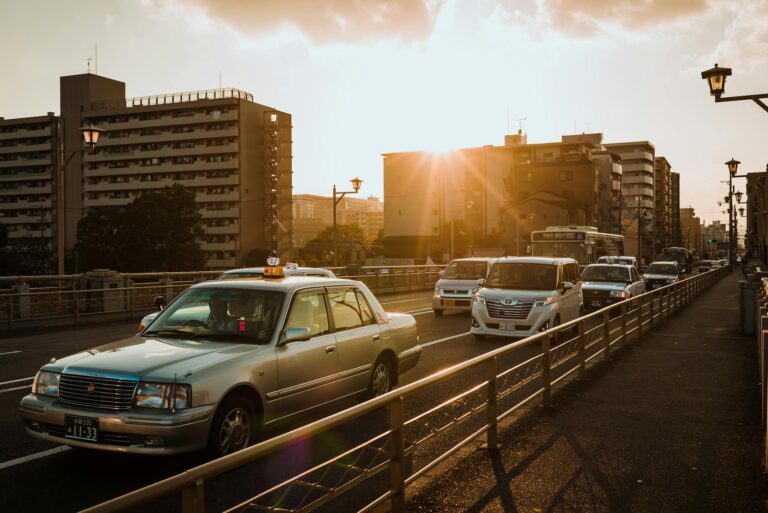
Quick answer: Driving to Kamakura from Tokyo takes 60–90 minutes and gives you access to the coastal temples and hiking trails that train-only visitors miss. Parking costs ¥500–1,500 per stop. For two or more people, driving is cheaper than four separate train fares.
Millions of people do exactly this. Which is the problem.
By 10 AM, Komachi-dori is shoulder-to-shoulder. The shrine approach is a slow shuffle. The Buddha has a permanent crowd in front of it. You’re seeing Kamakura, technically—but you’re seeing it through a screen of other tourists doing the same checklist.
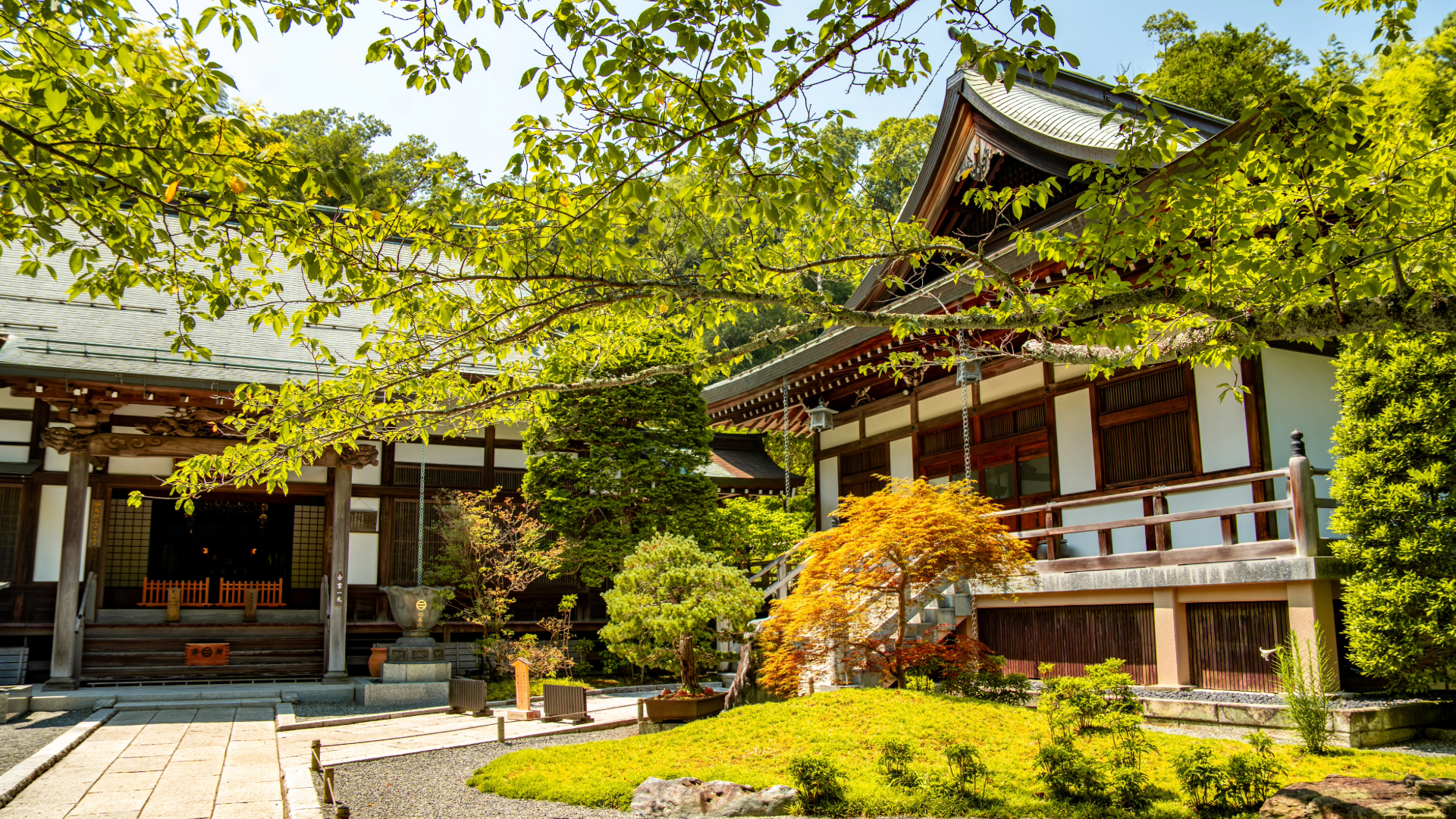
A second Kamakura exists in the eastern hills. It’s where the Ashikaga-era Zen temples sit at the end of narrow valleys. Where bamboo groves and rock gardens reward those who arrive at opening. Where the trails connect to ridge-line views most visitors never reach.
A kimono rental near Kamakura’s temples is one of those things that photographs better than you expect — the contrast against the centuries-old stone works.
The trains don’t go there. The buses technically do, but the friction—wait times, traffic, 15-minute uphill walks from the terminal—filters out most day-trippers.
The car collapses that friction. It transforms the dispersed geography from a barrier into a feature: sites spread across kilometers become a connected circuit you control.
Why the Trains Fail the Eastern Temples
Kamakura’s topography was designed for defense. Hills enclose the city on three sides; the sea guards the fourth. The Minamoto shoguns chose this terrain deliberately. It’s terrible for public transit.
The JR Yokosuka Line and Enoden run through the accessible zones—the station area, the coast, the western temples. They don’t penetrate the eastern valleys where the contemplative Zen temples cluster.
If you would rather take the train, the JR Pass may already cover the Yokosuka Line leg from Tokyo.
The Keikyu Bus network serves these areas, but the logistics are punishing. To reach Zuisenji—the deepest temple in the eastern hills—you wait for a bus (frequency varies; crowds often force you to wait for the second one), ride 15 minutes through traffic that affects buses the same as cars, then walk 15 minutes uphill from the terminal.
Total one-way time: 40-50 minutes.
A car covers the same distance in 12-15 minutes, parking directly at the temple gate. The “last mile” walk disappears entirely.
Canadian travellers should check their medical and rental cover before driving in Japan.
That time differential compounds across a day of temple-hopping. More importantly, the car lets you arrive at 7 AM—three hours before the bulk of Tokyo trains unload. You operate in a different Kamakura than the transit-dependent visitor.
The 7 AM Advantage
The major eastern temples open at 9 AM. The strategic value of early arrival isn’t entering before gates open—it’s positioning.
At 7 AM, you’re having breakfast at the farmers market while the train crowds are still in Tokyo. At 8:45 AM, you’re parked at Jomyoji Temple, walking to Hokokuji’s gate. At 9:00 AM sharp, you’re the first person into the bamboo grove.
By 9:30 AM, the first wave of buses from Kamakura Station arrives. The grove fills. The “empty frame”—a photograph of the bamboo path with no people—becomes impossible.
The car doesn’t just save travel time. It lets you synchronize with opening times in ways transit users can’t match.
The Morning Sequence: Fueling Before the Temples
The Farmers Market (Renbai)
Your 7 AM arrival point. The Kamakura Agricultural Co-op Market—locals call it Renbai—has operated since 1928, Japan’s first European-style vegetable market.
The prime selection of “Kamakura vegetables” (heirloom varietals grown in local mineral-rich soil) goes early. By 10 AM on weekdays, the best produce is claimed by restaurant chefs. On weekends, it’s picked over by 9 AM.
Inside the market: Paradise Alley Bread & Co. opens at 8 AM with a morning set—homemade sourdough, boiled eggs, soup. This is your nutritional baseline, superior to convenience store fare and integrated into the local food culture rather than the tourist economy.
Parking strategy: The market has no dedicated lot, but early arrival means easy access to nearby coin parking (Coin Park Kamakura Dai 2 in Onarimachi, Repark Kamakura Komachi). These lots fill by mid-morning.
The car advantage: Buying produce—heavy daikon, root vegetables, bread loaves—is punishing for train travelers who must carry it all day. Your trunk is a mobile locker. Purchase freely.
Alternative: Traditional Breakfast
Breakfast House Cobakaba opens at 7 AM (closed Wednesdays) with traditional teishoku sets: miso soup, multigrain rice, grilled fish. This is the local lifestyle start, not the tourist-centric cafes that open later.
The Coastal Prequel
If breakfast is efficient, you have time for the coastal loop before heading inland.
Zaimokuza Beach is a 5-minute drive from the station area. From this vantage point—or the nearby Zushi Marina ledge—you see Mt. Fuji across Sagami Bay in clear morning light. The 7:30 AM window offers high clarity before mid-day haze sets in.
At low tide, you can spot Wakae Island—remains of Japan’s oldest artificial harbor, built in 1232. Seeing this maritime infrastructure grounds you in Kamakura’s reality as a medieval fortress-city before you ascend to the temples.
The Jomyoji Hub: Your Parking Anchor
As the clock approaches 9 AM, relocate east on the Kanazawa Kaido (Route 204). Traffic is light moving away from the station.
The Jomyoji district is your base of operations. Three major sites cluster here: Jomyoji Temple, Hokokuji (the famous bamboo temple), and the Stone Oven Garden Terrace restaurant. One parking spot serves all three.
Why Jomyoji, Not Hokokuji
Hokokuji is the celebrity—everyone wants its bamboo grove. Its parking lot holds 5 cars. It fills instantly and the maneuvering is difficult.
Jomyoji Temple’s lot holds 20-30 vehicles. At 9 AM, it typically has capacity. Park here, walk across the street to Hokokuji. Your car waits safely while you move between sites on foot.
The Bamboo Strike
Objective: Be first through Hokokuji’s gate at 9:00 AM.
The bamboo grove is compact. The coveted empty-frame photograph—the path winding through dense Moso bamboo with no people—is only possible in the first 10-15 minutes. By 9:30 AM, the bus wave arrives and populates every shot.
Inside the grove, the Kyukoan tea house serves matcha (¥600 set) in the bamboo surroundings. Enjoying this while the grove is still quiet is quintessential Kamakura.
Timing: 9:00-9:45 AM for the grove and tea, then walk back to Jomyoji.
Jomyoji Temple
Ranked fifth among the Kamakura Gozan (Five Great Zen Temples), Jomyoji gets bypassed by crowds gravitating to Hokokuji across the street. Their loss.
The karesansui (dry landscape) garden here rivals Kyoto’s famous rock gardens. Arriving at opening means pristine raked gravel, undisturbed by wind or previous visitors.
Kisen-an Tea House (opens 10 AM) offers matcha in a tatami room overlooking the rock garden. Unlike the crowded, rapid-turnover tea spots near the station, this is contemplative. The green matcha against red felt carpet against grey stones—visually striking.
Stone Oven Garden Terrace
This is the strongest argument for driving to Jomyoji.
Located up the hill behind the temple’s main hall, the Garden Terrace occupies a renovated 90-year-old western-style villa with an English garden. They bake bread in an on-site stone oven and serve European cuisine.
Opens 10 AM. This is your 11 AM early lunch spot—avoiding the need to hunt for food in the crowded city center. Your car remains in the temple lot.
The terrace views are spectacular in spring (plum blossoms) and autumn. You’re eating in a garden restaurant while the train crowds are shuffling through Komachi-dori looking for a place with seats available.
Zuisenji: The Deepest Pocket
If Jomyoji is the hub, Zuisenji is the terminus—the deepest penetration into the eastern hills, at the very end of the Momijigayatsu valley.
This is where the car advantage is starkest.
The Logistics of Isolation
Transit approach: Bus from Kamakura Station to Daitonomiya terminal, then 15-minute uphill walk through residential neighborhoods. The friction filters out most visitors, which keeps Zuisenji quiet—but also makes it effectively inaccessible for time-constrained day-trippers.
Driving approach: The road is famously narrow, winding through residential areas as essentially a single lane with passing pockets. Confident driving required; large SUVs may struggle with oncoming traffic. A standard sedan or compact navigates it with caution.
The payoff: Park directly at the temple entrance (capacity ~10 cars). The 15-minute approach walk disappears. You’re deposited at the foot of the mossy stairs leading to the gate.
The Garden of Muso Soseki
Zuisenji was founded in 1327 by Muso Soseki—Zen monk, calligrapher, garden designer of the highest order. The temple is less about buildings and entirely about landscape.
Behind the main hall lies a garden carved directly into the hillside bedrock. This isn’t a “placed” garden but a “subtractive” one: a cave (Zen Cave) and pond dug into stone. It’s the only garden in Kamakura designated as a National Place of Scenic Beauty.
Known as the “Temple of Flowers,” Zuisenji is famous for plum blossoms in February and late autumn foliage in December. The lack of crowds allows contemplative viewing impossible at Hasedera or the main shrine.
The Ridge-Line Option
Zuisenji is the eastern trailhead for the Ten-en Hiking Course, running along the “Kamakura Alps” ridge to Kenchoji in the north.
The car enables a “short hike” strategy. Instead of committing to the full 5km traverse (which creates the problem of returning to your vehicle), hike 15-20 minutes up from the Zuisenji trailhead to the ridge line. From there, viewpoints look out over the city and sea.
You capture the hiking experience and the views without the multi-hour commitment. Then you walk back down to your car and drive to the next site.
The Nikaido Historical Cluster
Retreating from Zuisenji toward the center, the Nikaido district offers a cluster of historical sites easily linked by car.
Kamakura-gu (Daitonomiya)
Dedicated to Prince Morinaga, imprisoned and executed in a cave behind the shrine during the Kenmu Restoration turmoil. Established by Emperor Meiji in 1869 to honor the prince’s loyalty.
Parking: Large lot (~40 cars) that serves as a transport node for the area. Reliable capacity.
Features: The shrine is famous for shishi-gashira (lion head) wooden amulets believed to ward off evil. The Treasure Hall displays artifacts related to the prince.
Egara Tenjinsha
Dedicated to Sugawara no Michizane, the god of learning—one of the three major Tenjin shrines in Japan.
Parking: None on-site. Leave the car at Kamakura-gu, walk 5 minutes.
Timing: Famous for plum trees offering vibrant pink and white canopy in February.
Sugimoto-dera
The oldest temple in Kamakura, founded in 734—pre-dating the Kamakura Shogunate by centuries.
The atmosphere feels ancient and distinct from the Zen temples. Moss-covered stairs (now preserved; visitors use a side path) are iconic. The thatched roof evokes primal, rustic spirituality.
Parking: Very limited on-site. Located directly on the Kanazawa Kaido, walkable from the Jomyoji lot if necessary, or use a small coin lot nearby.
Kenchoji: The Northern Anchor
While geographically north rather than east, Kenchoji completes the circuit.
Parking: Massive lot directly in front of the Sanmon gate (~20 cars). Easy “final stop” depending on your exit direction.
The Hansobo Viewpoint
Deep within Kenchoji’s grounds, steep stairs lead to Hansobo—the shrine dedicated to the temple’s guardian deity.
The view from Hansobo is spectacular. On clear days, Mt. Fuji is framed by statues of Tengu (long-nosed goblins) guarding the shrine.
Efficiency: Drive to Kenchoji, walk through the temple complex, hike up to Hansobo (20-30 minutes round trip from the main hall), drive away. You capture the “alpine” view without the multi-hour commitment of the full Ten-en traverse.
The Provisions Run
A hidden cost of train-dependent trips: reliance on Komachi-dori for food. Tourist pricing, long queues, crowded seating.
The car unlocks high-quality dining and provisioning that requires travel but offers superior value.
Bergfeld (Yukinoshita)
Renowned German-style bakery on the drive toward the eastern hills. Heavy, authentic breads and pastries.
The car advantage: Purchase substantial quantities—rye loaves, sourdough—and store in the trunk. Carrying this on a crowded Enoden is unpleasant.
Mont Blanc Stand (Omachi)
Fresh-squeezed mont blanc desserts. Opens 10 AM. No seating—perfect for car-based visitors who can eat nearby or take away.
Alpha Betti Cafe (Jomyoji)
Near the Jomyoji bus stop. Casual, high-quality coffee with parking for 4 cars. Opens 9 AM. An alternative if Kisen-an tea house feels too formal or is full.
The Complete Itinerary
07:00 — Arrival & Breakfast Park at coin parking near Renbai Market. Explore the farmers market, buy local vegetables. Breakfast at Paradise Alley (opens 8 AM) or Cobakaba (opens 7 AM).
Optional: Coastal loop to Zaimokuza for Fuji views if time permits before 9 AM.
08:40 — Relocate to Jomyoji Drive east on Kanazawa Kaido. Traffic light moving away from station. Park at Jomyoji Temple lot.
09:00 — The Bamboo Strike Walk across the street to Hokokuji. Enter at opening. Photograph the empty grove. Matcha at the tea house in the bamboo.
10:00 — The Zen Hub Walk back to Jomyoji. Visit main hall and dry garden. Matcha at Kisen-an (opens 10 AM).
11:00 — Garden Lunch Early lunch at Stone Oven Garden Terrace on the hill behind the temple.
12:30 — The Deep Valley Drive to Zuisenji. Navigate the narrow approach. Park at the gate. Explore Muso Soseki’s rock garden. Optional: 15-minute hike up the trail to the ridge view.
14:00 — The Historical Cluster Drive back toward town. Park at Kamakura-gu. Visit the shrine, walk to Egara Tenjinsha or Sugimoto-dera.
15:30 — Provisions Stop at Bergfeld for bread or Mont Blanc Stand for dessert.
16:00 — Exit Depart via Asahina Pass or the coast road before the 17:00 rush hour peaks.
The Parking Node Cheat Sheet
Location Capacity Best Use Risk Kamakura-gu ~40 cars Primary hub for Nikaido cluster Low—reliable capacity Jomyoji Temple 20-30 cars Dining/temple hub for Jomyoji, Hokokuji, Garden Terrace Low-Medium—fills by noon Zuisenji ~10 cars Terminal node for deep valley Medium—narrow approach road Hokokuji ~5 cars Avoid—use Jomyoji instead High—fills instantly, difficult maneuvering Kenchoji ~20 cars Northern anchor for Hansobo views Low—paid lot
The Bottom Line
The train-based Kamakura is a high-friction, high-density zone that obscures the city’s contemplative roots. You see what’s accessible by rail—the same checklist as millions of other visitors.
The car reveals the Second Layer: the eastern valleys where Zen temples sit at the end of narrow roads, where bamboo groves are empty at opening, where rock gardens carved into hillsides reward those who arrive before the buses.
By arriving at 7 AM, you gain a three-hour head start. By parking at Jomyoji instead of fighting for spaces at Hokokuji, you eliminate friction. By driving to Zuisenji’s gate instead of walking 15 minutes uphill, you preserve energy for the garden itself.
The dispersed geography of the eastern hills isn’t a barrier when you have a car. It’s a filter that keeps the crowds concentrated elsewhere while you move through silence.
Tools That Help
Compact recommended for Kamakura’s side roads. A Sakura Mobile eSIM keeps Google Maps running between parking nodes — essential for navigating the eastern hills circuit.
Airalo eSIM — Google Maps is your co-pilot. Stay connected from landing. Japan plans from ~$5.
For the traveler who wants the checklist, the train is sufficient. For the traveler who wants the contemplative Kamakura—the rock gardens, the ridge views, the bamboo groves before anyone else arrives—the car is the mechanism that reveals it.
A foreign driver’s licence is invalid here without an International Driving Permit, which must be acquired from the CAA or AAA before leaving home. Once my paperwork is in order, I usually arrange my vehicles through a Japanese car rental aggregator.