The Architecture of Japanese Dining: From Vending Machine Ramen to Kaiseki
Japan has ¥500 ramen and ¥40,000 kaiseki in the same city. Here is how the dining tiers work and how to move between them without making costly mistakes.
How to Eat in Japan: From ¥500 Ticket Machines to ¥40,000 Kaiseki — The Dining Guide Nobody Writes Honestly
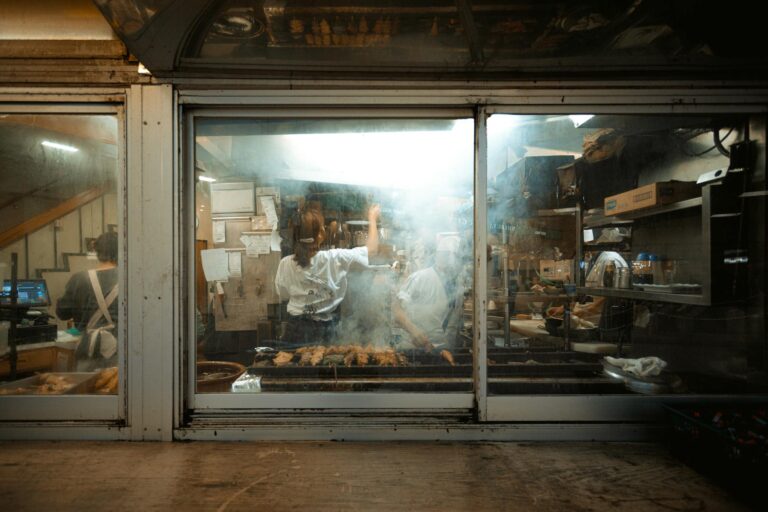
I’ve eaten roughly 2,000 meals in Japan over the past seven years. Standing at a ramen counter in Shinjuku at 11pm on a Wednesday, chopsticks moving on autopilot, watching the chef work a six-burner setup alone — that’s where I learned that the Japanese dining system isn’t a set of restaurants. It’s an architecture.
A machine with specific inputs, specific outputs, and a logic so internally consistent that once you understand it, you stop making the mistakes that mark you as someone who doesn’t belong.
What Is the Ticket Machine System and How Does It Actually Work?
The shokkenki — the ticket vending machine bolted to the wall at roughly 60% of Japan’s casual restaurants — is the most efficient ordering system I’ve encountered anywhere. It exists in ramen shops, curry houses, gyudon chains like Yoshinoya and Matsuya, and teishoku (set meal) joints.
It solves three problems simultaneously: Japan’s chronic labor shortage, the cost of urban floor space, and a cultural demand for hygiene so strict that separating cash handling from food preparation is foundational.
Here’s the exact sequence, because getting it wrong creates a bottleneck behind you:
| Step | What You Do | Why It Matters |
|---|---|---|
| 1. Check for seats | Look inside before touching the machine. If every stool is taken, wait outside. | Buying a ticket with no seat creates an operational problem. |
| 2. Insert money first | Feed coins or bills before pressing anything. Most take ¥1,000 notes; many reject ¥5,000 and ¥10,000. | Buttons don’t activate until currency is detected. |
| 3. Press your selection | Can’t read the Japanese? Hit the top-left button — always the signature dish. | Placement is deliberate, derived from Japanese reading patterns. |
| 4. Take ticket + change | Grab the paper ticket and coins from the tray below. | This ticket is your entire order. Lose it and you’ve donated to the restaurant. |
| 5. Hand it to staff | Sit down, hand the ticket over. They’ll tear it — half for the kitchen, half back to you. | After this, water is self-service. Find the dispenser yourself. |
The price reality: a bowl of ramen at a shokkenki spot in Tokyo runs ¥850–¥1,200 (~$7.70–$10.90 CAD as of March 2026). Gyudon at Yoshinoya is ¥498 for a regular bowl, tax included. A teishoku set meal at a place like Ootoya hovers around ¥900–¥1,100 (~$8.20–$10 CAD). These aren’t tourist prices — these are what salarymen pay daily. And the food quality at this tier would cost you $18–$25 in Toronto for anything comparable.
One detail that trips people up: after you hand in the ticket at a ramen shop, the chef may ask customization questions — noodle firmness, broth richness, oil level. If you freeze, just say “futsu” for everything. Normal across the board.
A note on connectivity: you’ll need data to translate menus and navigate. I used Airalo for eSIM coverage across three separate Japan trips — the most reliable option for getting online the moment you clear customs. Deeper breakdown in my Japan eSIM guide for Canadians.
How Do Izakayas Work — and What Is the Otoshi Charge Nobody Warns You About?
The izakaya is where Japan eats socially. The word — 居酒屋 — breaks down to “stay-drink-place,” and that’s exactly what it is: a pub built for lingering over small plates and beer. If the ticket machine restaurant is a solo sprint, the izakaya is a group marathon.
Modern chain izakayas (Torikizoku, Watami, Kin no Kura) run on tablet ordering — touchscreens mounted to your table, most with English options. Browse categories, tap what you want, hit order. No mispronunciation anxiety. For places without tablets, look for a call button on the table. No button? Raise your hand and say “Sumimasen.” In Japanese service culture, staff never approach unsolicited — they consider it an intrusion on your privacy.
Now, the otoshi. You sit down, order your first drink, and a small dish you didn’t order appears — edamame, potato salad, sometimes shiokara (fermented squid guts). It gets added to your bill. ¥300–¥700 per person (~$2.70–$6.35 CAD).
This is not a scam. Japan has no tipping culture, so the otoshi functions as a built-in cover charge — an economic buffer ensuring the establishment covers the baseline cost of your table. It also serves as a rapid appetizer while the kitchen prepares your actual order. You can technically refuse it at the moment it arrives by saying “Otoshi iranai desu,” but culturally, this causes confusion and polite pushback from staff who view it as standard operating procedure.
If you’re drinking in a group — especially with Japanese colleagues — one rule supersedes all others: never pour your own drink. You practice oshaku — pouring for others, especially elders or superiors. Watch their glasses. Top them up before they empty. Your glass will be filled by someone else. And nobody drinks until everyone has a glass and someone initiates “Kanpai!” Even if your beer is getting warm. You wait.
Tachinomiya: Standing Bars
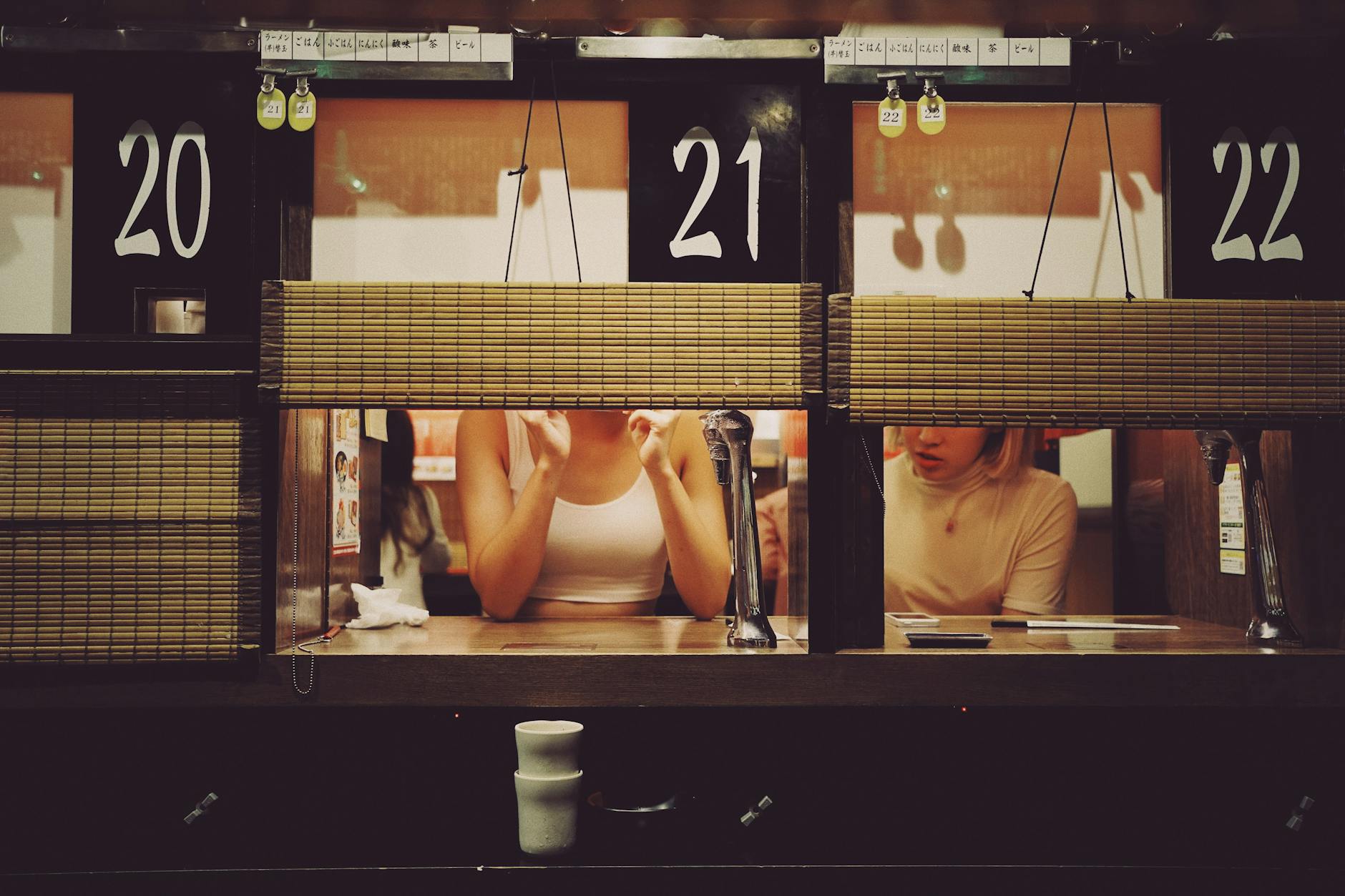
The tachinomiya — “standing drinking shop” — strips the izakaya format to its economic bones. No chairs. Communal counters or repurposed barrels. Post-war origins, salaryman clientele. Standing patrons drink faster and leave sooner, so higher turnover means the house charges less. Home-cooked dishes under ¥500 (~$4.55 CAD), large beers for similar prices.
Some curated food experiences and guided izakaya tours in areas like Yurakucho and Shinbashi take you into standing bars you’d never find on your own. In Kyoto, the Nishiki Market walking food tour covers the knife shops, pickled vegetable stalls, and backstreet izakayas that the main drag hides behind its tourist-facing facade.
What Is Kaiseki — and Is It Worth the Price?
If the ticket machine is the mechanical floor of Japanese dining and the izakaya is the social middle, kaiseki is the ceiling. Kaiseki ryori is a multi-course progression reflecting the exact moment in the calendar and the specific microclimate of the region. A spring kaiseki in Kyoto features cherry blossom sea bream and bitter mountain vegetables.
An autumn service in Hokkaido showcases matsutake mushrooms and sweet chestnuts. Every course balances taste, texture, color, and presentation — and the ceramics are themselves artistic statements. The plate is not a vessel. It’s part of the dish.
The standard progression follows a historically codified sequence:
| Course | What It Is & What to Do |
|---|---|
| Sakizuke | A small, delicate appetizer — the opening note — Eat slowly. This sets the tone for everything that follows. |
| Hassun | A seasonal platter of sea and mountain elements — Pause to admire the composition before eating. The chef expects you to notice. |
| Mukozuke | Seasonal sashimi — Dip lightly in soy sauce. Drowning it disrespects the fish. |
| Takiawase | Simmered vegetables with meat, fish, or tofu — Eat in order of flavor intensity — the chef sequenced deliberately. |
| Futamono | A lidded dish — usually clear soup or chawanmushi — A palate cleanser. Drink the broth directly from the bowl. |
Before the first bite: “Itadakimasu.” After the last: “Gochisousama deshita.” Chopsticks go on the hashioki (rest) when not in use — never standing vertically in rice, which mimics a Buddhist funeral offering and will genuinely disturb staff.
The Price Reality of Kaiseki
| Kaiseki Tier | Price (CAD/person) & What You Get |
|---|---|
| Standalone restaurant (Kyoto) | $91–$182 — 6–10 courses, counter or private room |
| Ryokan dinner (mid-range) | $136–$227 — 8–12 courses, included with accommodation |
| High-end ryokan (Kinosaki, Hakone) | $273–$454 — 12+ courses, premium seasonal ingredients |
Prices as of March 2026. Kaiseki at ryokans is typically included in the per-night rate.
The entry point most people miss: lunch kaiseki. Many serious restaurants in Kyoto and Tokyo offer abbreviated lunch courses at 40–60% of the dinner price. Kikunoi’s Roan outpost in Kyoto runs a lunch kaiseki around ¥6,000–¥8,000 (~$55–$73 CAD) that delivers the core experience without the full evening commitment.
If you’re considering a ryokan with kaiseki dinner, I’ve written a detailed breakdown of booking, pricing, and platform comparisons in my how to book a ryokan in Japan guide.
Interactive meals: For entertainment with your food, book the Sumo Show Restaurant experience — former professional wrestlers perform live bouts and explain the sport while you eat a traditional Japanese meal. Or take the Ryogoku sumo-town tour that ends with chanko nabe, the nutrient-rich hot pot wrestlers eat to gain weight and muscle.
How Do You Handle Dietary Restrictions in Japan?
This is where Japan’s otherwise brilliant dining architecture shows its seams. The concept of removing animal products from a dish is frequently interpreted as removing only the visible chunks — ignoring the invisible foundation beneath.
The Dashi Problem
The greatest barrier to plant-based eating in Japan is dashi — the umami-rich stock that forms the foundational flavor of nearly all traditional cooking. It’s overwhelmingly brewed from katsuobushi (fermented, dried bonito tuna flakes). Dashi is invisible. It’s in the miso soup, the tempura batter, the soba dipping sauce, the simmered vegetables — dishes that look vegetarian but aren’t.
| What You Need | Japanese (Romaji) & Meaning |
|---|---|
| Identify yourself | Watashi wa bejitarian/vigan desu — I am vegetarian/vegan |
| State restrictions | Niku/Sakana wa tabemasen — I don’t eat meat/fish |
| Audit the stock | Katsuo dashi hairemasu ka? — Does this contain bonito stock? |
| Request removal | [Ingredient] nashi de onegai shimasu — Without [ingredient] please |
The safe haven: shojin ryori — Buddhist temple cuisine, inherently vegan. Heavy in Kyoto and Koyasan. Root vegetables, seasonal greens, elaborate tofu preparations. If you’re vegan in Japan, seek these out deliberately. For the tea side of Kyoto’s food culture, Uji matcha tea experiences let you grind and whisk your own in the region that supplies most of Japan’s ceremonial-grade matcha.
Severe Allergies and Halal
For anaphylaxis-level allergies, verbal communication in a busy Japanese kitchen is a genuine medical risk. The solution: printed bilingual allergy cards from FARE or Equal Eats, listing your allergens in English and kanji. Forgot to print them? Every 7-Eleven, FamilyMart, and Lawson has network-connected printing — upload via the NetPrint app, print for about ¥10/page.
For Muslim travelers, hidden ingredients — pork-derived emulsifiers, gelatin, alcohol in soy sauce and mirin — create a minefield. The most useful tool: Halal Gourmet Japan, a GPS-enabled app mapping certified and Muslim-friendly restaurants across Tokyo, Osaka, and Kyoto, with a barcode scanner that flags haram ingredients in real time.
What Does a Full Day of Eating in Japan Actually Cost?
Here’s the math I wish someone had given me before my first trip. Three realistic daily budgets, all in Tokyo, all achievable without sacrificing quality:
Budget Tier — $25 CAD/day
| Meal | What & Cost (CAD) |
|---|---|
| Breakfast | Konbini onigiri + coffee — $3.18 |
| Lunch | Ticket machine teishoku — $8.18 |
| Dinner | Ramen + gyoza — $10.91 |
| Snacks/Drinks | Vending machine, konbini — $2.73 |
| Daily Total | — $25.00 |
Mid-Range — $58 CAD/day
| Meal | What & Cost (CAD) |
|---|---|
| Breakfast | Kissaten/cafe — $7.27 |
| Lunch | Sushi counter — $13.64 |
| Dinner | Izakaya with drinks — $31.82 |
| Snacks/Drinks | — $5.45 |
| Daily Total | — $58.18 |
Splurge — $223 CAD/day
| Meal | What & Cost (CAD) |
|---|---|
| Breakfast | Hotel buffet — $18.18 |
| Lunch | Lunch kaiseki — $54.55 |
| Dinner | Ryokan kaiseki — $136.36 |
| Snacks/Drinks | — $13.64 |
| Daily Total | — $222.73 |
All prices as of March 2026. Exchange rate: ¥110 = $1 CAD (approximate).
That budget tier is genuinely sustainable. I’ve done it for weeks during extended shoots. The food at that price point in Japan would cost $50–$60 CAD in any Canadian city for equivalent quality. This is one of the great paradoxes of Japan travel: the country has a reputation for being expensive, but eating well on a budget is easier here than almost anywhere else I’ve traveled.
A konbini tax note worth knowing: since 2019, Japan runs a split consumption tax on prepared food. Takeout is taxed at 8%; eating at the konbini’s in-store seating area bumps it to 10%. You’re expected to declare your intention at the register. On a ¥500 bento the difference is ¥10 — trivial once, but it adds up over two weeks of konbini meals.
Staff will microwave meals for you at the register (point at the microwave if language fails), and hot water dispensers are maintained specifically for instant noodles.
Payment, Etiquette, and Seasonal Notes
Two payment details that matter: never hand cash directly to a cashier — place it in the small change tray at the register. And never leave money on the table. Take the bill to the cashier near the entrance. To request the bill, cross your index fingers in an “X” and say “Okanjo kudasai.”
Don’t eat while walking. Buy your yakitori, step out of pedestrian flow, stand still, eat, hand the waste back. Festivals are the only real exception.
Japan’s dining culture is inseparable from its seasons. Spring kaiseki features sea bream and bamboo shoots (and Golden Week makes Kyoto reservations a logistics problem). Summer brings cold noodles and kakigori. Autumn is the culinary peak — matsutake, sanma, chestnuts — overlapping with foliage season, the optimal time for a ryokan kaiseki stay.
Winter means nabe, fugu, and crab, especially in Hokkaido’s onsen towns. If you’re timing your trip around a specific culinary experience, autumn and winter kaiseki at a ryokan represent the highest return on your dining investment.
Your Japan Dining Action Checklist
- Get your eSIM sorted before departure. You need data for translation apps, Tabelog, and Google Maps. Set up an Airalo Japan eSIM — activates before you clear customs. Full analysis in my eSIM comparison guide.
- Book ryokan kaiseki 2–3 months ahead for peak seasons. Full walkthrough in my ryokan booking guide.
- Pre-book food tours and cooking classes. For Sapporo-bound travelers, the Sapporo bar-hopping food tour hits the kind of standing ramen counters and draft beer bars this guide is built around.
- Lock in travel insurance. Provincial health coverage doesn’t apply abroad. Get a quote from Sacraw. Full breakdown in my insurance guide.
- Print allergy cards if applicable. Bilingual cards from FARE or Equal Eats, or print on arrival at any konbini for ¥10/page.
- Carry ¥1,000 notes. Many ticket machines only accept ¥1,000 bills. Break your ¥10,000 notes at a konbini first.
- Read the related guides. For the full trip architecture: JR Pass and regional rail passes, business hotels, capsule hotels, and Haneda vs. Narita airport breakdown.
A few words go a long way here. If you want to travel with more than a phrasebook, learn enough Japanese to travel confidently with Tabiji Academy