Japan Convenience Store Guide — What to Actually Buy at 7-Eleven, Lawson, and FamilyMart
Japanese convenience stores are nothing like what you're used to back home. Here's what to actually buy at 7-Eleven, Lawson, and FamilyMart — from perfect egg sandwiches to Strong Zeros and beyond.
Forget everything you think you know about convenience stores. Japanese konbini — that’s what locals call them — are less like the dusty corner stores back home in Canada and more like compact, ruthlessly efficient mini department stores that happen to serve some of the best grab-and-go food you’ll eat anywhere in the world. With over 56,000 locations across Japan, they’re on virtually every block, open 24/7, and they’ll become your best friend from day one.
The Big Three: 7-Eleven, Lawson, and FamilyMart
Japan’s konbini landscape is dominated by three chains, and while they look similar from the outside, each has its own personality once you walk through those automatic sliding doors.
7-Eleven (Seven & i Holdings)
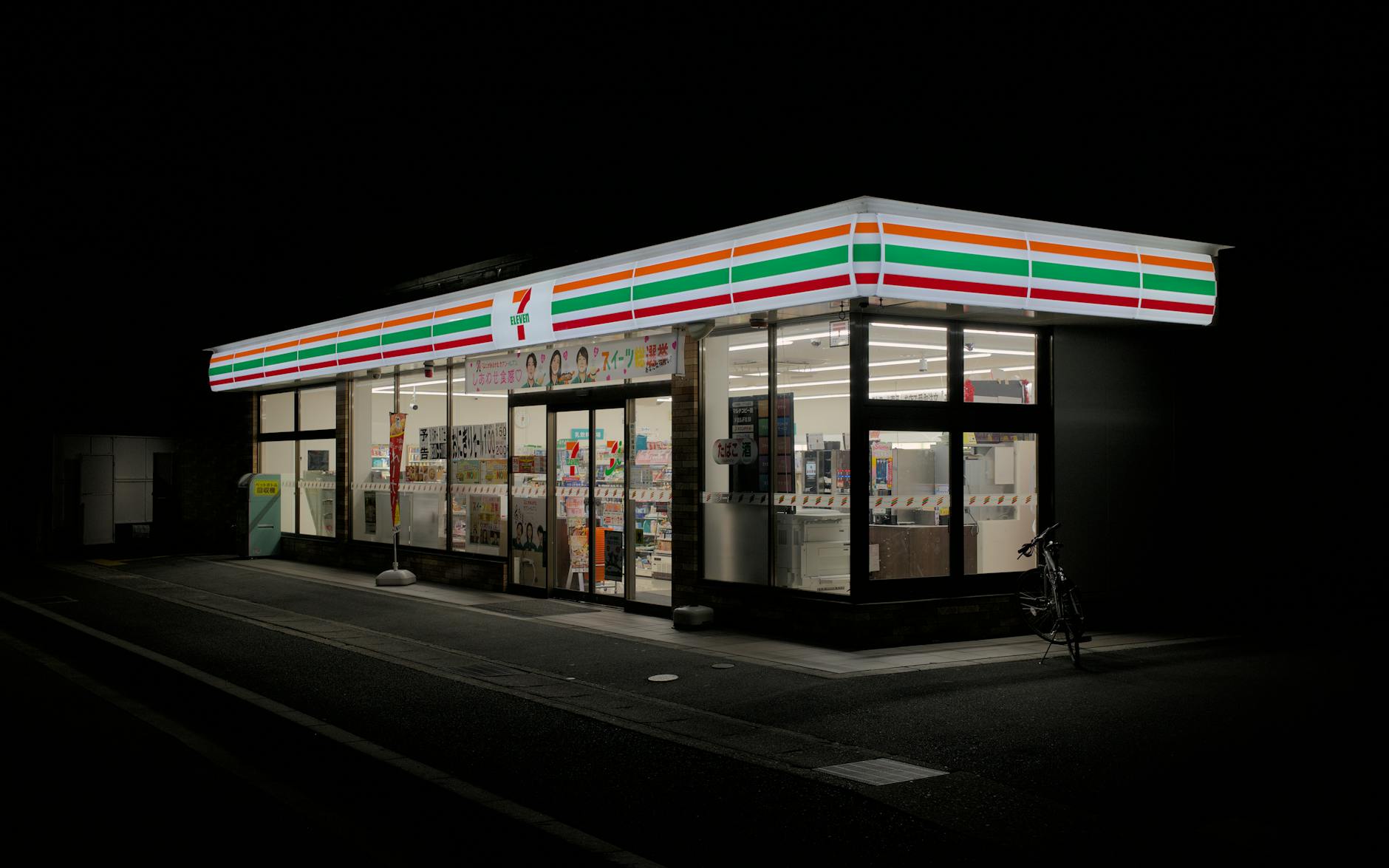
The undisputed king with over 21,000 locations. Japanese 7-Eleven is a completely different animal from its North American cousin. The food quality is genuinely impressive — their onigiri rice is cooked in small batches, their egg sandwiches are legendary, and they rotate seasonal items constantly. Their 7-Bank ATMs are the gold standard for foreign card withdrawals — if your bank card works anywhere in Japan, it works here. (I’ve got a full breakdown of how to avoid getting your card rejected in my 7-Eleven ATM guide.) Exclusive items to look for: the Seven Premium gold label line, their nanachiki fried chicken, and their cafe lattes from the in-store coffee machine.
Lawson
The dessert champion. Lawson’s “Uchi Cafe” sweets line is genuinely bakery-quality — their basque cheesecake went viral for a reason, and their cream puffs are dangerously good. Their karaage-kun (fried chicken nugget sticks) come in rotating flavors and are the perfect hot snack at any hour. Look for the blue “Lawson” sign for standard stores, but keep an eye out for “Natural Lawson” (green sign) for a more health-focused selection with organic options. Lawson also tends to have the best selection of regional and seasonal sweets.
FamilyMart
The famichiki store. I’m only half joking — FamilyMart’s signature fried chicken (famichiki) is a national institution. It’s crispy, juicy, and costs around 220 yen (~$2 CAD, as of early 2026). Beyond that, FamilyMart often carries a small selection of Muji household items, has solid bento options, and their “Convenience Wear” clothing line (designed with Facetasm) means you can grab a decent t-shirt or pair of socks at 3 AM if your luggage gets lost. Their parfaits and frappe drinks are also excellent.
Food Worth Buying (The Actually Good Stuff)
This is where konbini culture truly shines. The food isn’t just “good for a convenience store” — it’s genuinely good, full stop. A filling meal typically runs 500–800 yen (~$4.55–$7.30 CAD, as of early 2026).
Onigiri (rice balls): The gateway konbini food. Wrapped in nori with fillings like salmon, tuna mayo, mentaiko (spicy cod roe), or umeboshi (salted plum). The packaging is ingeniously designed to keep the nori crispy until you unwrap it. At 120–180 yen (~$1.10–$1.65 CAD) each, grab two or three for a filling snack. My go-to is the salmon (sake) — simple, perfect, every time.
Egg sandwiches (tamago sando): If you buy one thing at a Japanese konbini, make it this. The bread is impossibly soft and crustless, the egg salad is rich and slightly sweet, and there’s absolutely no Western equivalent that comes close. 7-Eleven’s version is the benchmark, but Lawson’s gives it a serious run.
Oden: Available from autumn through spring, this is a hot pot of slow-simmered items in dashi broth — fish cakes, boiled eggs, daikon radish, konjac, stuffed tofu pouches. You pick what you want from the heated case near the register. Perfect for cold days, and ridiculously cheap at 80–150 yen (~$0.75–$1.35 CAD) per piece.
Karaage and hot case items: Every konbini has a heated display case near the counter. Fried chicken, croquettes, nikuman (steamed meat buns), hash browns, and yakitori. The turnover is constant, so it’s almost always fresh. Lawson’s karaage-kun and FamilyMart’s famichiki are the headliners, but honestly, everything in that case is reliable.
Melon pan: A sweet bread with a cookie-crust top that somehow stays both crunchy and fluffy. Some stores carry a cream-filled version. It’s not the healthiest breakfast, but when you’re jetlagged at 6 AM, it’s exactly what you need.
Seasonal items: This is where it gets addictive. Konbini rotate their stock constantly — sakura-flavored everything in spring, matcha specials in early summer, sweet potato desserts in autumn, strawberry everything in winter. Limited-edition collaborations with popular brands and anime franchises appear and disappear in weeks. Half the fun is checking what’s new.
If you want to go deeper than konbini meals, browse guided food tours in Tokyo on Rakuten Experiences — food tours in Tsukiji and Asakusa run about ¥8,000 (~$73 CAD) and give you a whole different angle on how Tokyo eats. Worth it at least once.
Drinks Worth Grabbing
Strong Zero: Japan’s infamous 9% ABV canned cocktail. Tastes like a fruit soda but hits like a freight train. The grapefruit and lemon flavors are the classics. Exercise extreme caution — these things are deceptively easy to drink. A tall (500ml) can is around 200-250 yen; the regular 350ml can runs about 140-160 yen.
Boss Coffee: Suntory’s canned coffee line. Available hot or cold from the store’s drink case. The rainbow label “Boss Rainbow Mountain Blend” is the approachable entry point, but the black-label versions are proper strong coffee. Hot cans from the warmer near the register are a winter lifeline.
Matcha latte: Every chain has their own bottled version, but the fresh machine-made ones (where available) are a step above. 7-Eleven’s cafe machines do a solid matcha latte for under 200 yen (~$1.82 CAD).
Seasonal specials: Peach drinks in summer, hot yuzu in winter, sakura-flavored lattes in spring. The drink fridge is always worth a slow browse — Japan does limited-edition beverages like nowhere else.
Services You Didn’t Know You Needed
Here’s where konbini go from “nice snack stop” to “I genuinely don’t know how I’d travel Japan without these.”
ATMs (7-Bank): If you need cash — and you will, because Japan is still surprisingly cash-heavy — head straight to a 7-Eleven. Their 7-Bank ATMs support Visa, Mastercard, Cirrus, Plus, and most international networks. English interface available. Withdrawal fees are reasonable and clearly displayed. Lawson and FamilyMart ATMs work too, but 7-Bank has the highest success rate with foreign cards. If you’ve ever had a card declined at a Japanese ATM, my 7-Eleven ATM troubleshooting guide covers every fix I’ve found.
Printing and photocopying: Every konbini has a multifunction printer. You can print documents from a USB drive, your phone (via Wi-Fi or an app), or even directly from cloud storage. Crucial for printing boarding passes, reservation confirmations, or that temple entry ticket you forgot to print at the hotel.
Package shipping (takkyubin): You can ship luggage and packages from any konbini using Yamato Transport (the black cat logo) or Sagawa. If you bought too many souvenirs and your suitcase is groaning, ship a box to your next hotel or directly to the airport. It’s cheap, fast, and absurdly reliable. I wrote a full guide to takkyubin luggage forwarding in Japan if you want the step-by-step — it’s one of those things that sounds complicated until you do it once.
Ticket pickup and bill payment: Concert tickets, bus reservations, theme park passes — many can be purchased or picked up at the Loppi machine (Lawson) or FamiPort (FamilyMart). You can also pay utility bills, taxes, and online shopping invoices at the register with cash.
Pro Tips From Too Many Konbini Visits
Hot food case timing matters. Fresh batches of fried chicken, nikuman, and croquettes typically go in around 7 AM, 11:30 AM, and 5:30 PM — timed to morning commuters, lunch rush, and the evening crowd. Hit the case right after a fresh batch and the quality difference is noticeable.
Chase the seasonal limited editions. When you see something marked “kikan gentei” (limited time), buy it now. Not tomorrow, not on the way back. Now. These items rotate fast, and the best ones sell out within days. Your phone needs data to use Google Translate on those labels — I use an Airalo eSIM so I’m always connected for exactly these moments. My full Japan eSIM guide for Canadians has everything you need to set one up before you land.
IC card payment is fastest. A Suica or Pasmo card (the same ones you use for trains) works at every konbini register. Tap and go — no fumbling with cash or waiting for a card reader. Apple Pay with a linked Suica is even faster. This alone will save you minutes every day. See my IC card and JR Pass guide for how to set it up before you fly.
Check the markdown shelf. Usually a small section near the back or side of the store with items approaching their sell-by time, marked down 20–50%. The food is perfectly fine — Japan’s freshness standards are extremely conservative. Bento boxes at half price are a budget traveler’s best friend.
Trash and recycling. Many konbini have removed their public trash bins (or placed them behind the counter). If you buy something and eat it in the store area, ask staff where to dispose of it. When in doubt, carry a small bag for your trash — you’ll need it anyway, since public bins are rare across Japan.
What NOT to Buy
I’ve bought every one of these out of curiosity or desperation — usually both. Learn from my mistakes. Not everything in a konbini is a good deal:
Souvenir boxes of cookies and snacks: The pre-packaged “Tokyo Banana” type gift boxes are marked up significantly at konbini. Buy these at the airport, train station kiosks, or department store basements (depachika) where the selection is better and prices are the same or lower.
Umbrellas: The cheap vinyl umbrellas (around 500–700 yen, ~$4.55–$6.35 CAD) are fine in an emergency, but they’ll break in the first real wind. If rain is in the forecast, pick up a proper folding umbrella at a 100-yen shop (Daiso, Seria) or Don Quijote instead.
SIM cards and Wi-Fi devices: Konbini tourist SIM cards are overpriced and often limited. Sort your connectivity before you arrive — an eSIM purchased online before your trip is cheaper, faster to set up, and gives you data the moment you land. My Japan eSIM guide covers the best options for Canadians.
Medicine: The small medicine section at konbini is limited and pricey. For anything beyond basic pain relief, find a proper drugstore (Matsumoto Kiyoshi, Welcia, Sundrug) where the selection is vastly better and prices are lower.
Before You Go — Action Checklist
- Sort your eSIM before you fly. Get an Airalo Japan eSIM and activate it on the plane. You’ll want data the second you land to navigate to the nearest konbini. Full guide: Japan eSIM guide for Canadians.
- Set up Mobile Suica or Pasmo on your phone. You can do this before you leave home via the iPhone Wallet app. Tap to pay at every konbini register — no cash fumbling. Full setup in my IC card guide.
- Know your 7-Eleven ATM strategy. Bring a card that works on the Visa/Mastercard/Cirrus network. Pull a lump sum once or twice rather than draining it in small withdrawals. My 7-Eleven ATM guide covers which cards work and which don’t.
- Pack light enough to use takkyubin. Plan to ship ahead to hotels rather than lugging a 25 kg bag across Tokyo. Konbini shipping counters make this easy — read my takkyubin guide before you go. See also my full Japan packing guide for what actually makes the cut.
- Budget realistically for food. Konbini meals run 500–1,000 yen (~$4.55–$9.10 CAD) per sitting, as of early 2026. If you’re eating two konbini meals a day plus one sit-down, you’re looking at roughly ¥2,500–¥3,500/day on food. My Japan trip cost breakdown has a full per-day budget model.
- Get travel insurance sorted before you leave. Medical costs in Japan are manageable but not free. I use TuGo travel insurance — it covers trip interruption, medical, and the weird stuff like delayed luggage. Don’t skip this. My Canada-Japan travel insurance guide has the full breakdown.
- Explore beyond the konbini. Konbini are incredible, but Japan’s dining scene goes deep — from standing ramen bars to kaiseki. My Japan dining guide covers the full spectrum, budget through splurge.
Frequently Asked Questions
Are Japanese convenience stores open 24 hours?
Yes, nearly all 7-Eleven, Lawson, and FamilyMart locations in Japan are open 24 hours a day, 7 days a week. A small number of rural locations may have reduced hours, but in any city or town you visit, you can count on konbini being open around the clock.
Can I use a foreign credit card at Japanese convenience stores?
Yes. All three major chains accept Visa, Mastercard, and most international cards at the register. 7-Eleven ATMs (7-Bank) are the most reliable for foreign card cash withdrawals. Lawson and FamilyMart ATMs also work but have slightly lower success rates with non-Japanese cards.
What is the best konbini in Japan?
It depends on what you need. 7-Eleven has the best prepared food and ATMs for foreigners. Lawson has the best desserts and fried chicken (karaage-kun). FamilyMart has the best selection of Muji products and famichiki. Most travelers end up rotating between all three — that’s part of the fun.
Do Japanese convenience stores have vegetarian or vegan options?
Options are limited but growing. Look for inari sushi (sweet tofu pockets with rice), natto rolls, edamame, salads, and plain onigiri with kelp or umeboshi fillings. Be aware that many items contain dashi (fish stock) even when they appear vegetarian. 7-Eleven has started labeling plant-based items more clearly in recent years.
How much does a meal cost at a Japanese convenience store?
A filling konbini meal typically costs 500–800 yen (~$4.55–$7.30 CAD, as of early 2026). An onigiri runs 120–180 yen, a bento box 400–600 yen, and a drink 100–160 yen. You can eat well for under 1,000 yen if you mix and match items like onigiri, a side, and a drink.
Can I heat up food at a Japanese convenience store?
Yes. Staff will heat bento boxes and onigiri in the microwave for you at the register — just say “atatamete kudasai” (please warm this up) or simply point at the microwave. Most stores also have hot water dispensers for instant noodles. Unlike North American convenience stores, you don’t help yourself to the microwave — the staff handles it for you.
A few words go a long way here. If you want to travel with more than a phrasebook, learn enough Japanese to travel confidently with Tabiji Academy