Winter Japan Beyond Skiing: Illuminations, Onsen Season, and the Off-Peak Advantage
Winter Japan without skis is underrated. Illumination festivals, volcanic onsen, and off-peak pricing make December through February worth the trip.
Why Winter Japan Is Seriously Underrated
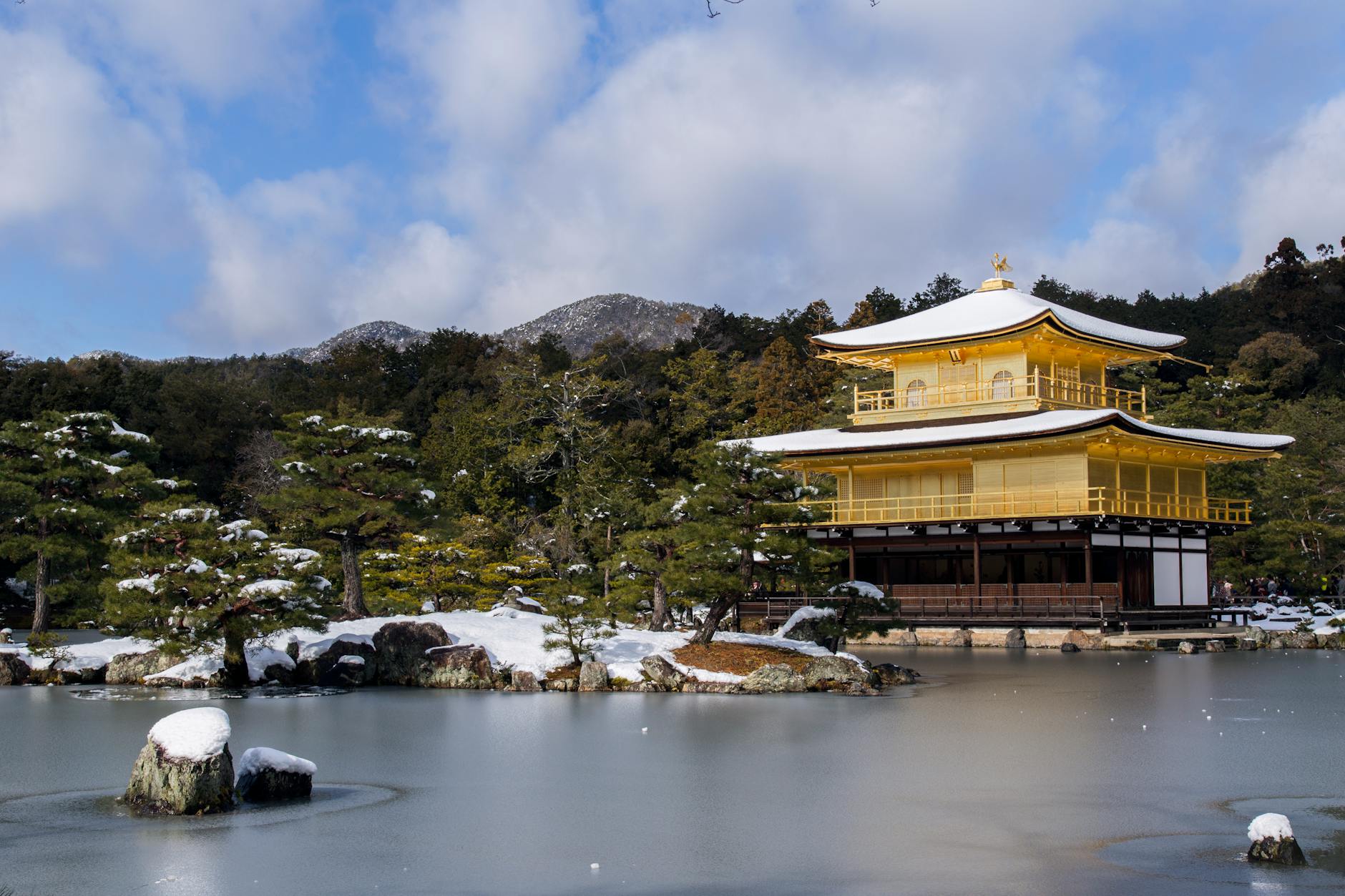
When winter hits Japan, most international visitors think one thing: skiing. And sure, the powder in Hokkaido and Nagano is world-class. But here’s what the ski crowd misses — winter Japan without skis is an entirely different trip, and honestly, it might be the better one.
We’re talking illumination festivals that put Christmas markets to shame, volcanic hot springs where you soak in steaming water while snow lands on your face, wild monkeys bathing in thermal pools, and seasonal food that peaks when the temperature drops. All of it at the lowest prices of the year.
Winter Prices: What You’ll Actually Save
Japan’s reputation as expensive is mostly a peak-season problem. Hotels run dynamic pricing algorithms that jack rates during cherry blossom season, autumn foliage, and Golden Week. A three-star room in Kyoto can jump from ~€101/night in the shoulder season to €181/night during November’s leaf-peeping frenzy.
The sweet spot? Mid-January through early March — skip the New Year holiday week (Dec 29–Jan 3) and regional snow festival dates. During these winter weekdays, rates hit their annual floor. You’ll get into properties that would be double the price in April.
For a deeper breakdown of the ryokan booking process and how to navigate Japanese accommodation pricing systems, I wrote a separate guide to booking ryokan in Japan that covers the cancellation policies and booking platforms in detail.
The 2025-2026 Lunar New Year Pricing Glitch
This particular winter has an unusual bonus. A diplomatic crisis between China and Japan — triggered by PM Takaichi’s comments on Taiwan in late 2025 — tanked Chinese inbound tourism. By January 2026, Chinese arrivals dropped 60.7% year-over-year, and airlines slashed 60%+ of their China-Japan flight capacity for February and March.
The Lunar New Year window (Feb 15–23) normally means sky-high hotel rates driven by massive Chinese tourist demand. In 2026, that wave got redirected to South Korea, Thailand, and Singapore. For everyone else, this means a pricing vacuum — Japanese hotels are sitting on excess inventory and slashing rates to fill rooms.
| Economic Variable | Traditional Behavior & 2025-2026 Winter Reality |
|---|---|
| Autumn/Spring Seasons | Maximum pricing, high occupancy driven by domestic and international demand. — Unchanged — rates remain at a premium with high volatility. |
| Mid-Jan to Early March | Annual pricing trough, lowest baseline rates for hotels. — Enhanced trough — standard low rates apply with higher availability. |
| Weekend Operations | Dynamic weekend pricing pushes Saturday rates up by roughly 30%. — Surcharges remain active — algorithms still target domestic weekenders. |
| Lunar New Year (Feb 15-23) | Severe pricing spike, near 100% occupancy driven by Chinese inbound market. — Pricing collapse — 60%+ drop in Chinese arrivals creates immense excess inventory. |
Winter Illuminations That Are Worth the Cold
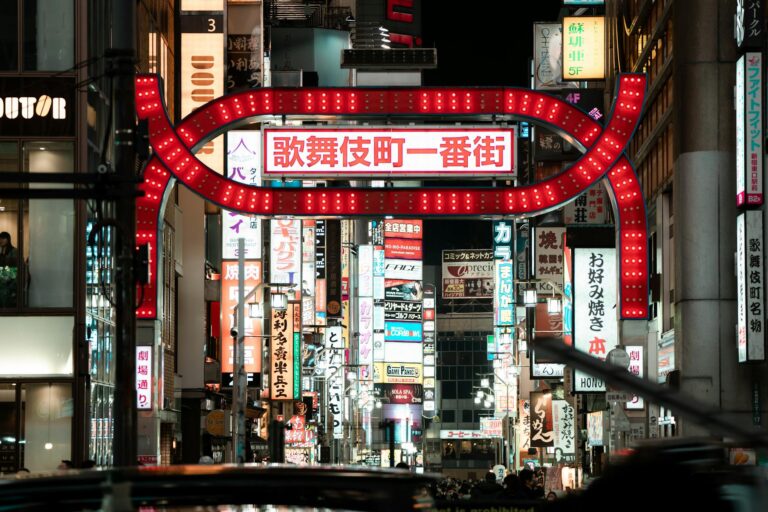
Japanese cities don’t just tolerate dark winter evenings — they weaponize them. Municipalities and private companies build enormous LED installations (irumineeshon) that function as legitimate winter tourism anchors. The cold, clear air makes the lights sharper and more vivid, and when it snows, the reflections multiply everything.
Tokyo’s Best Winter Light Displays
Tokyo’s illumination season runs mid-November through late February, woven directly into the urban fabric rather than contained in parks.
Roppongi — Tokyo Midtown: The “Midtown Christmas” event (Nov 13–Dec 25, 2025) fills the garden area with a massive blue LED starscape, a Santa Tree with 1,600 ornaments, and a real-ice skating rink that stays open through February 23.
Shibuya Blue Cave: Running December 4–25, this one bathes an entire pedestrian street in deep monochromatic blue. The reflections on the pavement create a continuous tunnel effect — genuinely surreal.
Tokyo Skytree: Installations run from November 6 through March 1, with an 8-meter Christmas tree at the base and rotating light designs on the 634-meter tower itself. The observation decks give you the best night view in the city.
If you are building a Tokyo illumination route, pre-purchasing observation deck tickets eliminates the queue that forms every evening from mid-November onward. The Skytree’s timed-entry system means you lock in a specific window rather than gambling on walk-up availability during peak illumination season. Check timed-entry Skytree tickets on Rakuten Experiences — the Tembo Deck at 350 meters is the one you want for night views.
The Big Rural Illuminations
Outside Tokyo, botanical gardens and theme parks go even bigger with dedicated mega-illuminations.
Ashikaga Flower Park (Tochigi): About 90 minutes from Tokyo Station. Famous for spring wisteria, but in winter they drape 5 million LEDs over the naked trees to simulate glowing flowers. The Rose Garden is artificially scented — you smell roses in January. Runs October 18, 2025 through February 15, 2026.
Ashikaga runs on timed admission during peak illumination nights. If you are traveling from Tokyo, factor in 90 minutes each way on the JR Utsunomiya Line plus the Ryomo Line transfer — the last train back leaves around 10:50 PM. Browse Tochigi-area winter experiences on Rakuten if you are combining this with a Nikko side trip — the geography works.
Nabana no Sato (Mie): Near Nagoya, this one runs all the way through May 31, 2026 using 5 million LEDs. The signature draw is the walk-through “Tunnel of Light” — an immersive corridor of concentrated LEDs. You can also view the lights from a 45-meter observation deck or while soaking in free open-air foot baths.
| Venue | Dates | Scale & Infrastructure |
|---|---|---|
| Tokyo Midtown (Tokyo) | Nov 13, 2025 – Dec 25, 2025 | Urban garden integration. “Santa Tree” with 1,600 ornaments, real-ice skating rink. |
| Shibuya Blue Cave (Tokyo) | Dec 4, 2025 – Dec 25, 2025 | Pedestrian streetscape. Monochromatic blue LED canopy creating an underwater illusion. |
| Ashikaga Flower Park (Tochigi) | Oct 18, 2025 – Feb 15, 2026 | 5 million LEDs across botanical grounds. Illuminated wisteria, scented Rose Garden, LED fireworks. |
| Nabana no Sato (Mie) | Oct 18, 2025 – May 31, 2026 | 5 million LEDs, theme park scale. Walk-through “Tunnel of Light,” 45m observatory, thermal foot baths. |
Hot Springs in the Snow: Winter Onsen Season
Japan sits on a volcanic goldmine of natural hot springs, and while onsen culture runs year-round, winter is when it peaks. The whole point of a rotenburo (open-air bath) is the temperature contrast — freezing air on your face, steaming mineral water everywhere else. Watching snowflakes evaporate into the rising steam before they hit the water surface is one of those moments you don’t forget.
The Best Winter Onsen Towns
Ginzan Onsen (Yamagata): The most photogenic onsen town in Japan. Multi-story wooden ryokan from the Taisho era (1912-1926) line a steep mountain valley with a rushing river through the center. Under heavy snowfall with gas lanterns glowing along the cobblestone streets, it looks like a scene from a period film. The Shirogane-yu public bath was designed by architect Kengo Kuma.
Noboribetsu Onsen (Hokkaido): Raw, volcanic, intense. The thermal source is Jigokudani (Hell Valley) — an active volcanic crater with towering steam vents and bubbling sulfuric pits. The visual contrast between the steaming craters and heavy Hokkaido snowpack is unlike anything in southern Japan.
For travelers routing through Hokkaido who want to combine Sapporo’s Snow Festival with a proper volcanic onsen circuit, Noboribetsu is 90 minutes south by JR Limited Express. The area sells winter-specific guided experiences — winter snowshoe and forest nature tours in Noboribetsu — that contextualize Hell Valley’s geological violence in a way that a solo walk through the boardwalks does not. Worth investigating if this is a first visit to the area.
Kinosaki Onsen (Hyogo): Completely different vibe. Instead of soaking in your ryokan, here you bath-hop. Guests walk through the snow-dusted town in yukata and wooden geta, visiting seven public bathhouses — the centuries-old tradition called soto-yu meguri.
Remote and Extreme Baths
- Manza Onsen (Gunma): At 1,800 meters in the Japanese Alps — sweeping alpine views and zero light pollution for stargazing from the water.
- Takaragawa Onsen (Gunma): Four massive mixed-gender outdoor baths totaling 700+ square meters, right alongside a snow-lined river. Open 24 hours — midnight bathing by moonlight reflecting off snowpack.
- Shikaribetsu-ko (Hokkaido): Every winter, locals build a temporary village on the frozen lake surface including a functioning rotenburo. You can alternate between the thermal bath and a hole cut through the lake ice.
| Destination | Prefecture & Defining Winter Characteristic |
|---|---|
| Ginzan Onsen | Yamagata — Nostalgic Taisho-era romance. Gas lanterns, Kengo Kuma-designed Shirogane-yu. |
| Noboribetsu Onsen | Hokkaido — Volcanic geological intensity. Sources from Jigokudani (Hell Valley) steam vents. |
| Kinosaki Onsen | Hyogo — Social bath-hopping culture. Soto-yu meguri to 7 public baths in traditional yukata. |
| Shikaribetsu-ko | Hokkaido — Ephemeral ice architecture. Baths constructed directly atop a frozen lake surface. |
Snow Monkeys: What to Know Before You Go
The Jigokudani Snow Monkey Park in Nagano is one of those places you’ve seen in photos a hundred times — wild Japanese macaques soaking in hot springs while snow falls around them. It’s real, and it’s worth the trip, but winter visits require planning.
How the Monkeys Got There
This isn’t an ancient tradition. In the late 1950s, ski resort expansion pushed the macaques off their mountain territory and into nearby farms. A local nature advocate lured them to the isolated Jigokudani valley instead. When apples used as bait fell into a ryokan’s hot spring pool, a young monkey waded in, liked it, and the rest of the troop followed. The park was established to protect them.
December through March is the prime window — the cold drives the monkeys into the baths for warmth. During warmer months, they have no reason to soak.
Getting There in Winter
The park is 35 km northeast of Nagano City. From Nagano Station, take either the Shiga Kogen express bus to Kanbayashi Onsen trailhead, or the Nagano Dentetsu train to Yudanaka Station plus a local bus. The 2-Day Snow Monkey Pass covers both transport options and the entrance fee. (If you are planning broader Hokkaido logistics, the Hokkaido skiing and snow guide covers the transport layer in more detail.)
From the trailhead, it’s a mandatory 30-minute hike on a snowy, often icy forest trail. Waterproof snow boots are non-negotiable — the park explicitly says regular shoes are hazardous. Metal crampons are strongly advised. The monkeys are wild and sometimes retreat during blizzards, so check the park’s live camera feeds before committing to the hike.
One logistical detail that catches people off guard: the Kanbayashi Onsen trailhead and the forest path to the monkey pools have no Wi-Fi coverage. If you are relying on the park’s live camera feeds and social media updates to verify the troop’s location before committing to the hike — which you absolutely should — you need mobile data that works in rural Nagano.
I use Airalo’s Japan eSIM for exactly this kind of scenario. Activate it before you leave Tokyo and you will have coverage on the Nagano Dentetsu line, at the trailhead, and everywhere between. (I compared eSIM options against Canadian carrier roaming in a dedicated analysis — the cost differential is significant.)
Winter Festivals Worth Planning Around
Sapporo Snow Festival
The biggest winter event in Japan, running February 4–11, 2026. Over two million visitors, $430 million in economic impact. The star attraction: massive snow sculptures reaching 15 meters tall, built by a 9,000-person workforce including Japan Self-Defense Forces personnel. They truck in 20,000 tons of snow from surrounding mountains.
Three sites spread the crowd:
- Odori Site: The main venue — 1.5 km through Odori Park with architectural snow sculptures, an international carving contest, and food stalls.
- Susukino Site: One subway stop south in the nightlife district. Ice sculptures (not snow), fish frozen inside ice blocks, and an ice bar open until 11 PM.
- Tsudome Site: Family-focused, daytime only (10 AM–4 PM). Snow slides, rafting courses, a maze, and indoor warming areas.
If you are building around the Sapporo Snow Festival, the logistics extend beyond the three festival sites. The food culture surrounding the festival — Jingisukan, Sapporo ramen, seafood at Nijo Market — is half the draw. A Sapporo bar-hopping food tour on Rakuten Experiences covers the backstreet izakaya circuit that most visitors cannot navigate without Japanese — the kind of operational shortcut that pays for itself in a single evening.
Otaru Snow Light Path
Running February 7–14, 2026, just a 30-minute train ride from Sapporo — but the polar opposite in feel. Where Sapporo is massive and loud, Otaru is quiet and candlelit. Around 200,000 candles glow inside hand-carved snow lanterns along the historic canal and abandoned railway line. The whole town participates, lighting storefronts and homes.
The organizers deliberately refuse commercial expansion and corporate sponsorship. The point is introspection — the candles melt, the snow disappears, and nothing about it can be replicated. That embrace of impermanence is deeply Japanese, and it hits different at freezing temperatures with a hot spiced wine in hand.
The Otaru Snow Light Path pairs naturally with a half-day snowshoe trek through the forests above Sapporo — the terrain between the two cities is some of the most accessible powder hiking in Hokkaido. Guided powder snowshoe forest treks near Sapporo start from Rakuten Experiences and include gear — the same experience link I referenced in the Hokkaido skiing guide.
Zao Snow Monsters
On the Zao mountain range in Yamagata, freezing Siberian winds carry supercooled water droplets that freeze on contact with fir trees. Over weeks, the ice builds up until the trees are completely engulfed, forming towering shapes that look like frozen giants. They’re called juhyo — “snow monsters.”
The viewing window is tight: late January through late February. Too warm and they collapse; too dry and the ice doesn’t form. You access them via a two-stage ropeway from Zao Onsen village to 1,661 meters. Night illumination events (Dec 27, 2025–Feb 23, 2026) light the monsters with colored floodlights from 5–9 PM, casting long shadows across the snowpack. Last ropeway ascent at 7 PM.
What to Eat in Winter Japan
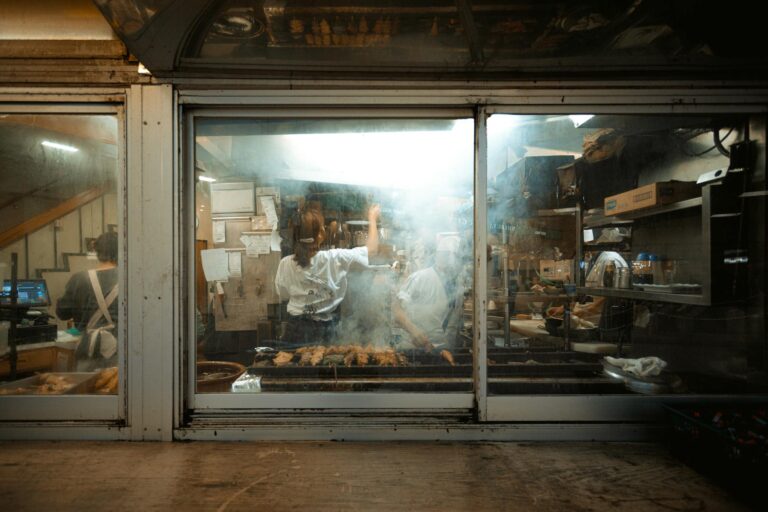
Winter is arguably the best eating season in Japan. Ocean temperatures drop, pushing fat content in seafood higher. The cold weather encourages slow-simmered broths and communal cooking. Here’s what to prioritize.
Hot Pots and Comfort Food
Nabe is the defining winter meal — communal hot pot cooked at the table. Sukiyaki (thinly sliced beef in sweet soy broth), shabu-shabu (swishing meat through kombu broth), and nikujaga (beef and potato stew in soy-mirin sauce) are everywhere.
Oden might be even more ubiquitous. A stew of daikon, konjac, boiled eggs, and fish cakes simmered in dashi stock, served with karashi mustard. Every region does it differently — Kyoto uses light kelp broth, Nagoya goes miso, Tokyo runs a dark soy base. In winter, you’ll find it in convenience stores and street stalls as much as in restaurants.
Street Food and Shrine Snacks
The sound of a yakiimo (roasted sweet potato) truck is winter in Japan. Slow-roasted in stone ovens, the starches caramelize into something that rivals pastry. The modern netto-ri-kei varieties are bred for extreme sugar content and a gooey texture that’s borderline dessert.
During Hatsumode — the New Year’s first shrine visit — stalls serve amazake (hot fermented rice drink) and zenzai (warm sweet red bean soup with toasted mochi). Standing in freezing air with a steaming cup after midnight prayers is the ritual that marks the new year for most Japanese families.
Northern Regional Specialties
Hokkaido’s unique lamb farming tradition produces Jingisukan — DIY lamb barbecue grilled on a convex metal skillet, typically with Sapporo beer. The coast delivers Ishikari nabe, a miso hot pot loaded with fatty winter salmon.
In Tohoku, Akita’s Kiritanpo (mashed rice cylinders toasted on cedar skewers, simmered in miso broth) and Aomori’s winter bluefin tuna from the Tsugaru Strait — fish weighing up to 300 kg with exceptionally high fat content — are winter-only experiences.
Winter Sake Season
The rice harvest in autumn kicks off the brewing cycle, and winter brings the release of shinshu (new sake) — freshly pressed, unpasteurized, with a vibrant fruity aroma and slight effervescence. Breweries release limited batches from December through March, meant to be drunk immediately alongside rich winter hot pots. It’s the perfect pairing for everything above.
| Culinary Category | Key Dishes / Beverages | Regional Association |
|---|---|---|
| Hot Pots (Nabe) | Sukiyaki, Oden, Ishikari nabe. Communal warming; Oden dashi absorption varies by region. | National |
| Street & Shrine Food | Yakiimo, Amazake, Zenzai. High-sugar netto-ri-kei potatoes; fermented rice heat. | National (Hatsumode rituals) |
| Northern Meats | Jingisukan, Oma maguro. High fat content in winter tuna; heavy lamb BBQ. | Hokkaido, Aomori |
| Winter Sake | Shinshu, Shiboritate. Unpasteurized, high amino acid/glutamic acid for maximum umami. | National (Brewing cycle) |
Wrapping Up: Why This Winter Is the One
A planning note for Canadians specifically: winter travel in Japan compounds the standard medical coverage gap.
Provincial health insurance does not cover you abroad, and the scenarios described in this guide — icy 30-minute forest treks to Jigokudani, high-altitude rotenburo at 1,800 meters, navigating packed-snow festival sites with 2 million other visitors — carry higher injury risk than a standard Tokyo itinerary.
Sacraw is a Canadian underwriter built for these conditions. If you are traveling on a Canadian passport during winter months, verify your coverage explicitly handles winter sports-adjacent activities and remote medical evacuation before you leave.
The 2025-2026 winter window is unusually good. Hotel rates are at annual lows, amplified by the collapse in Chinese tourism that normally spikes prices during Lunar New Year. The illuminations, onsen towns, festivals, and winter food are all at their peak.
It takes more planning than a standard Tokyo-Kyoto loop — you need the right boots for Jigokudani, the right timing for Zao’s snow monsters, and the right dates around Sapporo’s festival. But the payoff is a version of Japan that most visitors never see.
Winter Japan Planning Checklist
If this guide reshaped your winter Japan itinerary, here is the execution sequence:
- Lock connectivity first. Rural onsen towns, the Jigokudani forest trail, and Zao Ropeway stations all require mobile data for real-time schedule checks. Airalo’s Japan eSIM activates in minutes and covers every prefecture discussed here.
- Pre-book illumination and observation deck tickets. Timed-entry systems at Tokyo Skytree and teamLab Planets eliminate queue time during peak illumination season.
- Book winter experiences in Hokkaido early. Sapporo snowshoe treks and food tours fill during Snow Festival week. The Noboribetsu winter forest tours are small-group and cap quickly.
- Canadian travelers: sort insurance before departure. Winter itineraries carry higher risk profiles than standard city travel. Sacraw covers the scenarios that matter — verify your policy includes winter activities and remote evacuation.