The Honest Guide to Skiing Hokkaido
Niseko lift pass prices, Furano vs Hakuba alternatives, transport from New Chitose, and what skiers actually need to know before booking Hokkaido.
The Comparison You’ve Already Made in Your Head
If you ski Whistler, you already understand big mountains, variable weather, and the particular pain of paying top dollar for a single-day lift ticket. What you may not have priced out is this: a Niseko United All Mountain day pass for the 2025–26 season runs approximately ¥12,000 at the window — roughly USD $65. Niseko’s vertical drop is 900 metres versus Whistler Blackcomb’s 1,530 metres. On paper, Whistler wins that fight by a wide margin.
But terrain size is not why skiers keep coming back to Hokkaido every January. The reason is the snow.
The Physics of Japow: Why Hokkaido Powder Is Different
A vast cold air mass forms over the Siberian permafrost and tracks south. It crosses the Sea of Japan — a relatively warm body of water — picking up moisture. When it hits the Hokkaido mountains, it rises, freezes, and releases. The critical variable: in Hokkaido’s core winter months, the freezing level sits at or near sea level. Almost no altitude at which that moisture warms up.
The result: snow with a water content of approximately 4–5%. Compare that to Utah powder — widely regarded as North America’s best — which runs around 7%. Whistler’s maritime snowpack sits considerably higher. Hokkaido inland snowfields produce what the industry calls champagne powder: low density, almost no resistance.
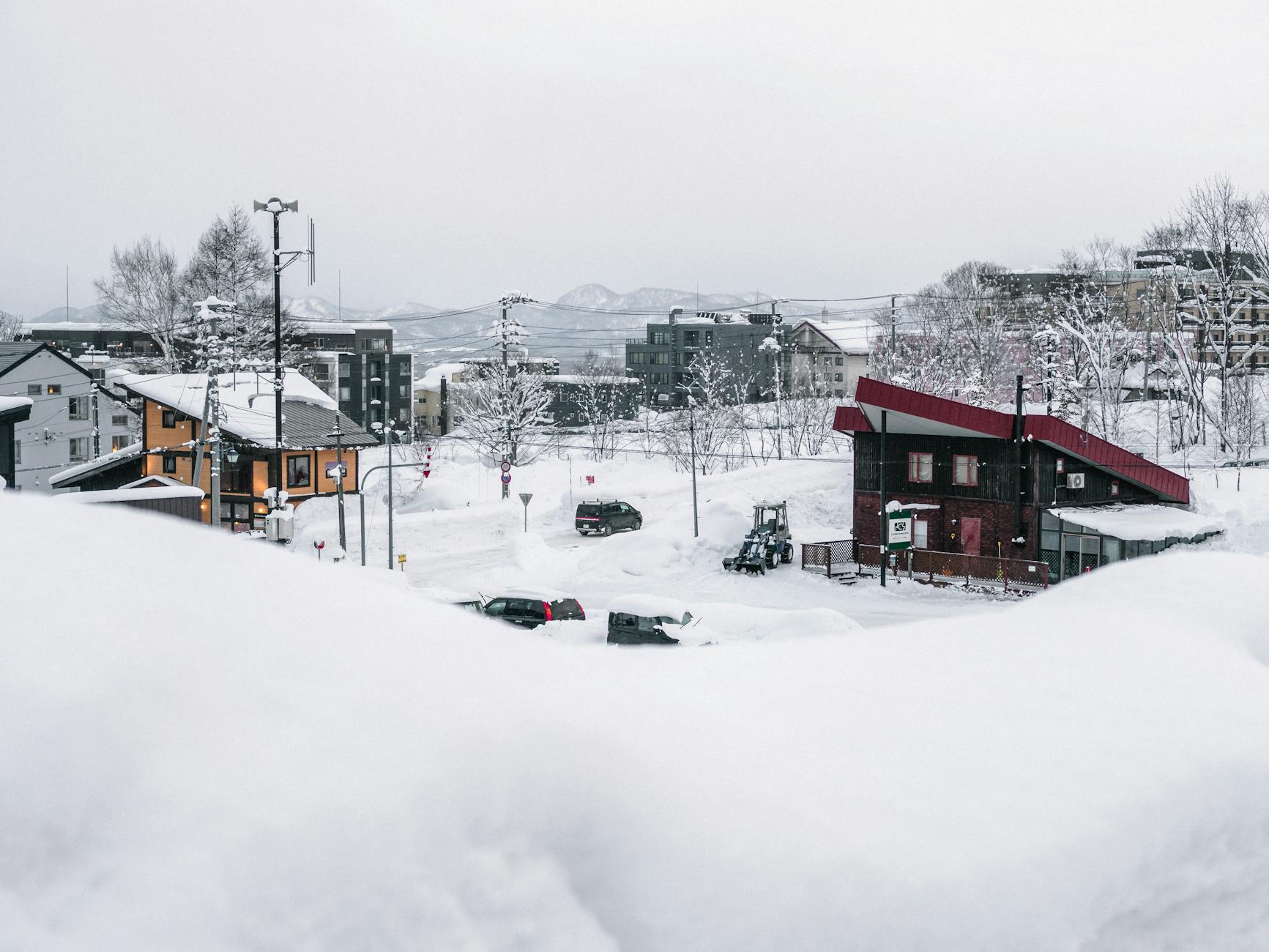
Niseko’s base village accumulates 10–15 metres of snowfall per season. January and February see snowpack depths of 200–400 cm. The prime powder window is late December through mid-February.
2025–26 Hokkaido lift pass prices at a glance:
- Niseko United All Mountain (1 day): ¥12,000 (~USD $80)
- Niseko United early/spring season: 30% discount on regular rates
- Furano (1 day, mid-season): ¥8,000 (~USD $55) — children 12 and under free
- Furano early/spring: ¥6,500 (~USD $45)
- Hakuba Valley, Honshu (1 day): ¥10,400 (~USD $70) — covers all 10 resorts
- Niseko Moiwa (separate pass): Not covered by Niseko United or Ikon Pass
Online booking saves ~5% versus window price on Niseko United. Buy before you arrive.
Niseko United: The Four Mountains You’re Actually Buying
Niseko United is not a single resort — it’s four distinct ski areas sharing one lift pass: Grand Hirafu, Hanazono, Niseko Village, and Annupuri.
Grand Hirafu
The largest, most developed, most expensive, most crowded. All English menus, all international accommodation, all the lift queues. If you’ve read anything about Niseko before this article, it was about Hirafu. Ski-in/ski-out accommodation averages around USD $210/night. This is the headline number that makes Hokkaido feel expensive — but it’s the wrong place to look first.
Annupuri
Hanazono
Adjacent to Hirafu, interconnected, with better beginner terrain and marginally shorter queues. Closes April 12, 2026 — earlier than Hirafu and Annupuri (both run to May 6).
Niseko Village
Quiet, anchored by the Hilton. Best for skiers who plan to ski hard and return to the hotel. Limited après-ski.
Lift Pass Intelligence: Four Mistakes Skiers Make
- Buying at the window on the day. Online prices are ~5% cheaper and window queues on powder days eat an hour of skiing.
- Not checking the Ikon Pass. Niseko United is an Ikon Pass partner. If you hold a full Ikon Pass for Whistler already, verify your Niseko benefit before buying separately.
- Buying non-refundable passes before checking the forecast. Niseko’s official passes are non-refundable after purchase. Book when the storm window is confirmed.
- Assuming all four mountains are equal. Most tourists park on Hirafu for a full week and never access the quieter mountains the pass also covers.
Niseko Alternatives: Furano and Hakuba
Furano: Drier Powder, Lower Crowds, Lower Price
Furano sits further inland than Niseko — the maritime moisture has dissipated further before it hits the mountains. Noticeably drier powder than Hirafu’s base. Day pass ¥8,000 mid-season (~USD $55), early/spring ¥6,500 (~USD $45). Children 12 and under ski free.
Access from Sapporo: JR limited express to Takikawa, transfer to local train to Furano — approximately 2 hours, ¥4,000. Or highway bus: 2.5 hours, ¥2,700. Season: November 29, 2025 – May 6, 2026. The limitation: fewer English-language services than Niseko. Rewards slightly more independent travelers.
Hakuba: Honshu’s Serious Alternative
Hakuba Valley in Nagano Prefecture: 10 interconnected ski areas, Happo-One (1998 Winter Olympics venue), 1,701 metres of vertical — nearly double Niseko United and in Whistler’s range. Annual snowfall 11–13 metres. Day pass ¥10,400 (~USD $70), all 10 resorts. Snow is denser than Hokkaido — more Whistler-like in texture. The decisive advantage: about 3 hours from Tokyo (Shinkansen to Nagano, bus to Hakuba). No domestic flight, no separate island. For anyone adding ski days to a Tokyo-anchored trip, Hakuba is logistically far simpler.
Getting From New Chitose Airport to Niseko
| Option | Cost | Details |
|---|---|---|
| Ski Bus (recommended) | ¥6,000 (~USD $40) one way | ~2.5–3 hrs. Book ahead — powder days sell out |
| Train (JR Pass eligible) | ¥2,400–¥3,200 | ~3h52m. Transfer at Otaru. Hokkaido Rail Pass covers this |
| Rental Car | Variable | ~2 hrs. Studded snow tires mandatory. Bifue Pass can close |
Set up your Airalo Japan eSIM before you leave Canada — covers all major carriers across Hokkaido including rural areas. Activate on landing, no SIM swap required.
Accommodation: The $167/Night Gap
Ski-in/ski-out at Hirafu base averages USD $210/night mid-season. In Kutchan — the local town 10 km from Hirafu, connected by shuttle — rates drop to USD $43–$73/night. The gap: $137–$167/night. Over 7 ski days, staying in Kutchan saves roughly USD $960–$1,170 — effectively paying for your lift passes.
The middle-ground most guides miss: book in Annupuri village rather than Hirafu. Prices are lower, crowds thinner, still within the Niseko United boundary.
Travel Insurance: Not Optional on a Japan Ski Trip
A ski injury in Japan is not the same financial event as one at a home resort. Japan’s healthcare system does not cover foreign visitors. Surgery and medical evacuation from Hokkaido can exceed USD $150,000. Your home country health plan covers none of it. Sort comprehensive travel insurance — emergency medical coverage, ski injury riders, evacuation benefit — before any money moves on this trip. This is not an optional line item.
Booking Sequence: In This Order
- Flights. Route to Tokyo (NRT/HND), then domestic to Sapporo (New Chitose). Seasonal direct Tokyo–Sapporo flights are available from most major carriers. Book 6+ months out for January.
- Insurance immediately after flights. Sort comprehensive travel insurance with emergency medical and ski injury coverage before any further money moves.
- Accommodation. Peak January and Christmas–New Year books out months ahead. Secure Annupuri or Kutchan by September for January travel.
- Airport bus. Book the Chitose–Niseko shuttle in advance for January arrivals.
- Lift passes. Buy online before arriving — skip queues, lock in discount. Check Ikon Pass benefit first.
- eSIM. Airalo Japan eSIM → Install before departure.
Niseko vs. Whistler: The Honest Answer
Whistler has 1,530m vertical and 8,171 acres. Niseko United has 900m and 2,191 acres. A peak Whistler day costs around USD $205; Niseko runs around USD $65. Whistler’s après-ski is more developed; Niseko’s Hirafu village is smaller but genuinely excellent. For non-skiing days, powder snow forest snowshoe treks near Sapporo offer a different way to experience Hokkaido’s winter landscape.
This is not a question of which resort is objectively better. It’s what you’re optimizing for. If you want maximum vertical and terrain variety, Whistler is the better choice — and it’s accessible in a fraction of the travel time. If you want powder of a quality that doesn’t exist at your local mountain, and you’re willing to build a trip around accessing it, Niseko in January is a categorically different experience. Most skiers who go once come back.