Kanazawa Cherry Blossoms: The Garden Goes Free While Kyoto Crowds Out
Kenrokuen drops its admission fee during cherry blossom season and blooms a week before Tokyo. Here is the exact window, overlooked spots, and the logistics.
Kanazawa Cherry Blossoms: The Garden Goes Free While Kyoto Crowds Out
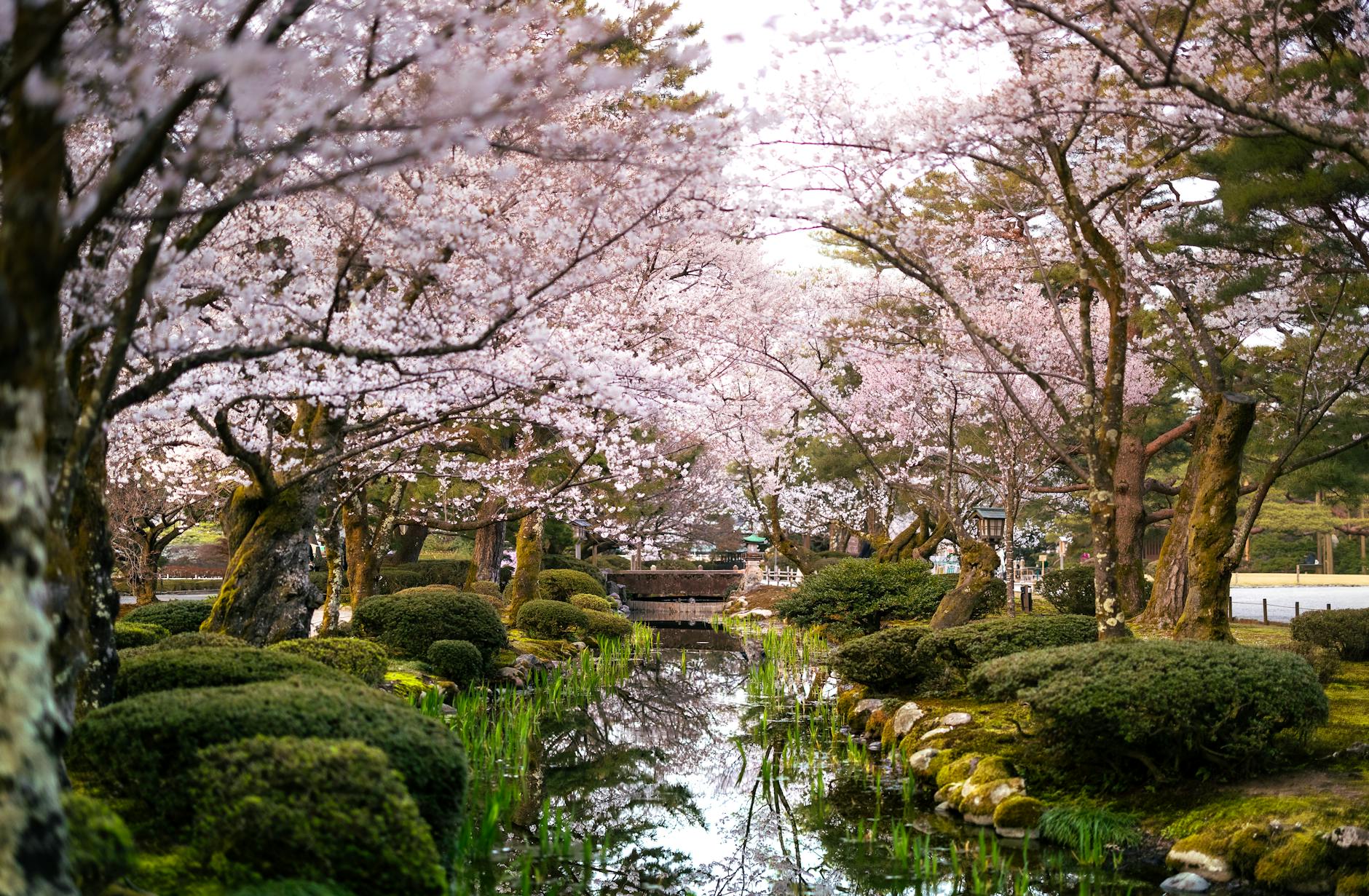
Kenrokuen — Japan’s most celebrated garden, the benchmark against which every other Japanese garden is measured — charges ¥320 admission most of the year. During peak cherry blossom, it drops that fee entirely and stays open until 21:30. That’s the fact most Kyoto-bound travelers in April never encounter, because they’re standing three-deep in front of a torii gate with a thousand other people trying to get the same shot.
For the full experience, Kanazawa food and culture walking tours cover the garden, samurai district, and local craft scenes in a single guided loop.
Kanazawa blooms around April 2, hits full bloom around April 6, and the admission waiver runs roughly April 5 through mid-April. If you’re already planning a Japan trip in that window and you haven’t reconsidered your routing, this article is going to cost you a detour. That’s intentional.
—
Why Kanazawa Over Kyoto for Sakura: The Math
The case against Kyoto in cherry blossom season isn’t that Kyoto isn’t worth it — it is. The case is that April Kyoto is a logistical exercise in managing disappointment. Maruyama Park at full bloom is real; so are the 40,000 people also there. Philosopher’s Path is genuinely beautiful; the wait to walk it without someone’s selfie stick in your frame is measured in hours, not minutes.
Kanazawa, by comparison, was named one of BBC Travel’s 20 Best Places to Visit in 2026 — partly on the strength of its post-Noto earthquake recovery story, partly because people who have been there know what it actually is: a city that preserved its geisha districts, its samurai quarters, and its Edo-period garden without getting flattened by mass tourism. The infrastructure is there. The crowds are not, relative to Kyoto.
The math on free admission alone is almost irrelevant — ¥320 isn’t the reason to go. But it signals something about Kanazawa’s relationship with its visitors during blossom season: the city actually wants you there. The lights stay on until 21:30. The gates open at 04:00. Entry is free before 07:00 year-round, and from April through August the garden opens as early as 04:00 (later, around 05:00-06:00, the rest of the year) — and during blossom season, that window inside a free-admission garden is one of the better situations you can put yourself in on this trip.
The Kyoto vs. Kanazawa question isn’t either/or — the Hokuriku Shinkansen and Thunderbird limited express (with a transfer at Tsuruga since March 2024) put Kanazawa about 2h-2h15m from Kyoto. If you’re already making a long-haul commitment to get to Japan, the blossom window is the clearest argument for adding the loop.
—
Kenrokuen: The Specific Details
Free Windows — Exactly When and How
Year-round, Kenrokuen admits visitors free before 07:00. The garden opens at 04:00 in spring. That’s a three-hour window of free, quiet, low-light access to 400+ cherry trees, including the rarest cherry variety in Japan.
During peak bloom — approximately April 5 through mid-April in 2026, aligned with full bloom around April 6 — admission becomes free for the entire day. The garden also extends evening hours to 21:30 during this period, against its normal 18:00 closing time.
So on a peak bloom day you have three distinct strategic windows: pre-07:00 (quiet, golden hour, mist if you’re fortunate), midday (busiest, but the light on the Kotoji Tsuridōrō lantern is hard to argue with), and evening illumination from dusk to 21:30.
My preference is 05:30 arrival. You get the blue-hour transition, near-empty paths, and enough light to shoot by 06:00. By 07:30 the first wave of group tours arrives from Kanazawa Station. By 09:00 you’ve already had three hours in the garden and you’re leaving as most visitors are just showing up.
The Kikuzakura
Kenrokuen’s 400+ trees include multiple varieties, but the one that warrants specific attention is the Kikuzakura — described as the rarest cherry variety in Japan, notable for having more petals than any other Japanese cherry. It reads as a dense, almost chrysanthemum-like bloom rather than the open five-petal structure most people picture when they think sakura. It’s worth knowing what you’re looking for before you walk in, because it doesn’t announce itself.
Ask at the entrance or consult the garden map — the location shifts slightly depending on which trees are performing in a given year, but it’s typically in the central and upper sections of the garden. During peak bloom, the Kikuzakura will be clearly labeled.
Evening Illumination
The 21:30 closing during blossom season is not well-publicized in English-language travel resources, which makes it a practical differentiator. Evening illumination of Kenrokuen during cherry season means lit trees reflected in the garden’s upper and lower ponds, low crowds relative to daytime (most visitors are at dinner by 19:00), and a compositional setup that doesn’t require fighting for position.
If you’re shooting — and even if you’re not — the 18:30–20:00 window in the garden during peak bloom is the most underused access point in Kanazawa’s cherry season. The crowds that filled the garden at midday have largely cleared. The light is soft, then blue, then the garden lamps take over.
Entrance and Navigation
Kenrokuen has seven entrances. For early morning access and the least-crowded approach, use the Kodatsuno Gate (also called the Kenroku-machi entrance) on the south side. The Katamachi area is walkable from most central accommodations — 15 to 20 minutes on foot, which matters because pre-07:00 arrival means arriving before most taxis and buses have ramped up.
The adjacent Kanazawa Castle Park shares a wall with Kenrokuen and is completely free year-round. During cherry season it also blooms, and the castle grounds see significantly fewer visitors than the garden. It’s worth the crossover — particularly the Ninomaru area and the stone wall sections — as a contrast to Kenrokuen’s formal composition.
—
Beyond Kenrokuen
Kanazawa Castle Park
Free, adjacent, and underrated in the context of cherry season planning. The castle grounds have their own blossom trees and the castle reconstruction provides a structural backdrop that Kenrokuen — intentionally garden-scaled — doesn’t offer. If you’re inside Kenrokuen at first light and want to extend the morning without backtracking to your accommodation, the castle park is the natural continuation. Cross through the Tamagawa Exit toward the Saitama-mon Gate side for the best tree density.
Higashi Chaya District
The main street of Higashi Chaya — Kanazawa’s largest and best-preserved geisha district — has cherry blossoms along the lanes in April. The wooden lattice facades of the ochaya (tea houses), some operating since the early 19th century, and the cherry trees overhead make this the most compositionally specific blossom location in the city.
It also photographs differently depending on time of day: morning mist and empty lanes (before 08:00), or early evening when the tea house lights start to come on and the tourists thin out.
Higashi Chaya is a 20-minute walk from Kenrokuen or a short bus ride from Kanazawa Station (lines 70, 71 from Bus Stop 7 — get off at Hashiba-cho). Do not take a taxi for this specific route unless you’re pressed for time; the walk through the Asanogawa riverside path adds context to the neighborhood that the taxi route bypasses entirely.
Saigawa River
This is the local spot. Five hundred cherry trees line the Saigawa Riverbank — specifically the stretch along Higashi-Kanazawa toward Saigawa Ohashi bridge — and this is where Kanazawa residents actually go during blossom season. No garden admission, no tour groups, no audioguide wands. Picnic tarps, convenience store onigiri, families. The trees are mature and form a near-continuous canopy over the riverside path in full bloom.
If you want one honest read on where Kanazawa’s blossom season actually lives outside the postcard version, it’s Saigawa. Go on a weekday evening. Bring something from Omicho Market if it’s still open.
—
Getting There: Transport Math
From Kyoto: The Thunderbird
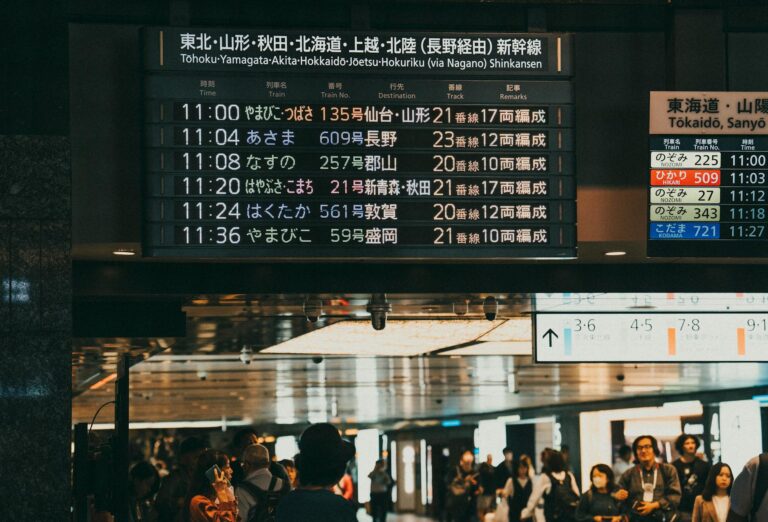
The route from Kyoto to Kanazawa runs on the Thunderbird limited express, operated by JR West. Since March 2024, the line connects at Tsuruga to the Hokuriku Shinkansen for the final Tsuruga–Kanazawa segment. Total journey time: approximately 2h to 2h15m. Unreserved fare: ¥7,130.
The first train from Kyoto departs at 06:59, arriving Kanazawa at 09:55. If you’re targeting the pre-07:00 free admission window at Kenrokuen, this train gets you in too late for same-day early access — which is an argument for staying at least one night in Kanazawa rather than attempting it as a same-day trip from Kyoto. The overnight structure isn’t incidental; it’s how you access the timing that makes Kanazawa’s blossom season work.
Reserved seats add roughly ¥1,500 to the fare and are worth it during the blossom window when the Thunderbird runs close to full. Book through JR West’s English site or through your JR Pass redemption if that’s your routing.
From Tokyo: Hokuriku Shinkansen
The Hokuriku Shinkansen runs Tokyo–Kanazawa directly (no change required) in approximately 2h30m on the Kagayaki service, or 2h50m on the Hakutaka. Unreserved fare is not available on the Kagayaki — the faster service is reserved-seat only. Budget approximately ¥14,000–¥15,000 (approximately USD $115–$125) for a reserved seat Tokyo–Kanazawa.
If your routing includes both Tokyo and the Kansai region, the pass math changes significantly.
The Hokuriku Arch Pass: When It Makes Sense
The Hokuriku Arch Pass covers the Tokyo–Kanazawa–Kyoto/Osaka circuit via Hokuriku Shinkansen and Thunderbird, priced at ¥35,000 for 7 days. As of the March 14, 2026 update, coverage has expanded to include Matsumoto, Hakuba, Kofu, Obama, and Maizuru — which meaningfully changes the value calculation if you’re extending into the Japan Alps or the Wakasa Bay coast.
The pass break-even on the core Tokyo–Kanazawa–Kyoto circuit alone: Tokyo–Kanazawa unreserved (~¥14,000) + Kanazawa–Kyoto Thunderbird (~¥7,130) = ~¥21,130. Add a return to Tokyo from Kyoto or Osaka (~¥13,000–¥15,000 Shinkansen) and you’re at ¥34,000–¥36,000 before factoring in any side trips. If you’re doing the full loop with even one regional extension, the Arch Pass is the better instrument.
Book the Hokuriku Arch Pass — it’s available as a digital voucher redeemable at JR ticket offices. You’ll need to collect the physical pass at a JR office in Japan, so book before you depart and know your collection point.
For Kyoto-only travelers who won’t go to Tokyo on this trip: skip the Arch Pass. Individual Thunderbird tickets through JR West or your existing JR Pass are the cleaner play.
—
Where to Stay
Kanazawa’s accommodation market during cherry blossom season — roughly late March through mid-April — runs tight. The short version: book in January if you’re targeting April 5–10. The following options are across different price points, all walkable or one short bus from Kenrokuen.
Sumiyoshiya — Mid-Range Ryokan, 300 Years Old
Sumiyoshiya has been operating in Kanazawa for roughly three centuries. That’s not a marketing figure — the building shows it, in ways that are either charming or inconvenient depending on your tolerance for authentic old construction. The rooms are traditional tatami, the breakfast is kaiseki-adjacent, and the location in the Katamachi area puts Kenrokuen at a 10-minute walk and Higashi Chaya at 20.
Rates during blossom season run approximately ¥22,000–¥35,000 per person depending on room and meal plan. That’s with dinner and breakfast included, which changes the per-day food budget calculation significantly.
Onyado Nono Kanazawa — Modern Ryokan-Style, More Accessible
Onyado Nono is a newer property that runs on the ryokan format — yukata, communal baths, Japanese-style rooms — without the 300-year-old building’s associated quirks. It’s closer to a well-executed boutique hotel operating Japanese conventions than a traditional inn. The price point reflects that: rooms run lower than Sumiyoshiya, typically ¥10,000–¥18,000 per room depending on season and occupancy, without meals included as standard.
For solo travelers or couples who want the ryokan aesthetic without the per-person meal pricing structure, this is the practical choice. The central location near Kanazawa Station is slightly further from Kenrokuen than Katamachi, but the station access is useful if you’re making day trips.
Connectivity
Japan’s physical SIM card infrastructure has improved, but sorting a Japan eSIM before departure removes the airport queue entirely. Airalo’s Japan eSIM plans activate on arrival and have been reliable in Kanazawa specifically — the city has solid LTE coverage throughout the central area and along the Saigawa Riverbank. 1GB gets used fast in a shooting-heavy trip; budget for 3GB minimum if you’re uploading.
—
Planning Timeline
January: The Booking Window That Actually Matters
Cherry blossom dates in Japan are forecast but not confirmed until February or March. The standard approach — wait for the forecast, then book — leaves you competing for the same accommodation inventory with everyone else who waited.
The better approach: book Kanazawa accommodation by mid-January for an early April stay, targeting April 4–8 as your high-probability full-bloom window based on historical averages (full bloom in Kanazawa historically runs April 5–10). If the forecast comes in early, you’ve got the booking. If it runs late, you’re in the garden during late bloom, which is still worth it.
Verify the specific terms at booking; they can tighten during peak periods.
Insurance: Have the Conversation Early
The Noto Peninsula — 60km northeast of Kanazawa — experienced a significant earthquake on January 1, 2024. Kanazawa itself sustained minimal direct damage and has been fully operational since, but the regional context is worth understanding before you finalize a Japan trip itinerary that includes the Hokuriku coast.
Before you book anything: sort your travel insurance. The travel insurance you can compare and buy at sacraw.com covers medical evacuation, trip cancellation, and the kinds of disruption that a seismically active region can produce. The Noto earthquake is specifically a conversation to have with your insurance provider about pre-existing conditions, regional exclusions, and what “natural disaster” clauses look like in your policy. Don’t skip this step because the itinerary looks straightforward.
February–March: Rail and Activities
The Hokuriku Arch Pass should be purchased before departure if it fits your routing. Book through jrpass.com — you’ll select a collection date at a JR office in Japan, typically on arrival day.
The Higashi Chaya tea ceremonies in particular book out 2–3 weeks ahead during peak blossom.
What Sells Out
In order of how fast inventory moves during cherry blossom season:
- Traditional ryokan rooms in Kanazawa (especially Katamachi area) — January or earlier for April 5–10
- Tea ceremony and cultural experience bookings in Higashi Chaya — 3–4 weeks ahead
- Reserved seats on the Thunderbird during peak blossom weekends — 1 month ahead minimum
- food tour slots — 2–3 weeks ahead
The one thing that doesn’t sell out: the 05:30 arrival at Kenrokuen. That’s a planning decision, not an inventory question. Which is exactly why most people miss it.
—
Action Summary: The Planning Sequence
To execute a Kanazawa cherry blossom trip, in the order things need to happen:
- Sort insurance first. Travel insurance through Sacraw — get this in place before any money moves. Understand your Noto/seismic region coverage.
- Book accommodation by January. Target April 4–8 check-in.
- Determine your pass routing. Tokyo circuit → Hokuriku Arch Pass (¥35,000, 7 days). Kyoto-only → individual Thunderbird tickets via JR West or existing JR Pass.
- Set up connectivity before departure. Airalo Japan eSIM — activate on landing, skip the airport SIM queue.
- Set the alarm. 04:30 for a 05:30 Kenrokuen arrival. The garden opens at 04:00 in spring. Free before 07:00 year-round, free all day during peak bloom. Everyone else arrives at 09:00. That’s a three-and-a-half hour head start on the most celebrated garden in Japan during its best two weeks of the year.
At 05:30, the garden holds a handful of visitors. The Kikuzakura at full density in low morning light is the kind of thing you could spend twenty minutes in front of and not feel like you’d used your time poorly. By 08:30, the first tour buses are pulling into the station car park two kilometres away.
Kyoto will still be there. The window at Kenrokuen at 05:30 only exists if you build the trip around it.
Prices verified March 2026. Train times based on current JR West schedules; verify departures at Hyperdia or the JR West English booking site before travel. Kenrokuen free admission dates subject to confirmation by Ishikawa Prefecture — typically announced 2–3 weeks before bloom; check the Kenrokuen official site or the Kanazawa Tourism website closer to your travel dates.